Susanna Truax by Vanderlyn, Pieter

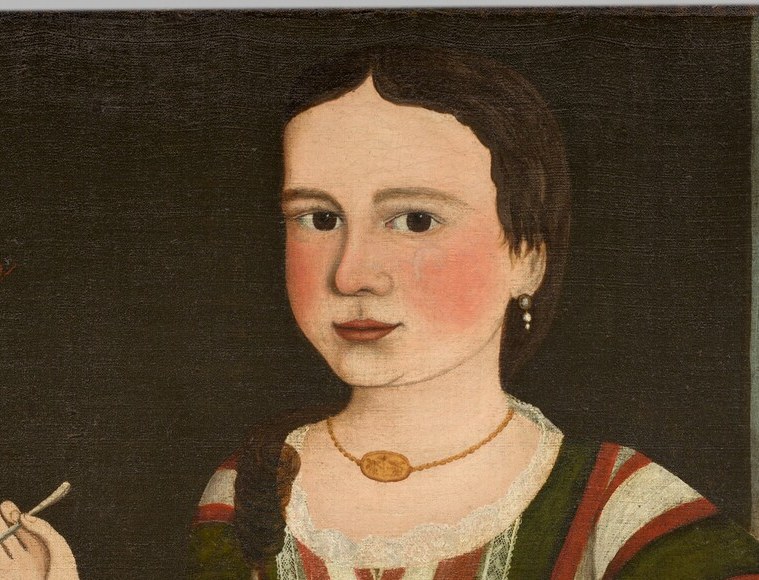
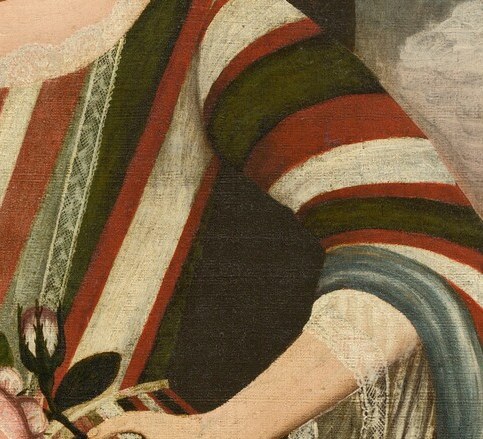
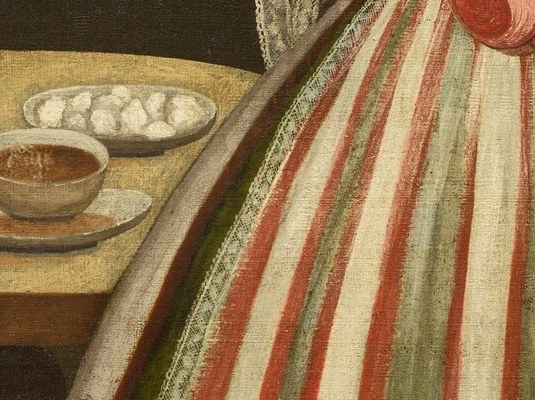
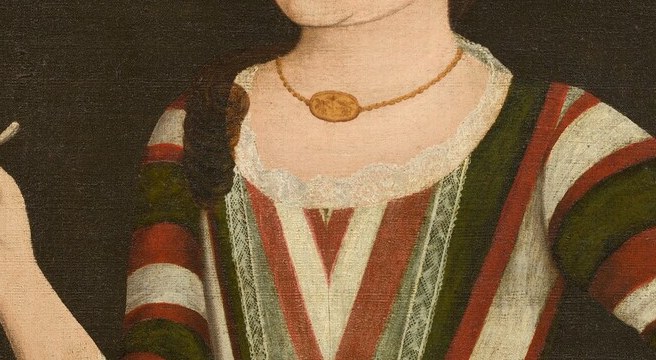
Susanna Truax was only four years old when she sat for this portrait in 1730. Painted by the artist known as the Gansevoort Limner (possibly Pieter Vanderlyn), the canvas is actually bed ticking, a sturdy cotton fabric more often used for mattresses than for art. Look past her composed face and striped dress into the window behind her: the distant river scene points to the Hudson Valley, where her Dutch family had settled. The red inscription in the corner likely holds her name and the date, a rare clue from an artist who left his works unsigned. Did Susanna ever recognize the landscape behind her as home?

#arthistory #colonialportrait #hiddeninplaintext

Details
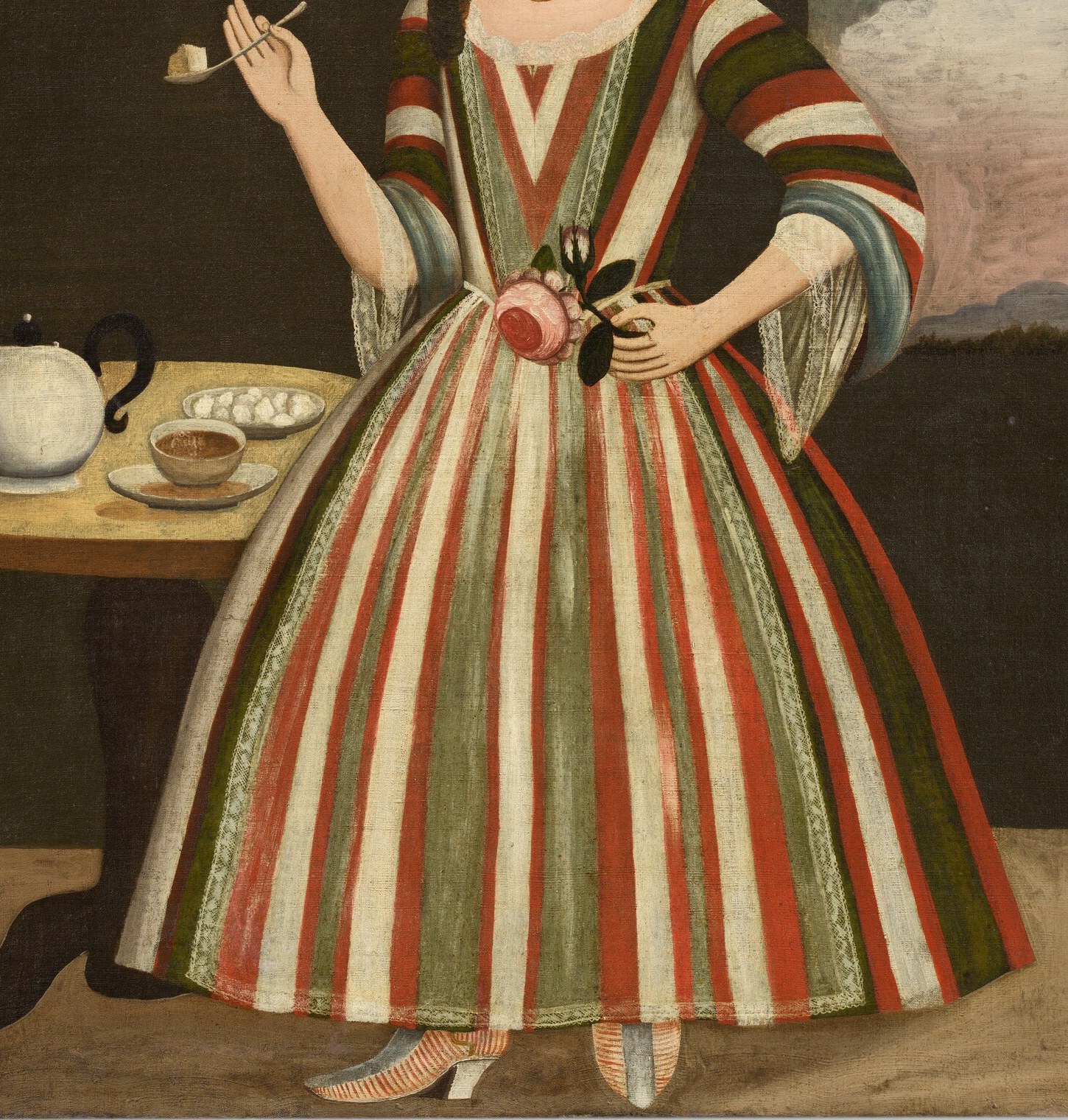
Painted on bed ticking whose own woven stripes likely inspired the costume pattern , or the dress fabric and the support are the same material, blurring sitter and canvas in an extraordinary material coincidence.
The sitter's wide, frontal stare is a hallmark of limner folk portraiture , unmodeled yet intensely present, locking eyes with any viewer across three centuries.
Pinching a cherry or strawberry between thumb and forefinger was a conventional attribute of innocence and transience in colonial child portraits , a memento mori in miniature.
A second piece of fruit held at waist level doubles the symbolic weight; apples signal temptation and original sin, oranges signal prosperity and rarity in the Hudson Valley.
Coral was worn by Dutch-American children as a protective amulet against illness; its presence here is a cultural and social-status marker specific to Hudson Valley Dutch families.
Transcript

She looks like a proper young lady. But the dress was painted on bed ticking. Cotton fabric meant for a mattress. Now look past her, into the window. A river cuts through the background. The Hudson Valley, where her family settled. An inscription names her in red paint.