Artwork
Susanna Truax
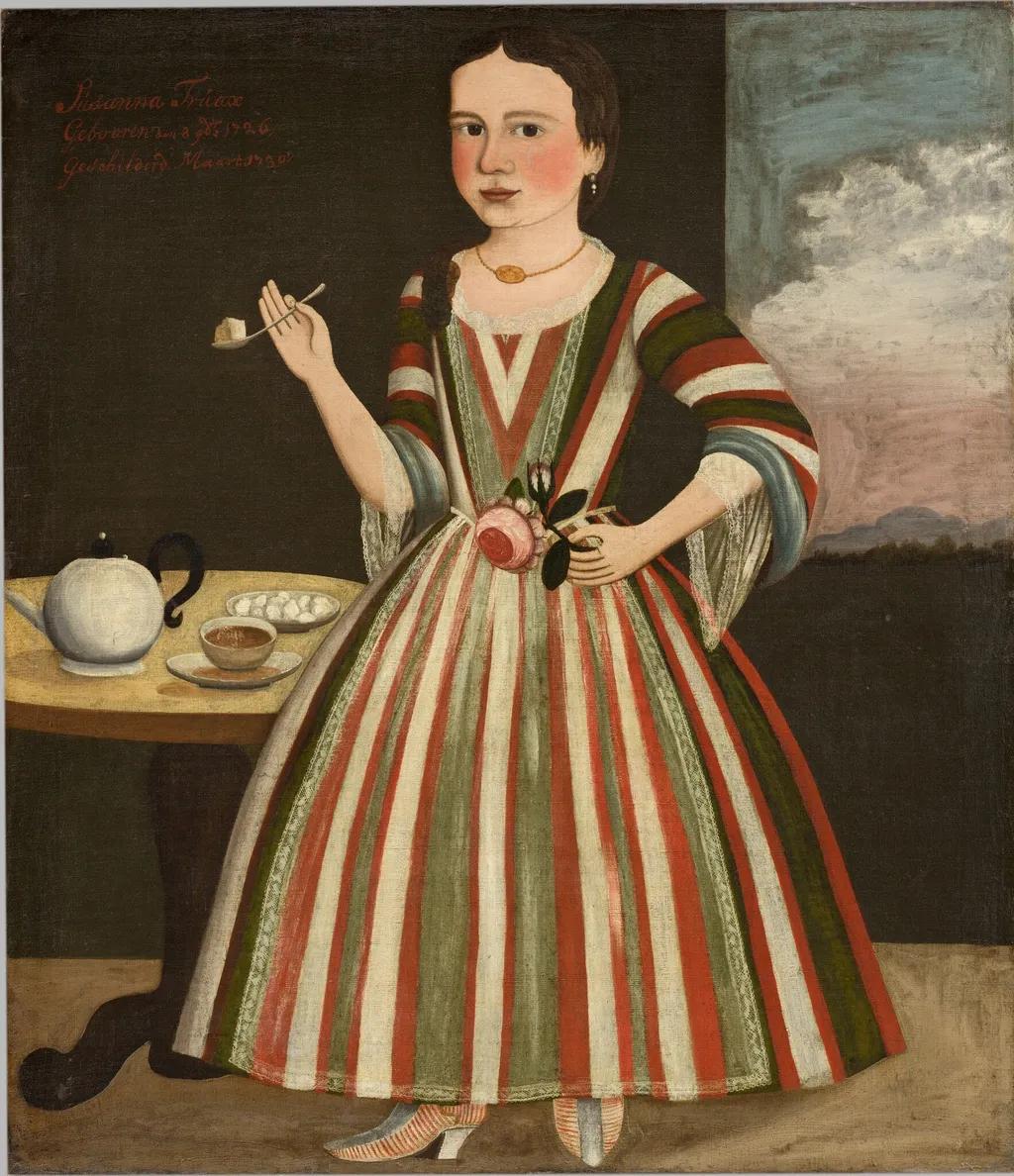
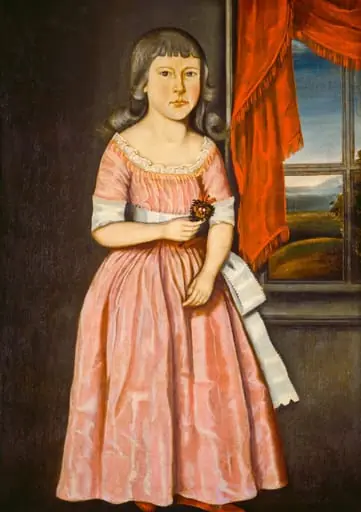
Susanna Truax is an oil painting by the Baroque artist Pieter Vanderlyn. It dates from 1730 and is held in the collection of the National Gallery of Art.
- Inscription
- Inscribed:upper left: Susanna Truax / Gebooren den 8 [--]: 1726, / Geschilderd, Maart, 1730 [translated as: "Susanna Truax / born 8 November: 1726, / Painted, March 1730"]
About this work
Around 1730, a Hudson Valley painter, possibly Pieter Vanderlyn, portrayed the young Susanna Truax on bed ticking, the woven cotton normally used for mattresses rather than oil paintings. Born in 1726 to an Albany-area Dutch family, she lived until 1805. The portrait stayed with her brother's descendants for over two centuries before the National Gallery of Art acquired it in 1980.
Technique & Style
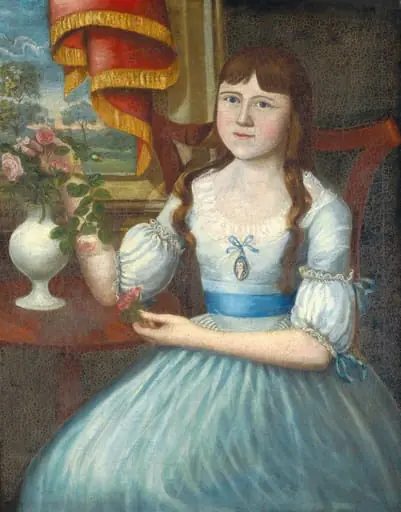
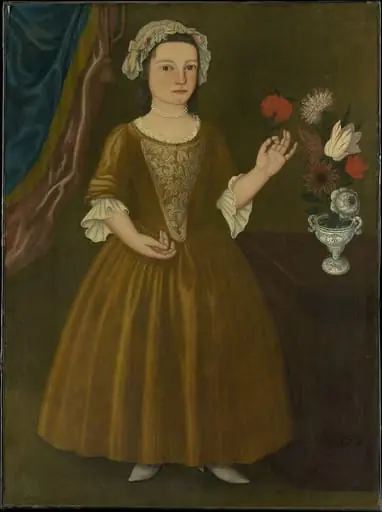
The composition depicts a woman seated at a table with a teapot, sugar bowl, spoon, and flowers, while a sky and clouds appear in the background.
The painting is executed in oil on bed ticking, an unconventional support for the period. It measures 95.9 by 83.8 centimeters. The composition depicts a woman seated at a table with a teapot, sugar bowl, spoon, and flowers, while a sky and clouds appear in the background.
This combination of formal portraiture with still-life elements is characteristic of the early 18th-century American limner tradition exemplified by Pieter Vanderlyn, also known as the Gansevoort Limner.
History & Provenance
Painted in 1730 by Pieter Vanderlyn (also known as the Gansevoort Limner), the portrait descended in the family of the sitter's brother, Andries Truax, eventually passing to Katherine Landon Fuguet, who held it until 1946. In 1949, John P. Kinsey sold the painting through agent Charles F. Montgomery to Edgar William and Bernice Chrysler Garbisch. The Garbisches bequeathed the work to the National Gallery of Art in 1980.
Overview
The portrait of Susanna Truax, painted in 1730, captures a young girl from an Albany-area Dutch family. Attributed to the artist known as the Gansevoort Limner, possibly Pieter Vanderlyn, this work is notable for its use of bed ticking as a canvas. The sitter, born in 1726, lived into the early 19th century. This painting offers insight into early 18th-century colonial portraiture and material practices.
Context
The artist responsible for this work is identified as the Gansevoort Limner, a figure potentially synonymous with Pieter Vanderlyn. Born in Holland around 1687, Vanderlyn trained in Amsterdam before arriving in New York via Curaçao in 1718. He established himself in the Hudson Valley as a portraitist, active between 1730 and 1745, while also engaging in land speculation and trade. The attribution to Vanderlyn, first proposed in 1969, continues to be a subject of scholarly discussion.
Own this work as a print
Artist & collection
Artist
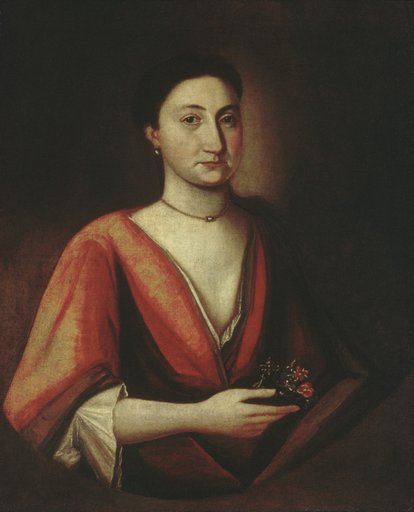
Pieter Vanderlyn was born in Holland around 1687 and served with the Dutch navy off the coast of Africa before emigrating to colonial New York, likely via Curaçao, around 1718.