Mountain Stream in the Auvergne by Rousseau, Théodore
This is Mountain Stream in the Auvergne, painted by Théodore Rousseau in 1830. It is an oil sketch on paper, later mounted on canvas, and it records a specific, unglamorous corner of central France before railroads, before tourism, and before landscape painting was a settled genre.
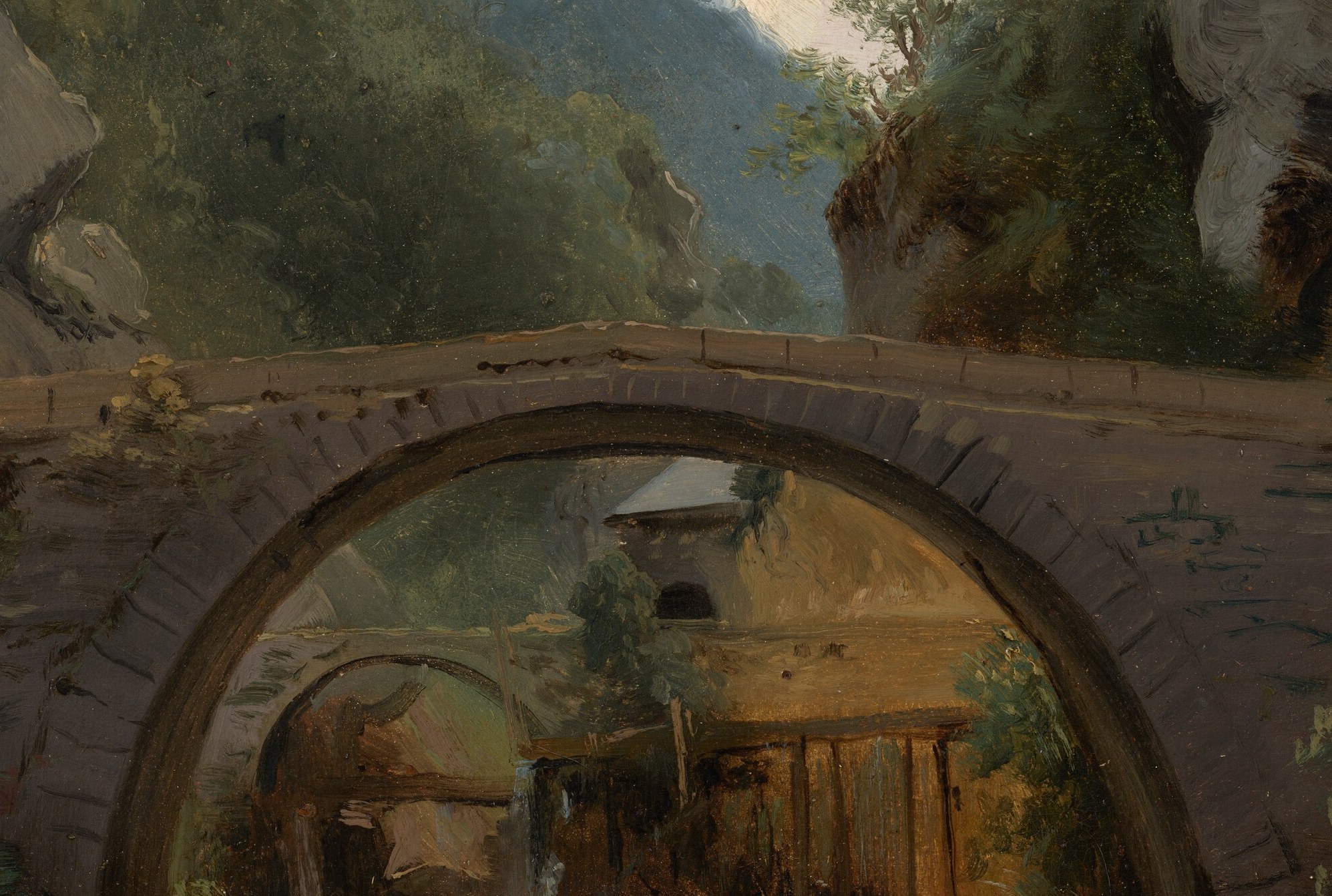
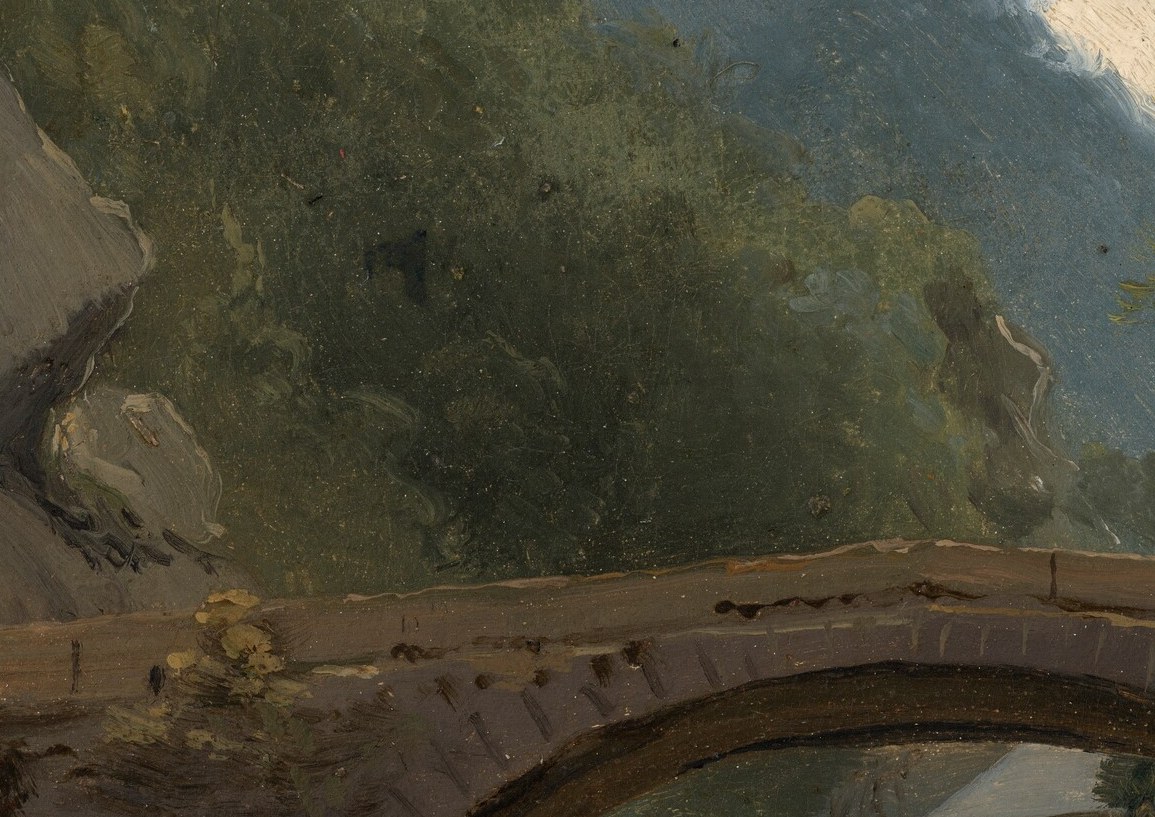
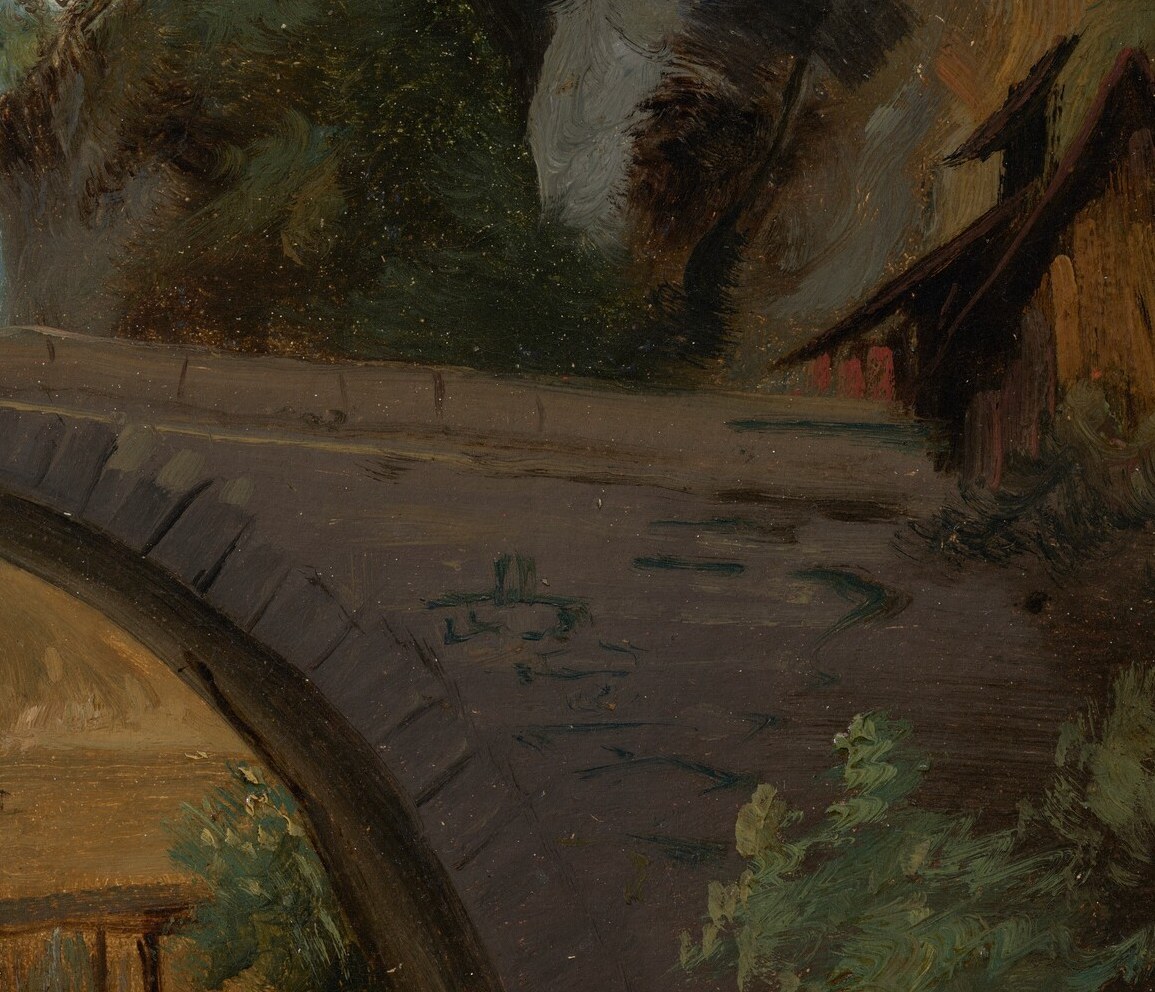
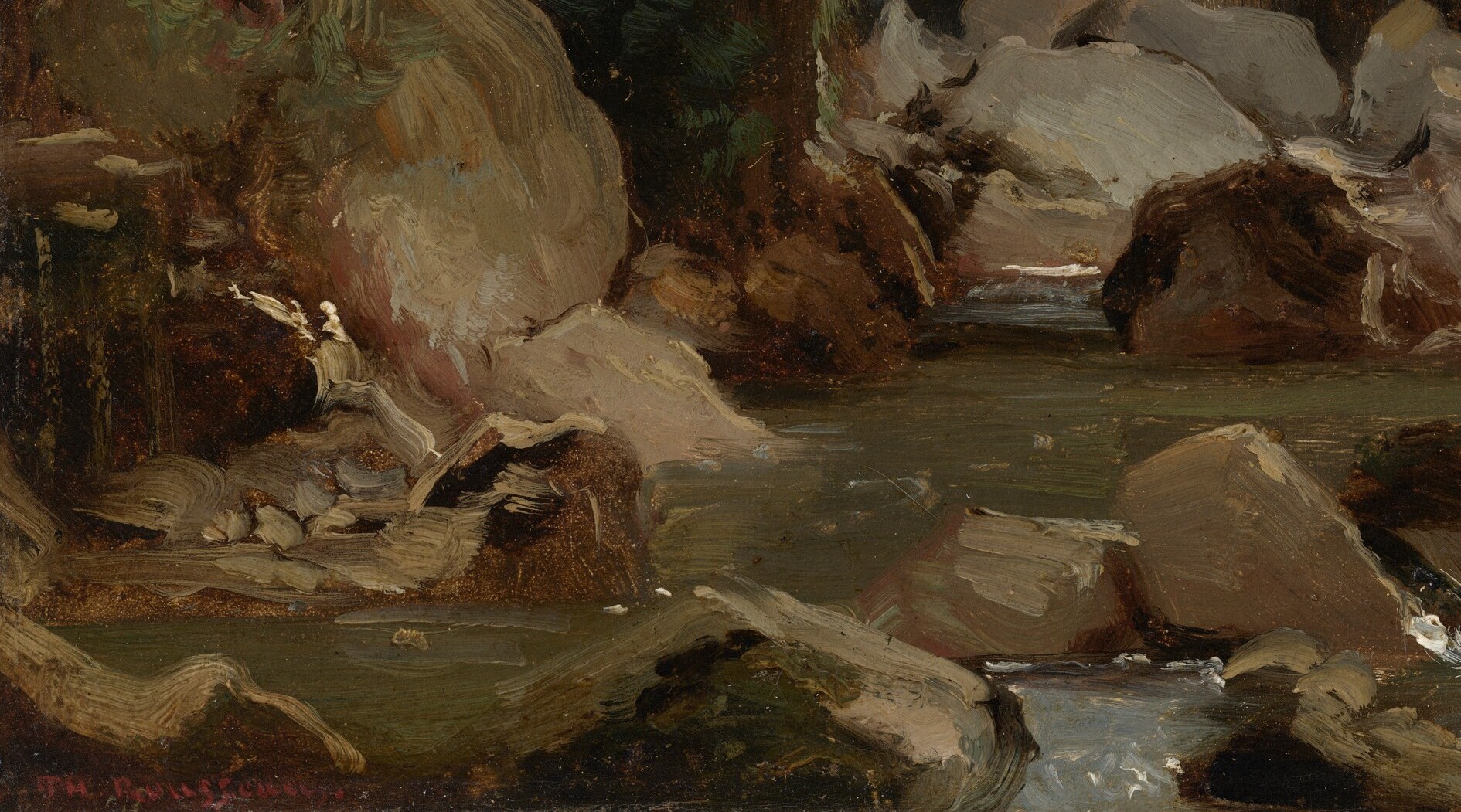
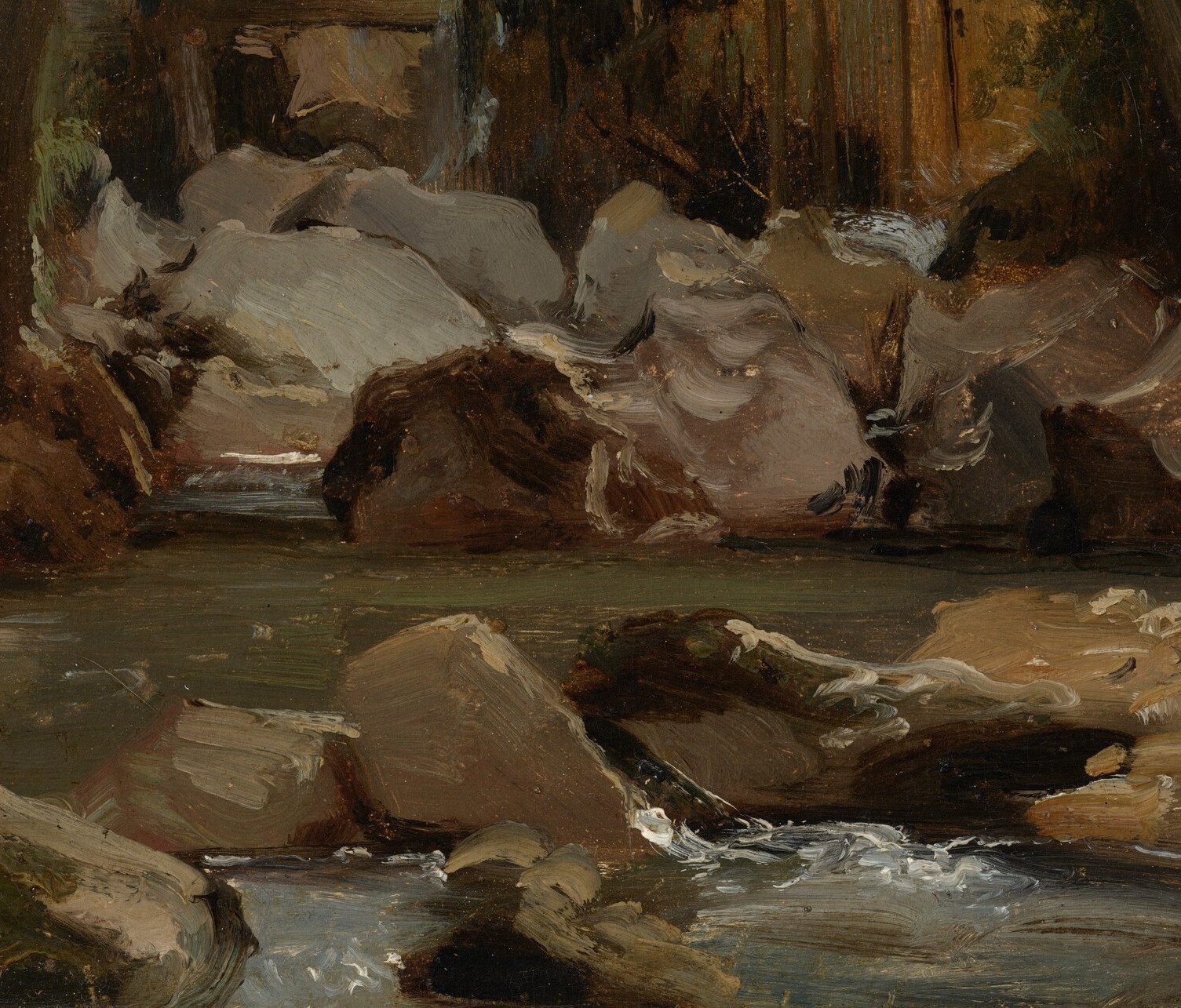
Look first at the stone bridge. Its arch frames the bright sky, pulling your eye deep into the gorge, but the bridge itself is half-swallowed by ivy and scrub. Rousseau gives the foreground boulders the same close attention a portraitist gives a face: wet moss, lichen, the sheen of spray. A single small building sits to the right of the bridge, the only human trace in the scene. Everything else is rock, dark trees, and moving water.
Rousseau was barely twenty when he made this. He hiked into the Auvergne carrying oil paints on paper, an unusual portable method that let him work fast and directly from the landscape. He would become a central figure in the Barbizon school, a group of painters who rejected studio idealizations and insisted on painting nature as they actually found it. This little work is one of the first documents of that impulse.
The painting is quiet, unheroic, and completely specific. It is what one person saw, standing on a stream bank in 1830, in a place that had not yet learned to expect visitors.
Details
Transcript
The year is 1830. No railroad reaches this gorge. A stone bridge has stood here longer than anyone remembers. Look at the parapet. The stone is being eaten by plants. That small building on the right is the only sign of people. The painter was twenty, hiking the Auvergne with oil paints on paper. He painted the moss on these boulders like a portrait. That rushing water is the sound this painting makes. He walked into a wilderness. He walked out with this.