On to Liberty by Theodor Kaufmann
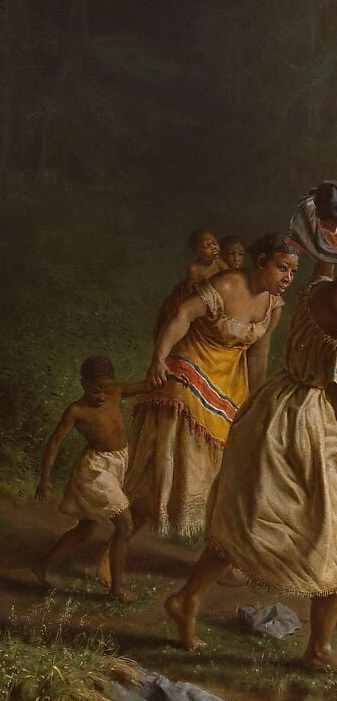
Theodor Kaufmann's 'On to Liberty' (1867) is one of the very few mid-19th-century American paintings to depict emancipation from the perspective of the freed people themselves. Painted just two years after the Thirteenth Amendment abolished slavery, it is a rare and radical act of sympathetic imagination on canvas.
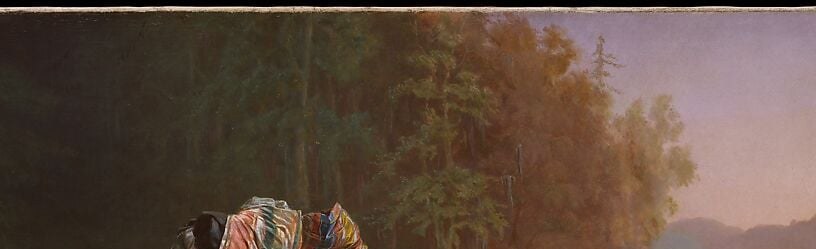
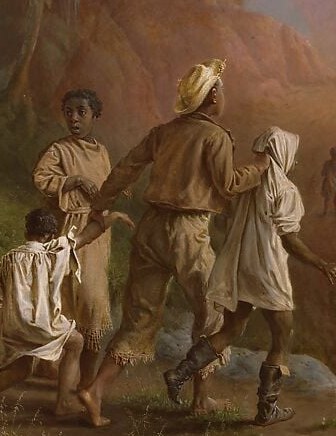
Look first at the warm glow on the horizon line beyond the trees. Kaufmann uses that light like a compass, every figure in the painting is moving toward it. The bright red cloth hoisted high above the crowd may be an American flag. It is the single most saturated note of color in the entire composition, and it pulls the eye directly into the center of the march.
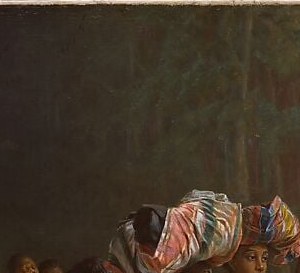
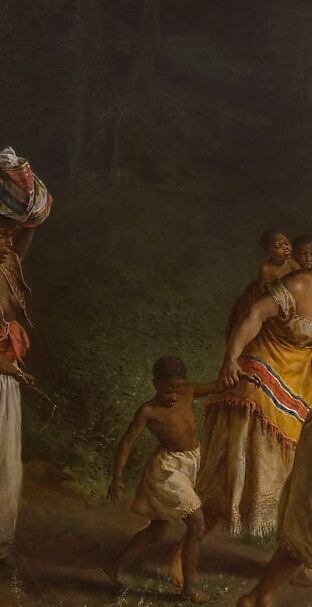
The artist was a German immigrant who had fought for the Union during the Civil War. When the war ended, he turned back to his brushes and chose this subject: a group of men, women, and children striding out of shadow and into the light, carrying bundles, children, and flags. The loose, urgent brushwork is deliberate, it makes the scene feel like a document of real motion, not a posed allegory.
Kaufmann lived until 1896, but his name faded from American art history. 'On to Liberty' survives as a reminder that some of the truest witnesses to a nation's turning points painted what they had actually fought to see.
Details
Transcript
After the Civil War, a German-American soldier picked up his brushes. Theodor Kaufmann had fought for the Union. Now he would paint its meaning. Look at the horizon. It glows like a promise. Everything moves toward it. Even the children run ahead. That red flash above them carries the whole hope of the picture. The bundles on their heads hold everything they own. Kaufmann painted this in 1867, two years after the Thirteenth Amendment.