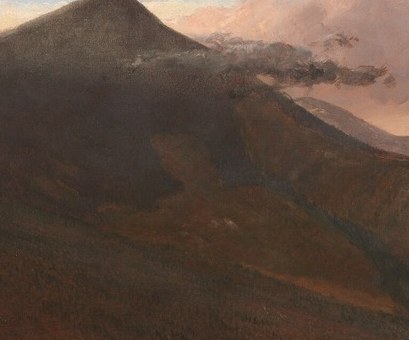
View of Schroon Mountain, Essex County, New York, After a Storm by Thomas Cole
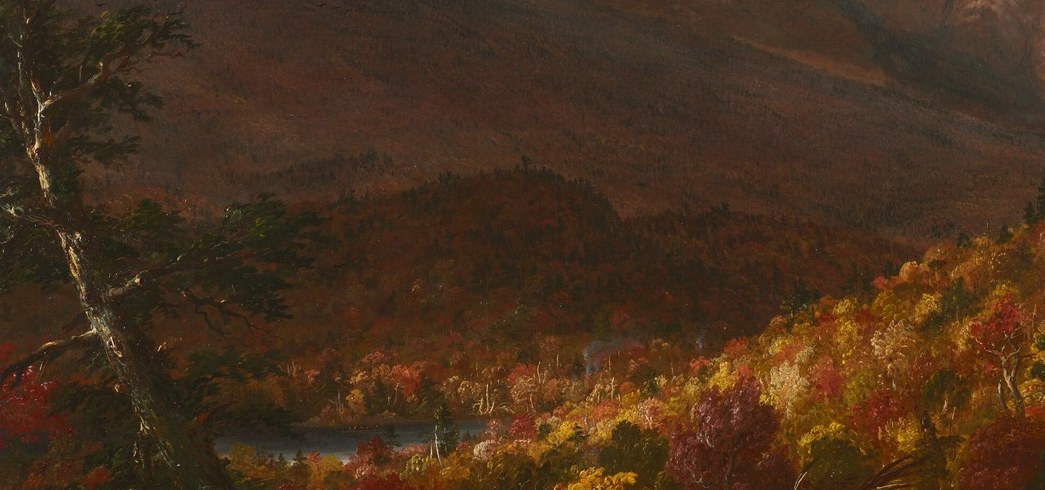
Thomas Cole's "View of Schroon Mountain, Essex County, New York, After a Storm," painted in 1838, is a significant work from the founder of the Hudson River School, currently held at The Cleveland Museum of Art. Cole's dramatic landscapes often carried allegorical meanings, portraying the American wilderness as a pure, untouched Eden, a stark contrast to the industrialization prevalent in Europe at the time.
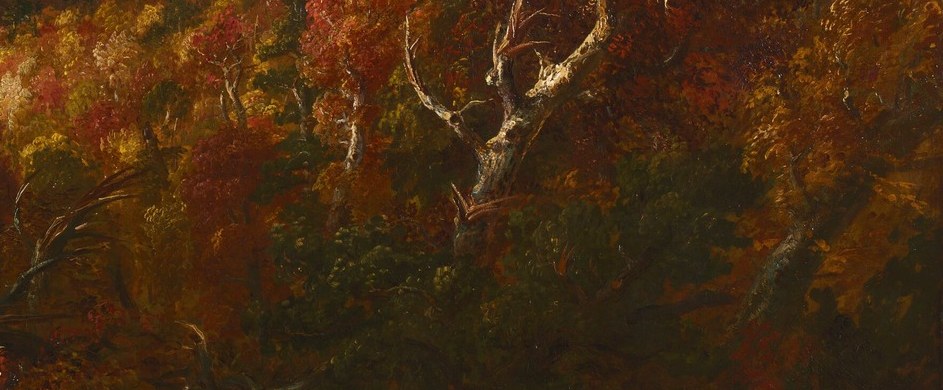
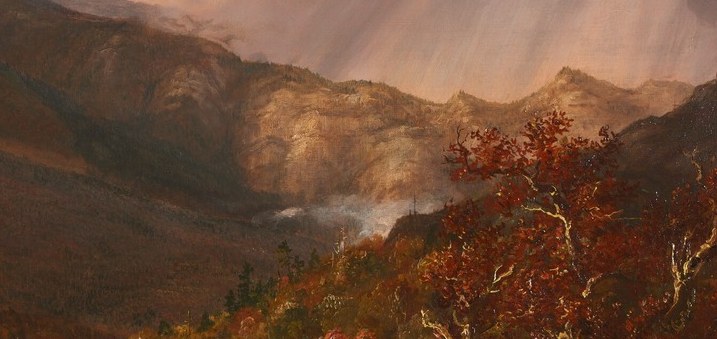
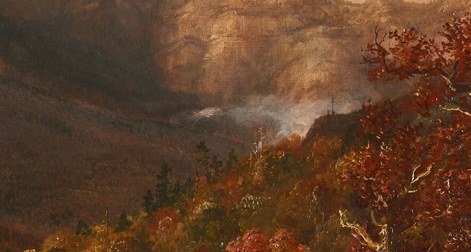
In this painting, notice the vibrant autumn foliage and the shafts of sunlight breaking through the storm clouds. Cole used bold brushstrokes to capture the rugged texture of the mountain and trees, emphasizing the raw power and beauty of nature.
Cole (1801-1848) was an Anglo-American artist whose work, while romantic, often subtly criticized industrialism and westward expansion. His paintings are a window into the artistic and philosophical concerns of 19th-century America. Today, his works are highly sought after, with a similar landscape recently fetching nearly $5 million at auction.
What do you find most striking about this depiction of the American wilderness?
Details
Transcript
This dramatic landscape by Thomas Cole was painted in 1838. He founded the Hudson River School, America's first art movement. Cole presented American wilderness as an untouched, Edenic space. But his work wasn't just beautiful, it was also political. He criticized industrialism and urban expansion in his landscapes. A Cole painting recently sold for nearly $5 million.