Pasture at Evening by Albert Pinkham Ryder

Albert Pinkham Ryder’s *Pasture at Evening*, painted between 1912 and 1932, housed at The Metropolitan Museum of Art. This painting is a testament to an artist’s prolonged obsession, with its surface physically bearing the marks of its creation.

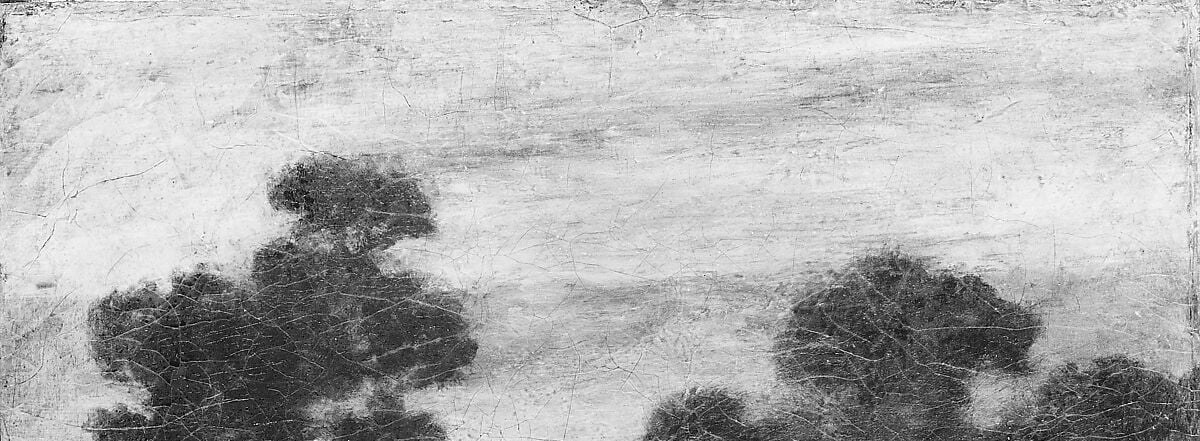
Look closely at the paint itself. Ryder repeatedly applied and scraped away layers, building up a unique texture that appears cracked and crazed. It resembles dried mud or ancient skin, a physical manifestation of his artistic struggle.

This intense reworking over two decades transformed the canvas into a deeply atmospheric work. The cows merge with the landscape, and the heavy sky contributes to a dreamlike, introspective mood, characteristic of Ryder's poetic approach to nature.

Ryder's process here is as much the subject as the landscape itself.

Details
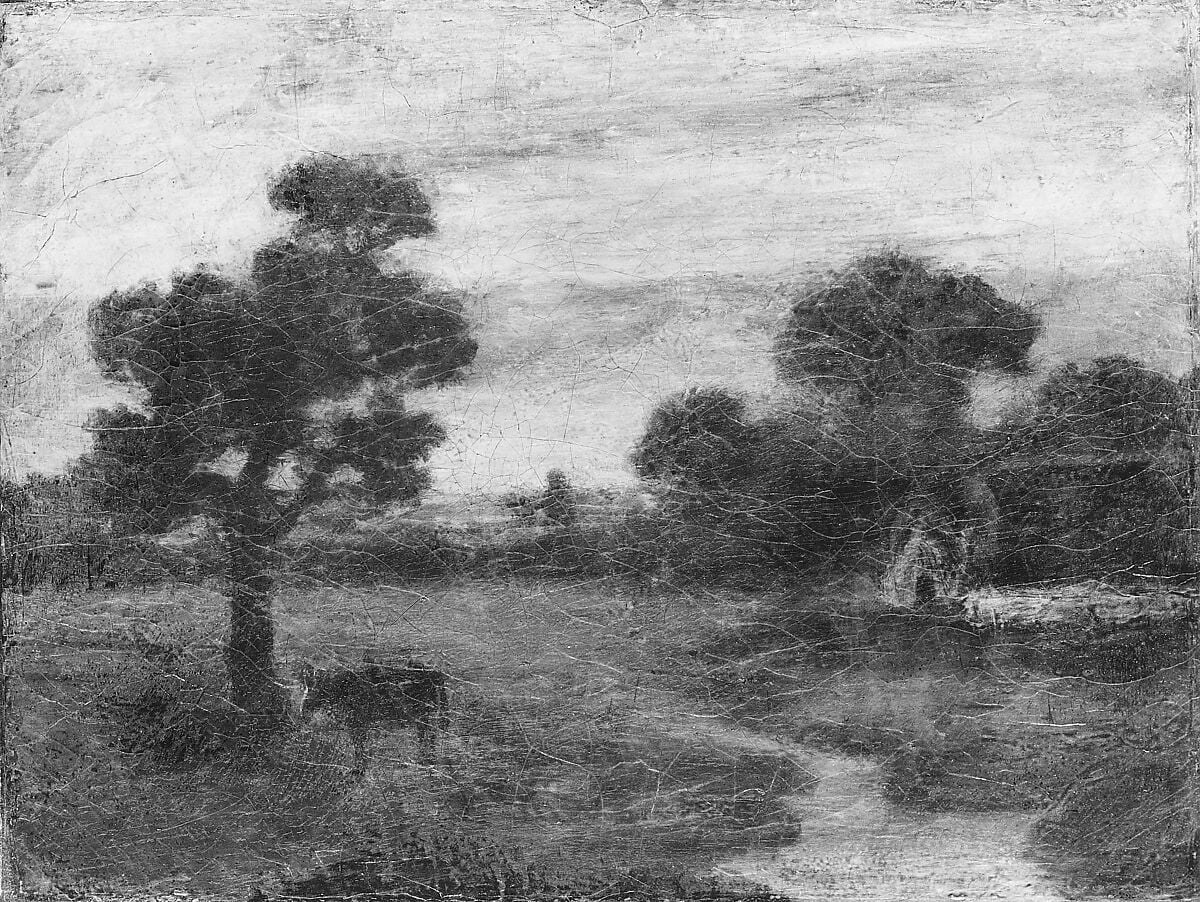
He scraped off paint and added more, again and again.
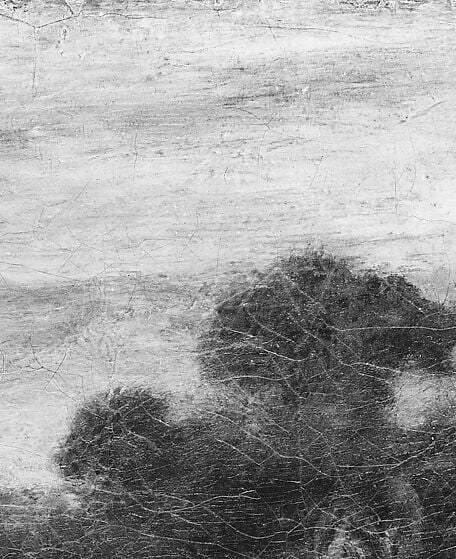
Ryder labored for decades on his skies; this dense, layered atmosphere holds the most accumulated paint and radiates the painting's emotional weight.
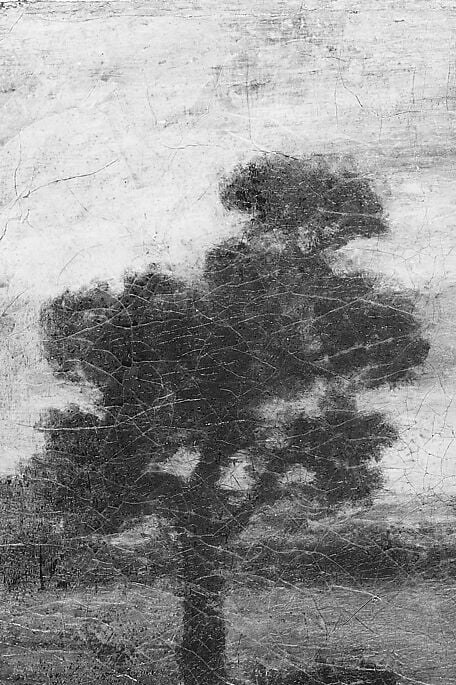
The dominant compositional anchor; its twisted silhouette against the sky conveys age and solitude, characteristic of Ryder's brooding romanticism.
A secondary grove that frames the composition's right side; darker and denser, creating depth by receding into evening shadow.
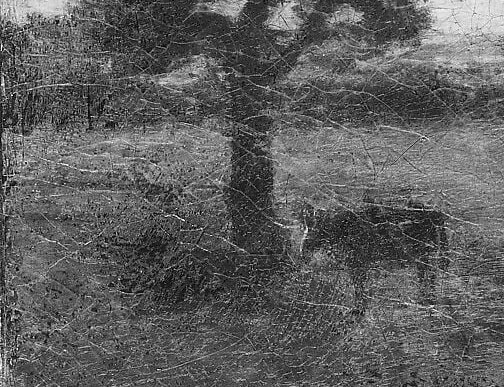
The titular cows dissolve into the earth tones; their indistinctness is deliberate , they embody Ryder's merging of creature and landscape.
Transcript

This painter obsessed over this canvas for twenty years. He scraped off paint and added more, again and again. Look at this cracked and crazed paint surface. It looks like dried mud or ancient skin. Ryder built texture through this obsessive reworking. The whole canvas became a record of his struggle.