The Landing of Columbus by Hicks, Edward
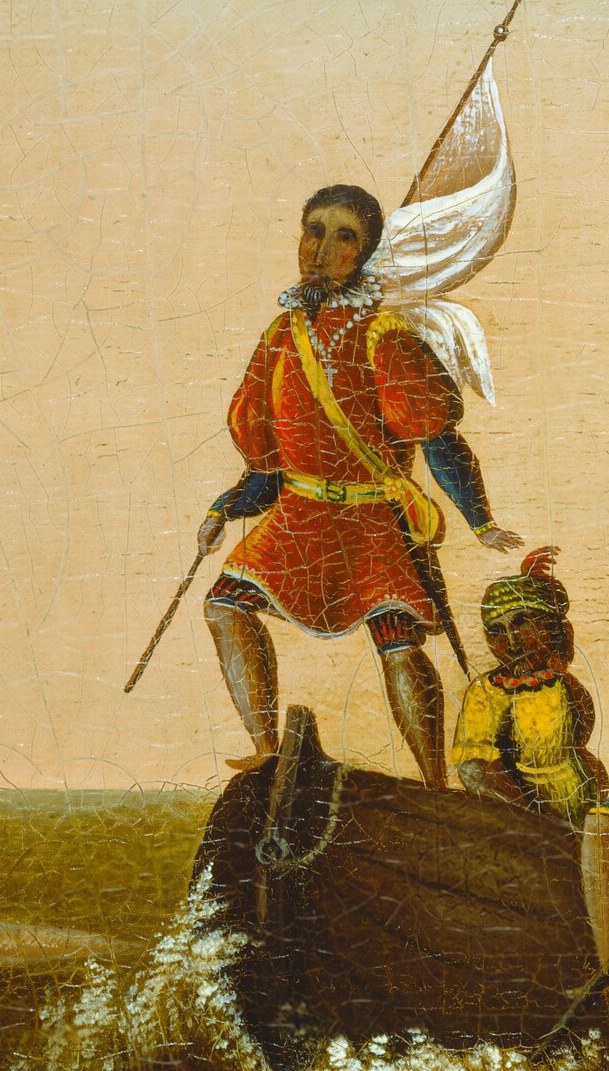
Edward Hicks's "The Landing of Columbus," painted around 1837 and held in various collections, is more than just a historical scene; it's a visual sermon. Hicks, who was also a Quaker preacher, often embedded moral messages and symbolic meaning into his artworks.
In this painting, observe the details: the flag Columbus holds bears a prominent red cross, symbolizing the religious motivation behind his voyage and the Spanish crown's mission. His sword, displayed at his hip, speaks to power and the implied conquest that accompanied the arrival.
Hicks meticulously crafted his scenes, often transforming them into narratives. While his farm scenes brought him fame, his historical works like this one also carry his distinctive approach to storytelling through carefully chosen symbols. He wanted to convey the deeper implications of such momentous events.
This painting invites us to look beyond the surface, to decode the intentional messages an artist like Hicks wove into his work. What other hidden meanings might be found?
Details


Transcript
This painting tells a story, but not just with what you see. Look at the flag Columbus carries. It holds a clear symbol. The red cross represents the religious mission of the Spanish crown. His sword, prominently at his hip, signals another message. It's a symbol of power and the implied conquest to come. Edward Hicks, a preacher, often painted moral lessons into his art. Even in this dramatic scene, the subtext is plain.