Saint Luke Drawing the Virgin by Rogier van der Weyden
Rogier van der Weyden's "Saint Luke Drawing the Virgin" is a masterpiece of early Netherlandish art, rich with symbolic details that unfold a profound theological narrative. Dating from around 1435-1440, this oil and tempera on oak panel is housed at the Museum of Fine Arts, Boston.
At first glance, it depicts Saint Luke, the patron saint of artists, sketching the Virgin Mary as she nurses the infant Jesus. But closer inspection reveals a fascinating detail: carved figures of Adam and Eve on the armrest of Mary's throne. These tiny figures, representing humanity's fall from grace, are cleverly juxtaposed with the Virgin and Child.
This artistic choice positions Mary as the "New Eve," whose son, Jesus, offers redemption for the original sin. The painting not only showcases van der Weyden's exquisite technique but also his deep engagement with theological concepts, making it a powerful devotional image for its time.
What other hidden meanings might you find in this intricate work?
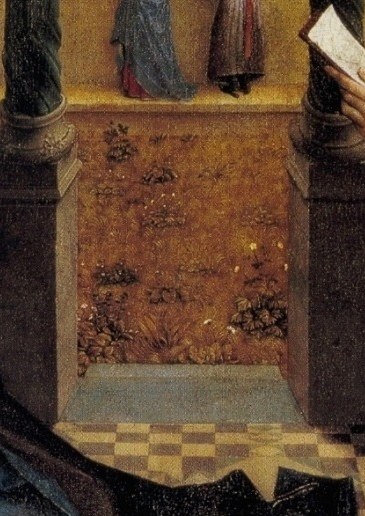
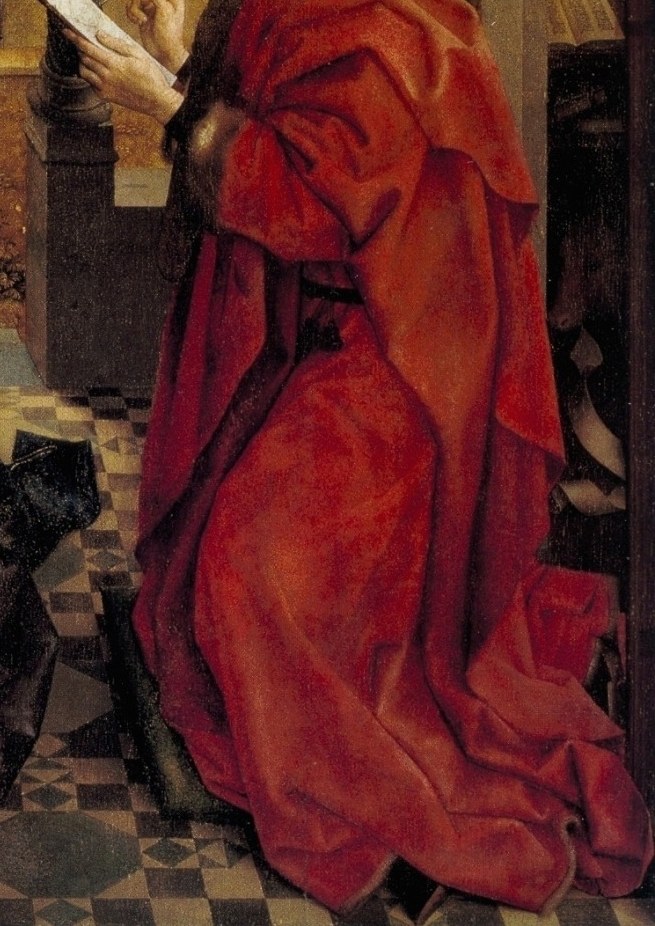
Details
Transcript
This painter was a master of hidden details. Look closely at the throne where Mary sits. On the armrest, tiny figures are carved. These are Adam and Eve, after the Fall. Their presence here connects to Mary's role. She is seen as the New Eve, bringing salvation. Saint Luke records this divine history.