Hamlet and His Mother by Eugène Delacroix
Delacroix painted this scene from the closet scene of Shakespeare's Hamlet in 1849, and it lives at The Metropolitan Museum of Art. It is not an illustration of a play so much as a study in two forces colliding: guilt and accusation, warmth and cold, the living and the just-killed dead.
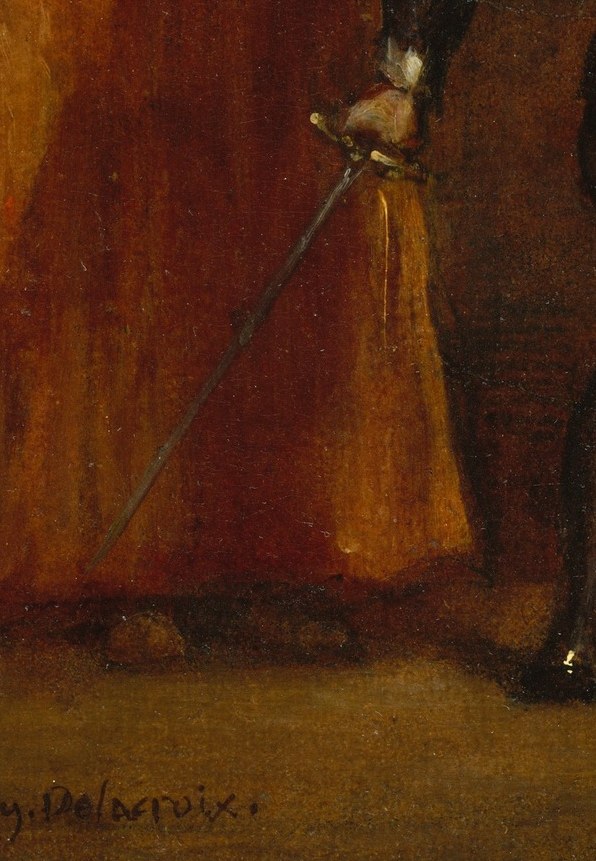
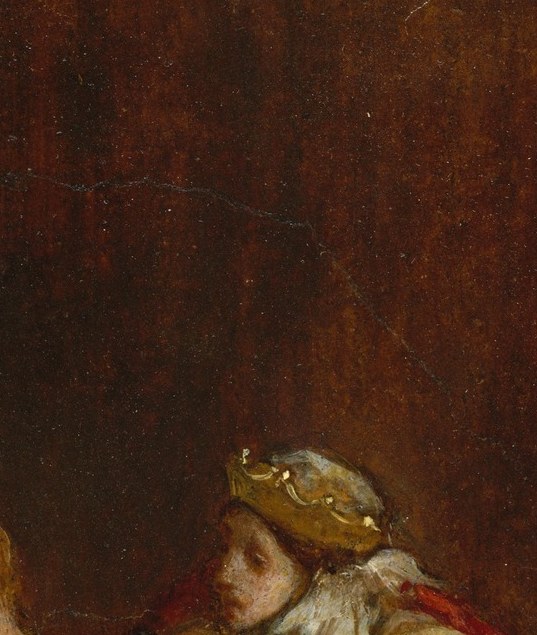
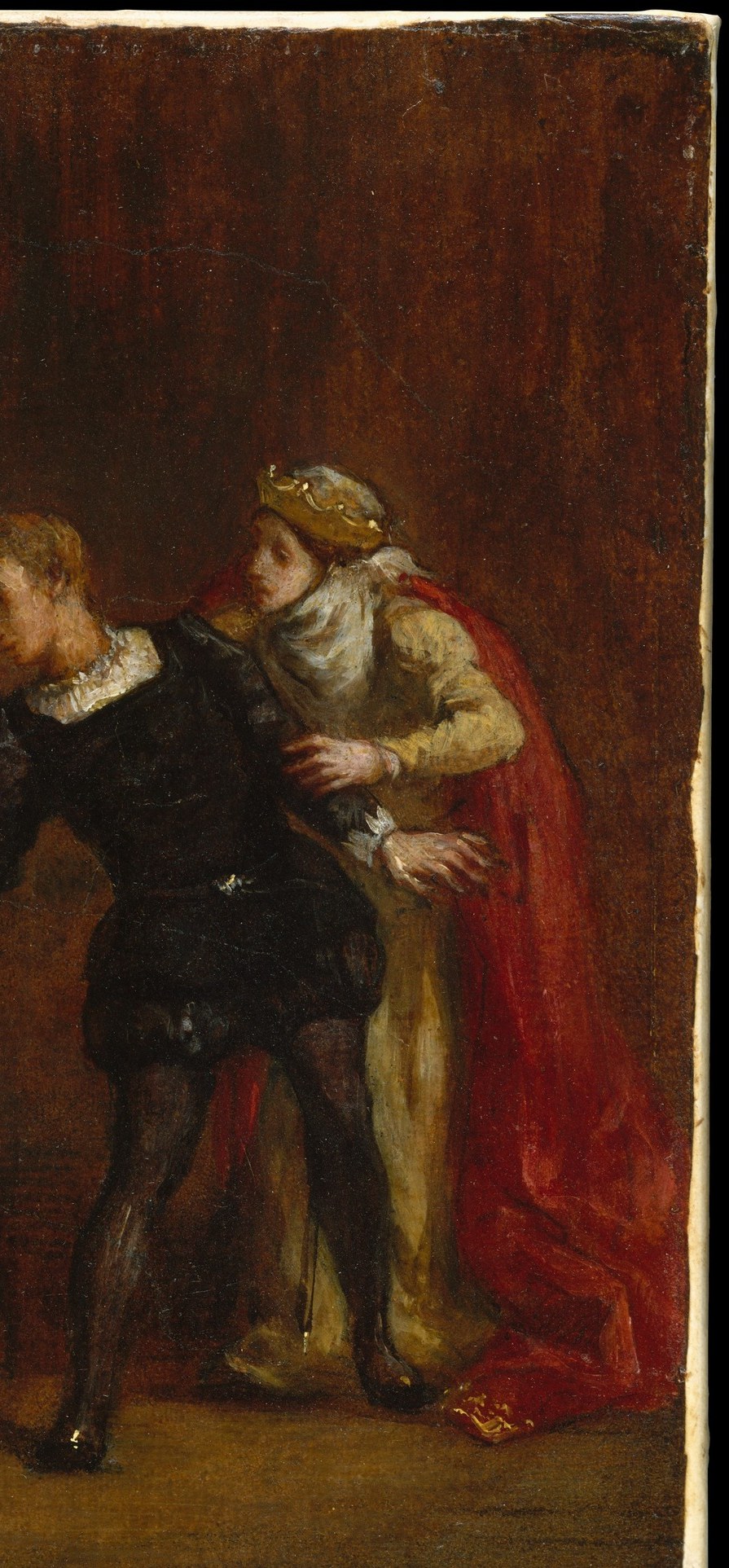
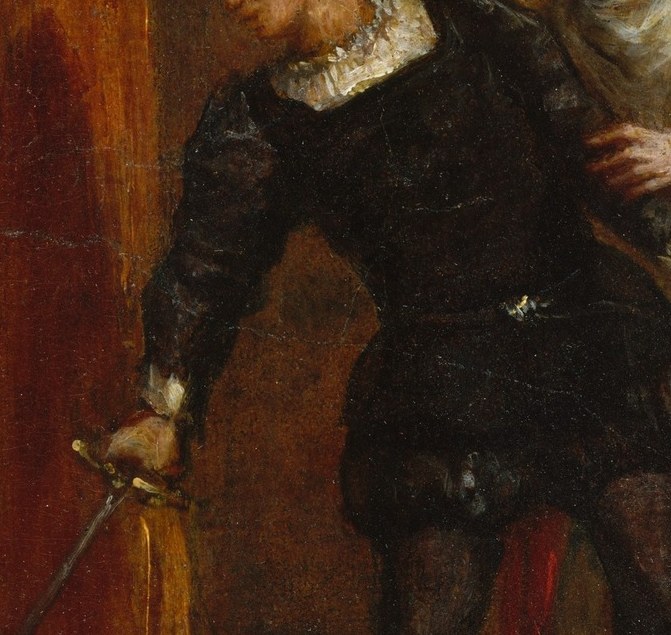
Look at Hamlet's face first, then his mother's. Hers is blurred, almost dissolving under his words, while his is sharp with grief and fury. The warm light falls on her red-orange garments; his black doublet absorbs everything. Delacroix is using color as moral argument.
The red curtain behind Gertrude is doing more than filling the background. In the play, Polonius hides behind an arras and Hamlet stabs him through it. The body is still there, unseen by us but understood, hidden inside the painting's warmest field of color.
Delacroix built the French Romantic movement on work like this: thick impasto, visible brushstrokes, Venetian color, and human emotion held at its breaking point. Baudelaire said he was 'passionately in love with passion, but coldly determined to express passion as clearly as possible.'
What do you read in Gertrude's face, fear, guilt, or something closer to grief?
Details

Transcript
He has just killed a man. Now Hamlet confronts his mother. She draws back, her face blurred by his accusation. The red curtain is not only fabric. Behind it lies the body of Polonius, whom Hamlet just stabbed. Delacroix paints her in warm light and him in black that swallows light. A mother's guilt and a son's grief, made visible.