A Lock, a Column, and a Church beside a Lagoon by Canaletto
Canaletto, a master of Venetian cityscapes, was renowned for blending reality and imagination in his paintings. "A Lock, a Column, and a Church beside a Lagoon," painted in 1742 and held at The Metropolitan Museum of Art, is a prime example of his 'capricci', imagined architectural views.
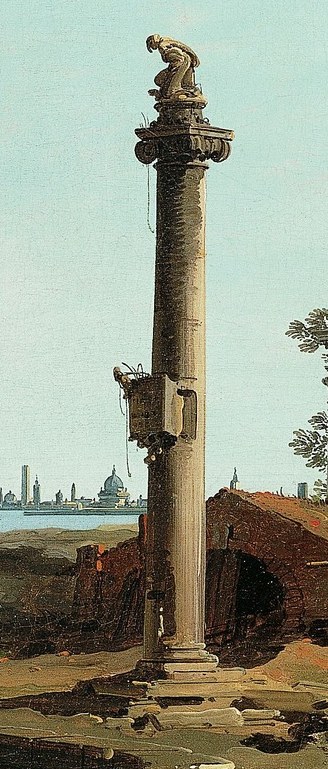
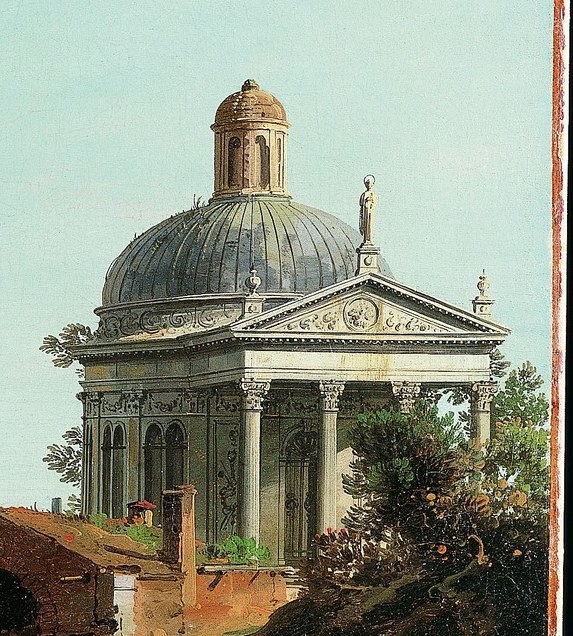
Look closely at the distant cityscape and the crumbling archway in the foreground. These aren't precise depictions of actual places, but rather a clever fusion of Venetian spires and classical Roman ruins, creating an idealized yet recognizable landscape.
Canaletto, whose real name was Giovanni Antonio Canal, often created these composite scenes. This approach catered to the burgeoning Grand Tour market, offering travelers a beautiful, dreamlike souvenir that was both topographically suggestive and aesthetically harmonious. He found great success with this style, especially in England, where his works were highly sought after.
What kind of story do you think these imagined landscapes were meant to tell?
Details

Transcript
This painter was famous for his grand, sweeping cityscapes. He often combined real landmarks with imagined ones. Look closely at the distant city skyline. It’s a mix of Venetian spires and Roman ruins. Even the crumbling archway in the foreground is a fantasy. His imagined views, called 'capricci,' were wildly popular.