Virgin and Child by http://www.wikidata.org/.well-known/genid/c9104e1457d5579c8a95fa8268482086
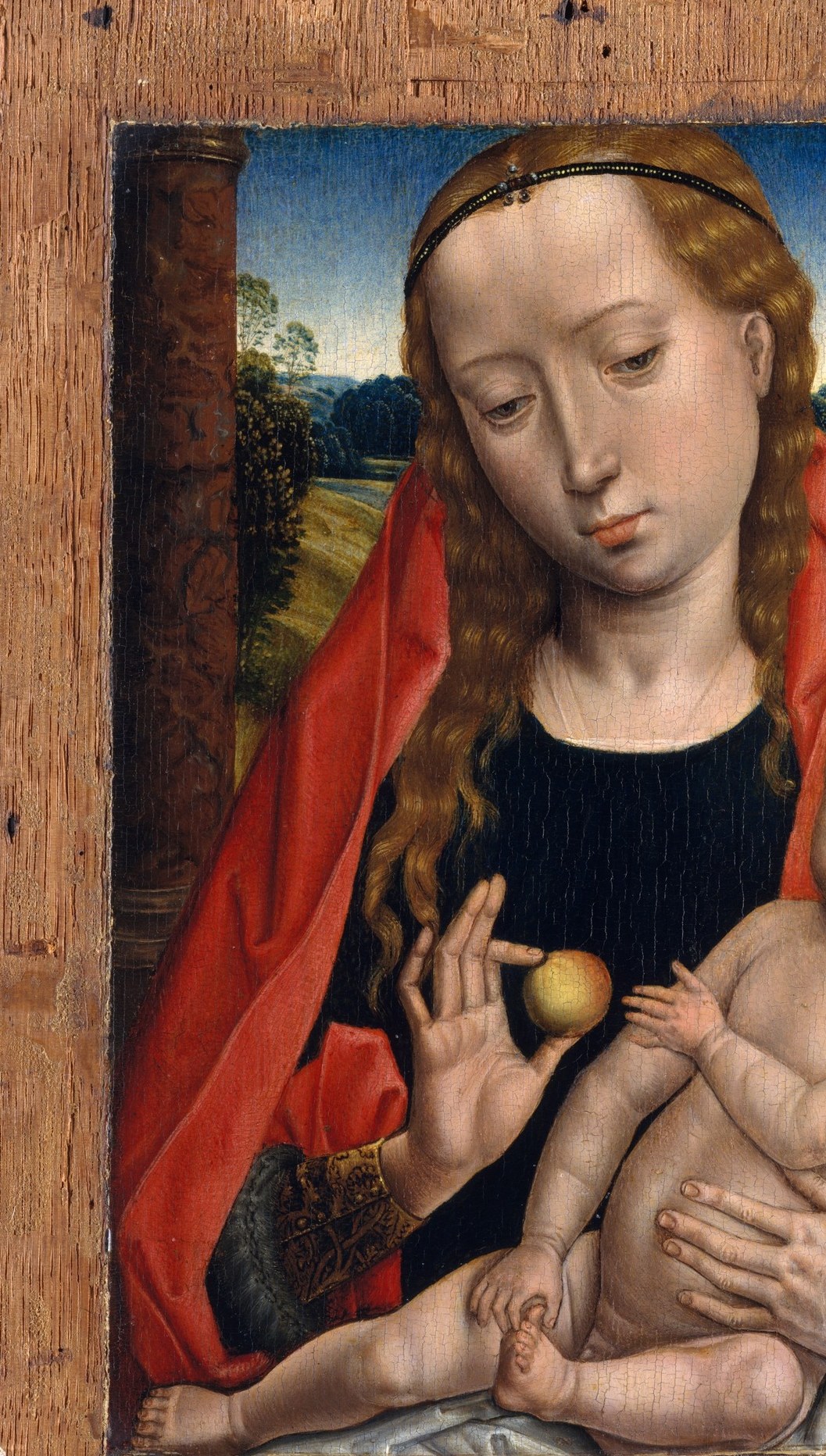
This is "Virgin and Child", painted around 1490 by an artist known today as the Master of the Legend of St. Lucy. It hangs in the Museo Nacional Thyssen-Bornemisza in Madrid. The first thing you notice is the crimson of Mary's mantle and the quiet exchange with the golden apple. But the painting's real secret is at the edges.
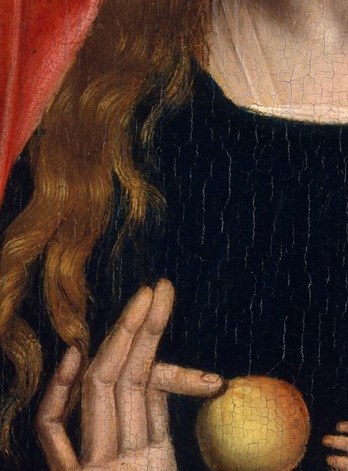
The main action fills the center: Mary offers the apple of Eden to an attentive Christ Child, a tender moment loaded with the foreshadowing of redemption. You watch the child's hands reach for it, and you see Mary's downcast eyes holding the knowledge of what it means. The chiaroscuro pushes them forward, three-dimensional and present.
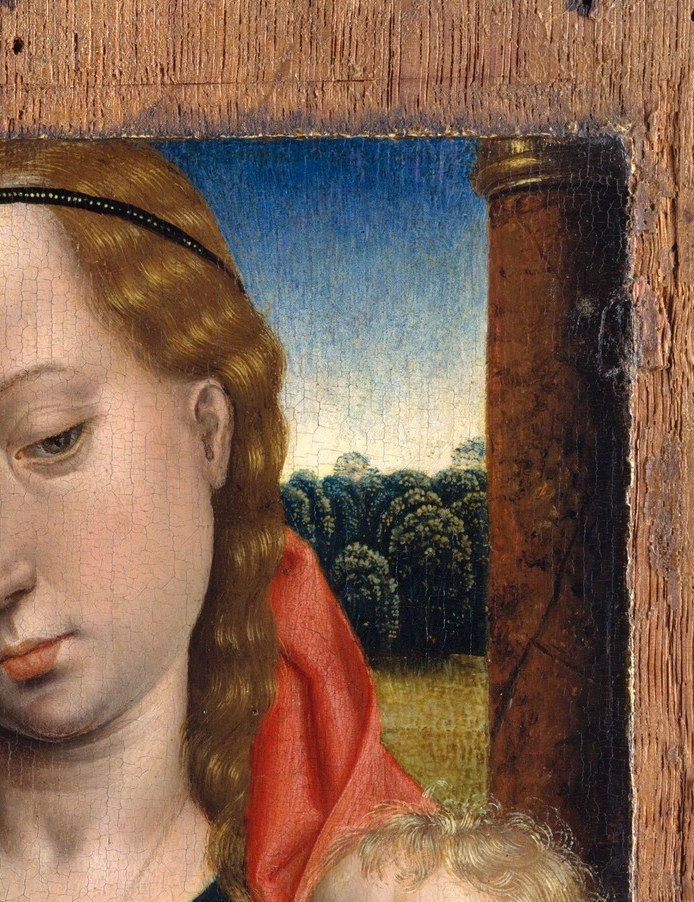
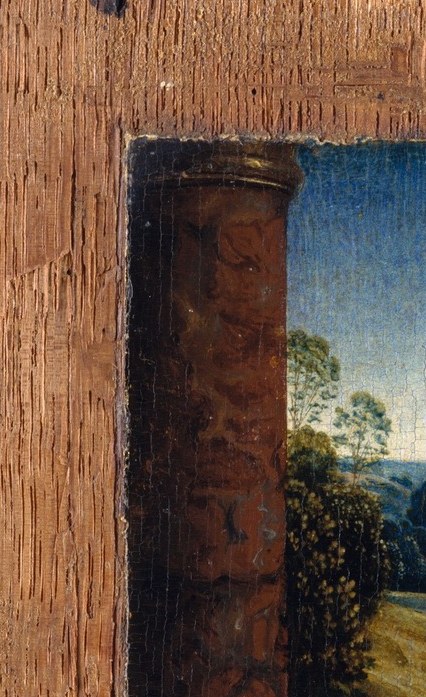
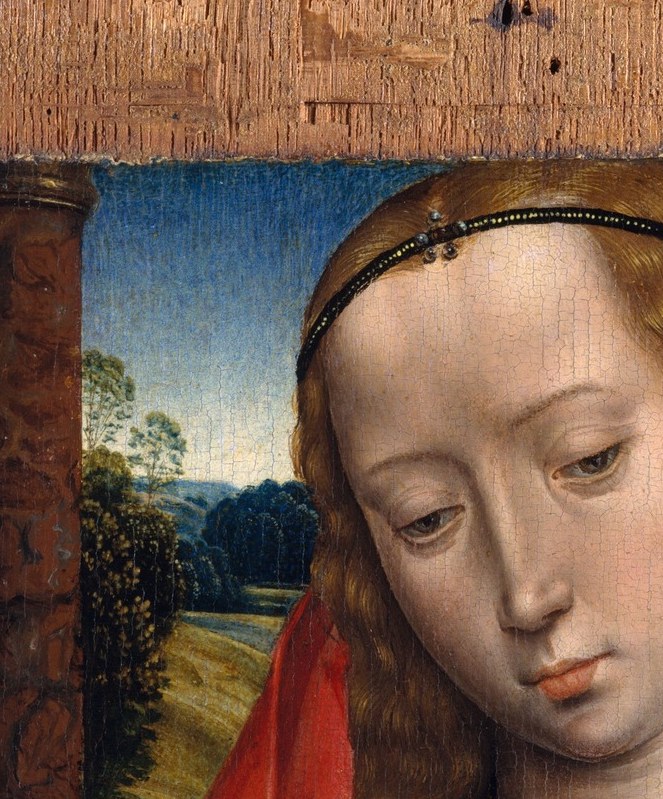
But the painter didn't stop at the figures. The background shows a delicately rendered garden and sky on the right, and an easily overlooked sliver of the same landscape peeks through on the extreme left behind her shoulder. He painted a complete, continuous world, even in the corners nobody sees at first glance. This is the Flemish devotional method: infinite care in every inch, because the sacred is in the details.
Next time you see a painting on a small screen, look for the corners. Often, that's where the artist hid the most human part of the story.
Details
Transcript
You almost never see the whole thing on a phone. The red mantle fills the screen. It feels like the whole world. But a Flemish painter, around 1490, was building a universe. Look at the right edge: a garden with individual leaves. Now look at the far left. Behind her shoulder. It's not empty red. It's another patch of sky and trees. The same world continues behind her. He painted everything, even where no one would look.