Cypresses by Vincent van Gogh
In 1949, the Metropolitan Museum of Art paid $95,000 for Vincent van Gogh's Cypresses, setting a new record for the institution’s spending on a single painting. The price made headlines, but the real story is why the Met chased this particular canvas. Painted in June 1889, it shows the Provencal countryside Van Gogh could see from his window at the asylum of Saint-Paul-de-Mausole in Saint-Remy, where he had admitted himself a month earlier.
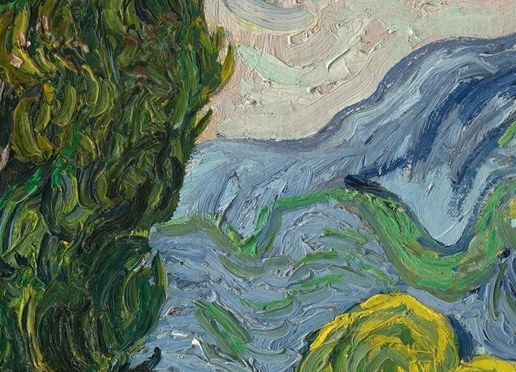
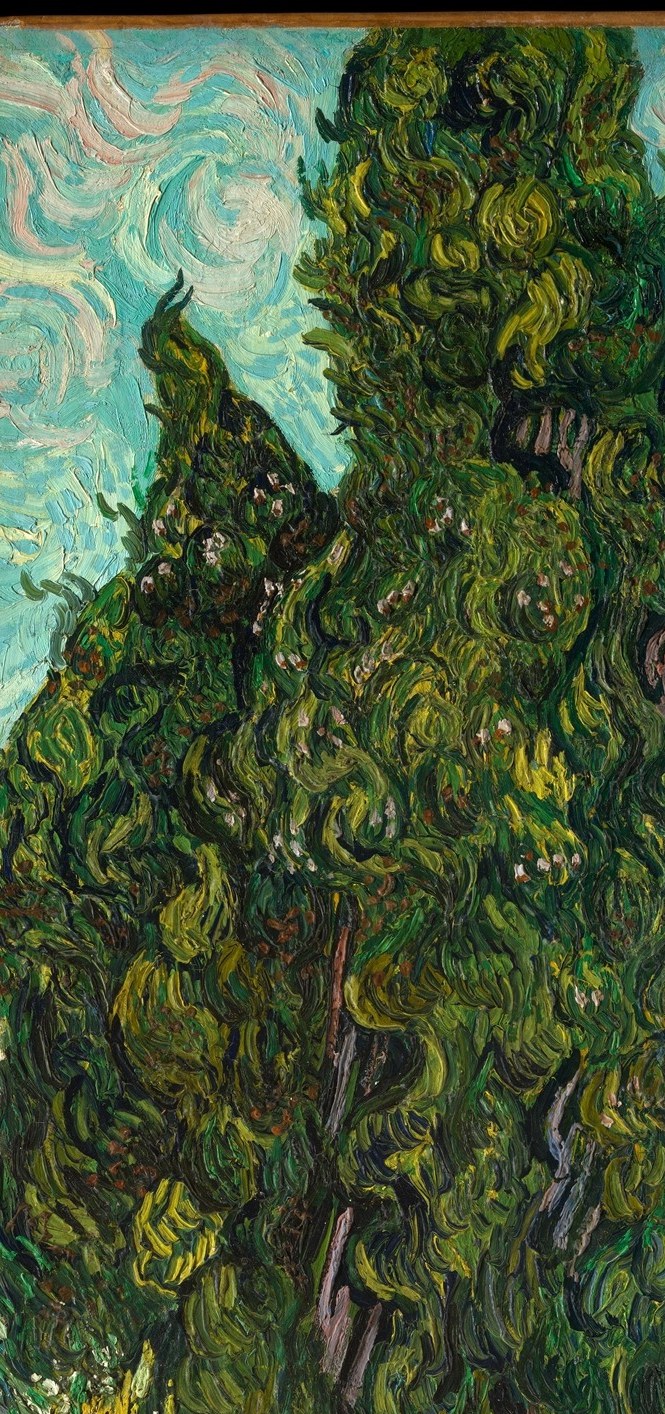
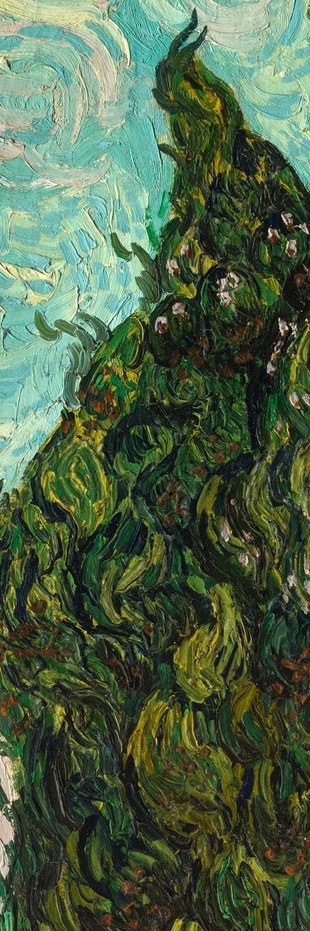
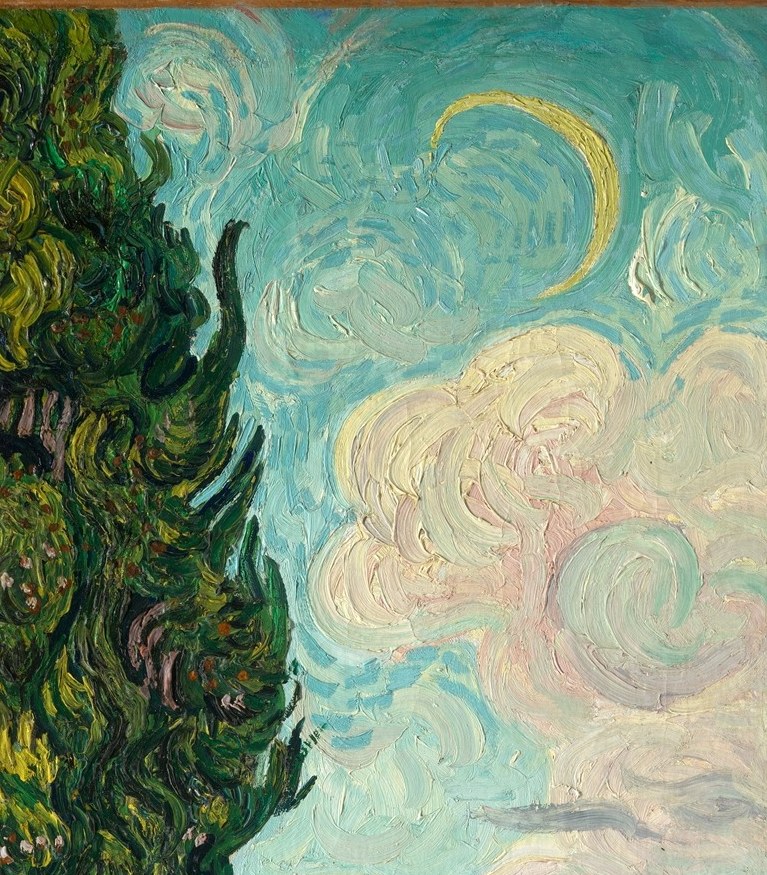
The cypress trees became an immediate fixation. Look at the thick impasto along the dark left edge of the main tree: Van Gogh applied paint so heavily it stands off the canvas in ridges, turning each stroke into a physical record of his gesture. Above, the cloud vortex curls in opposing spirals, making the sky feel like a living force pressing against the trees. The tips of the cypresses stab into the pale air, denying any clear boundary between earth and heaven.
Van Gogh produced around 860 oil paintings in just over a decade, but the cypress motif from this asylum period held special weight for him. He wrote to his brother Theo calling the trees “as beautiful as an Egyptian obelisk,” and defended them against critics who found them too dark or strange. The Met’s $95,000 gamble in 1949 was a bet that this strange beauty would endure.
Today, Cypresses hangs in gallery 822 at the Met. Adjusted for inflation, that record price approaches $1.2 million. By current Van Gogh standards, the museum got one of the great bargains in art history.
Details

Transcript
In 1949, the Metropolitan Museum paid $95,000 for this painting. It was the most they had ever spent on a single work. Van Gogh painted it from the grounds of an asylum. He arrived here in May 1889. By June, he was obsessed with the cypresses. He called them beautiful as Egyptian obelisks. Look at the paint itself. Each stroke is a sculpture. He turned pigment into topography to hold the wind in place. The museum knew: this was the motif he died defending as his best.