Saint Catherine of Siena Receiving the Stigmata by Giovanni di Paolo
Saint Catherine of Siena Receiving the Stigmata, painted by the Sienese master Giovanni di Paolo around 1450, is built around a single astonishing detail that evaporates at normal viewing distance. The painting now lives at The Metropolitan Museum of Art.
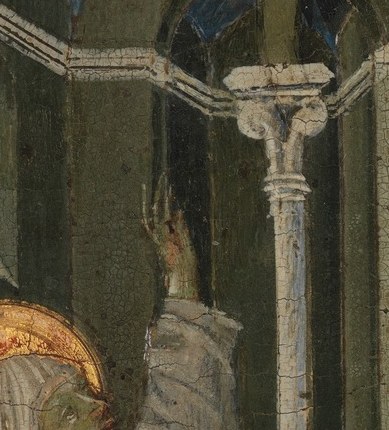
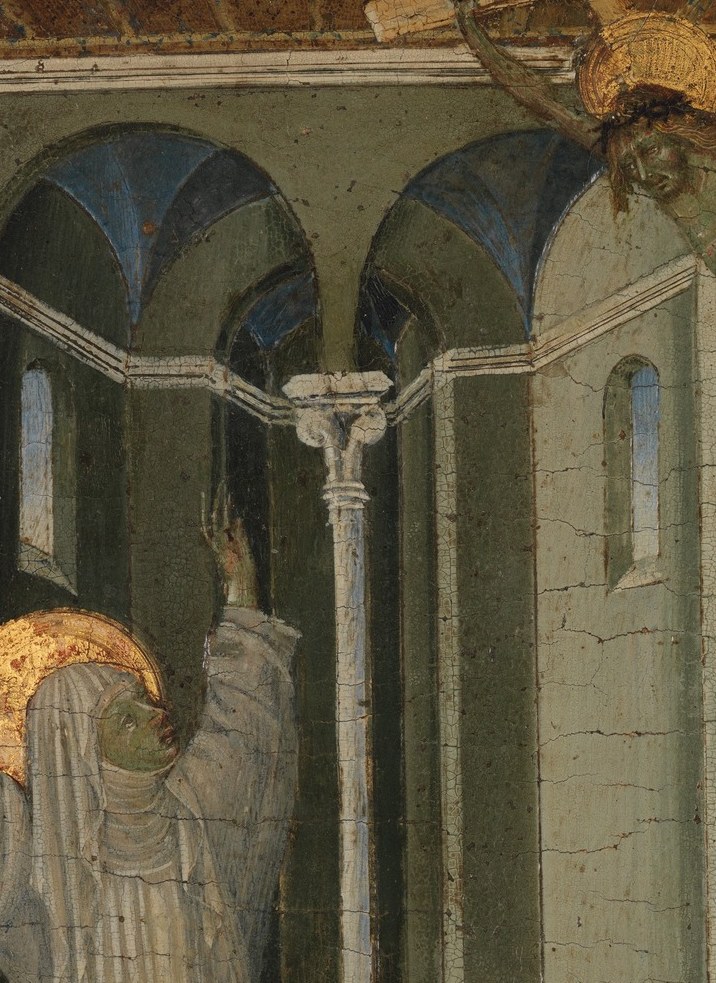
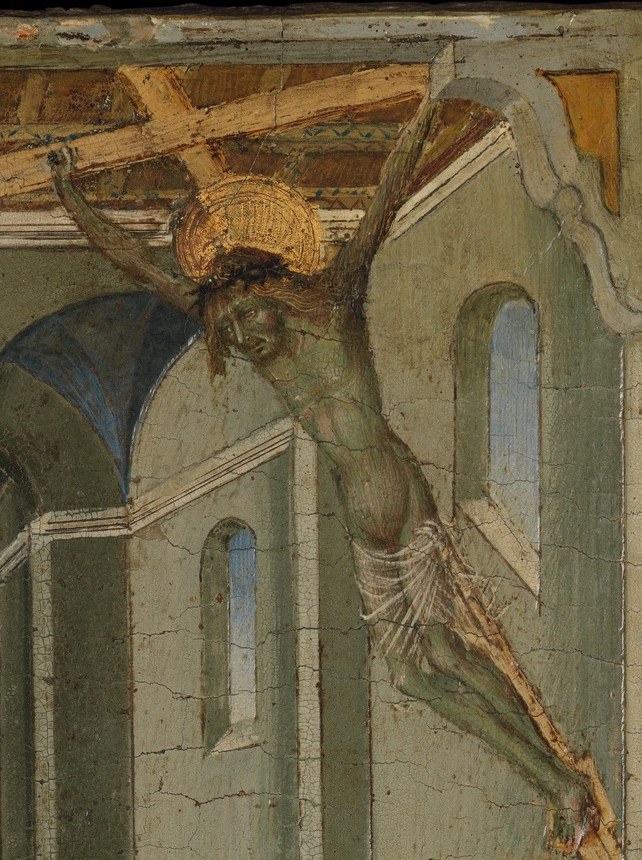
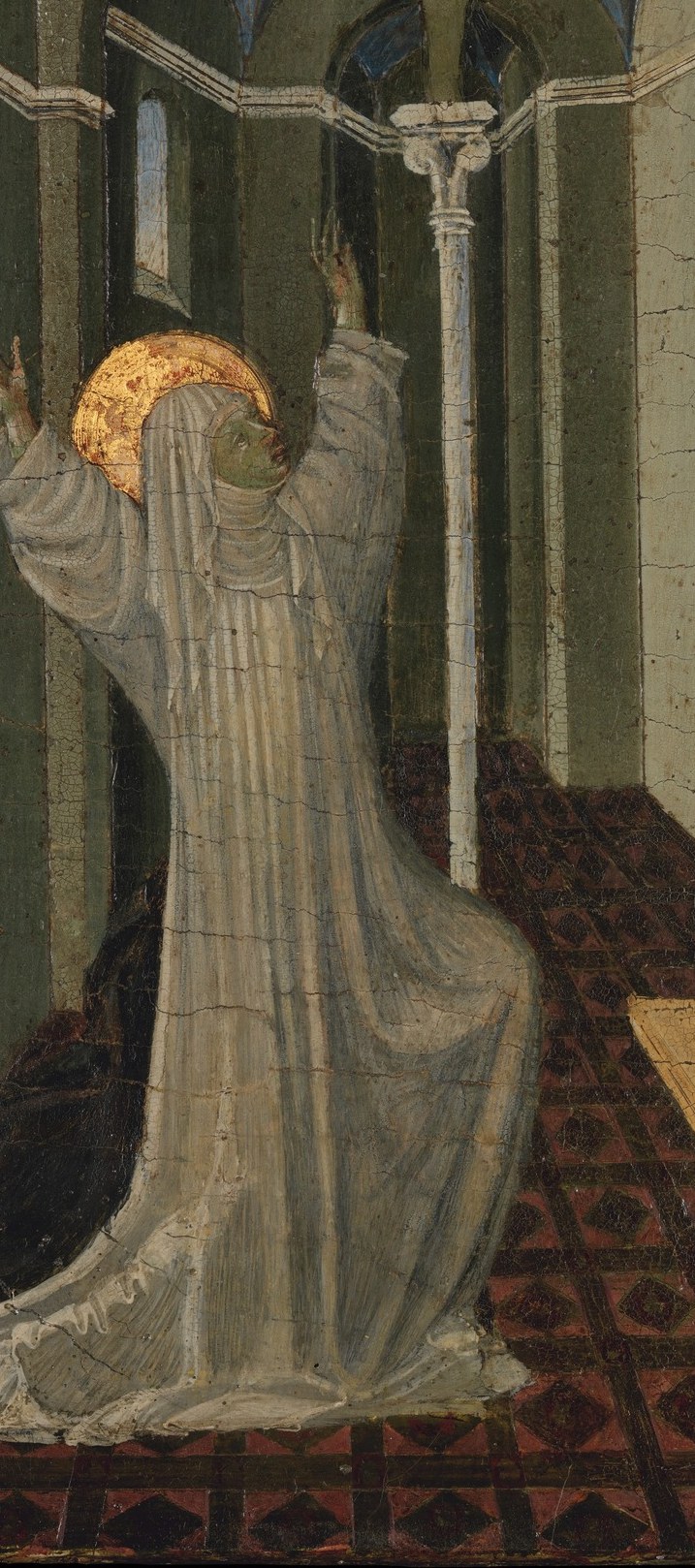
Look between Catherine's raised hands and the floating crucifix above her. Five hair-thin gold rays travel that short gap. They are the stigmata in transit, the exact moment the wounds leap from Christ's body to hers. Giovanni di Paolo made a theological argument physical: the beams are not decoration, they are the mechanism of the miracle.
Catherine of Siena, a 14th-century Dominican tertiary, prayed to feel Christ's suffering fully. In 1375, during a visit to Pisa, she experienced a vision in which five rays of light descended from a crucifix and pierced her body, leaving invisible wounds. Giovanni di Paolo, painting a century later for a Sienese church or private patron, rendered those rays in shell gold so fine they read as a shimmer rather than a mark.
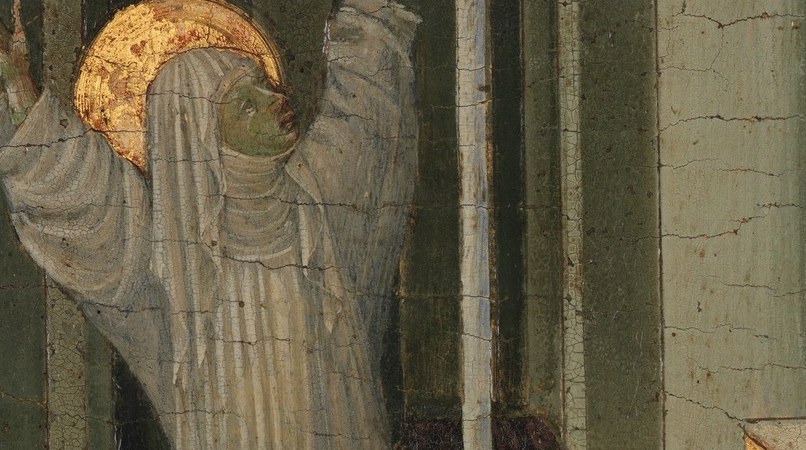
The rest of the painting anchors this weightless moment: Catherine's white Dominican habit billows as though shocked by the contact, and the richly embroidered altar frontal on the right grounds the vision in real chapel space. But everything serves those five short lines of light. Next time you stand before a Sienese panel, look for the gold no one else notices.
Details
Transcript
A nun kneels in a bare chapel. She sees a vision. Catherine of Siena, arms flung wide, face tilted skyward. In 1375, she prayed to share Christ's wounds. Then it happened. Now look carefully between her palms and the cross. Thin gold beams. Nearly invisible at a glance. The painter made the wound-transfer a physical line of light. This is not just a miracle. It is theology drawn in gold.