Self-Portrait in the Studio by Tilborgh the Younger, Gillis van
This is Self-Portrait in the Studio, painted around 1645 by Gillis van Tilborgh the Younger. It is one of the earliest self-portraits by a Flemish teenager who would go on to run a busy workshop in Brussels, and it has spent centuries largely overlooked.
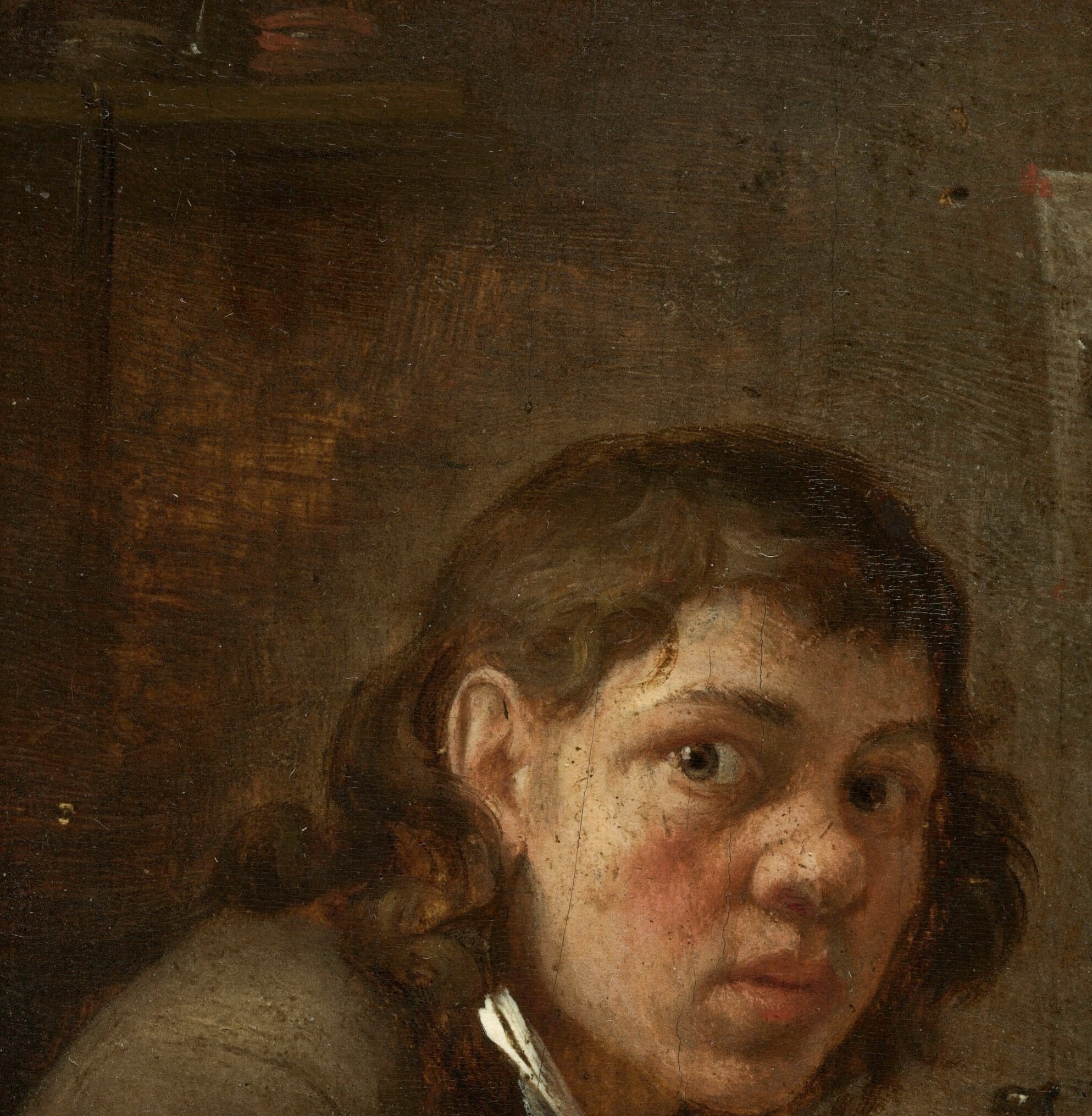
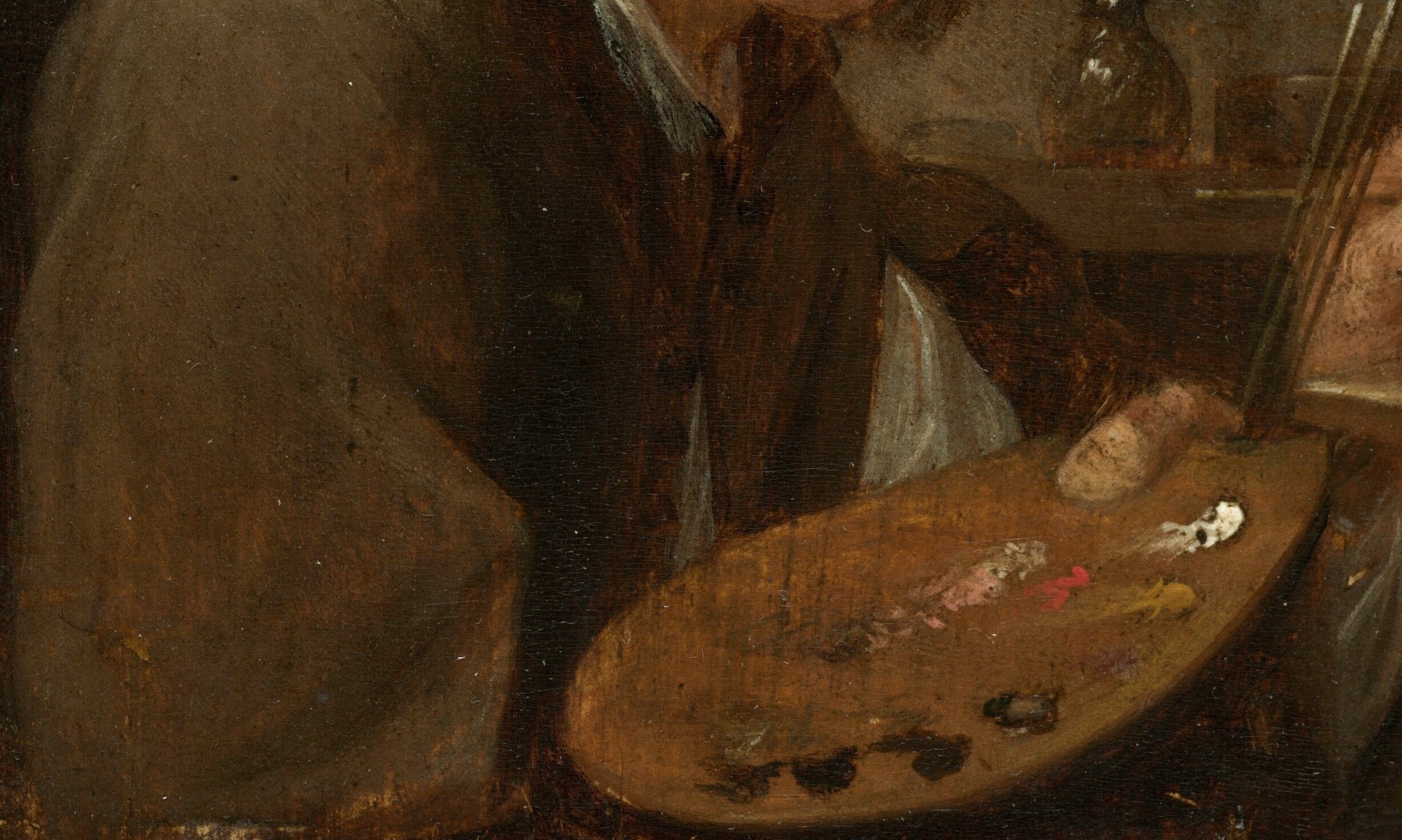
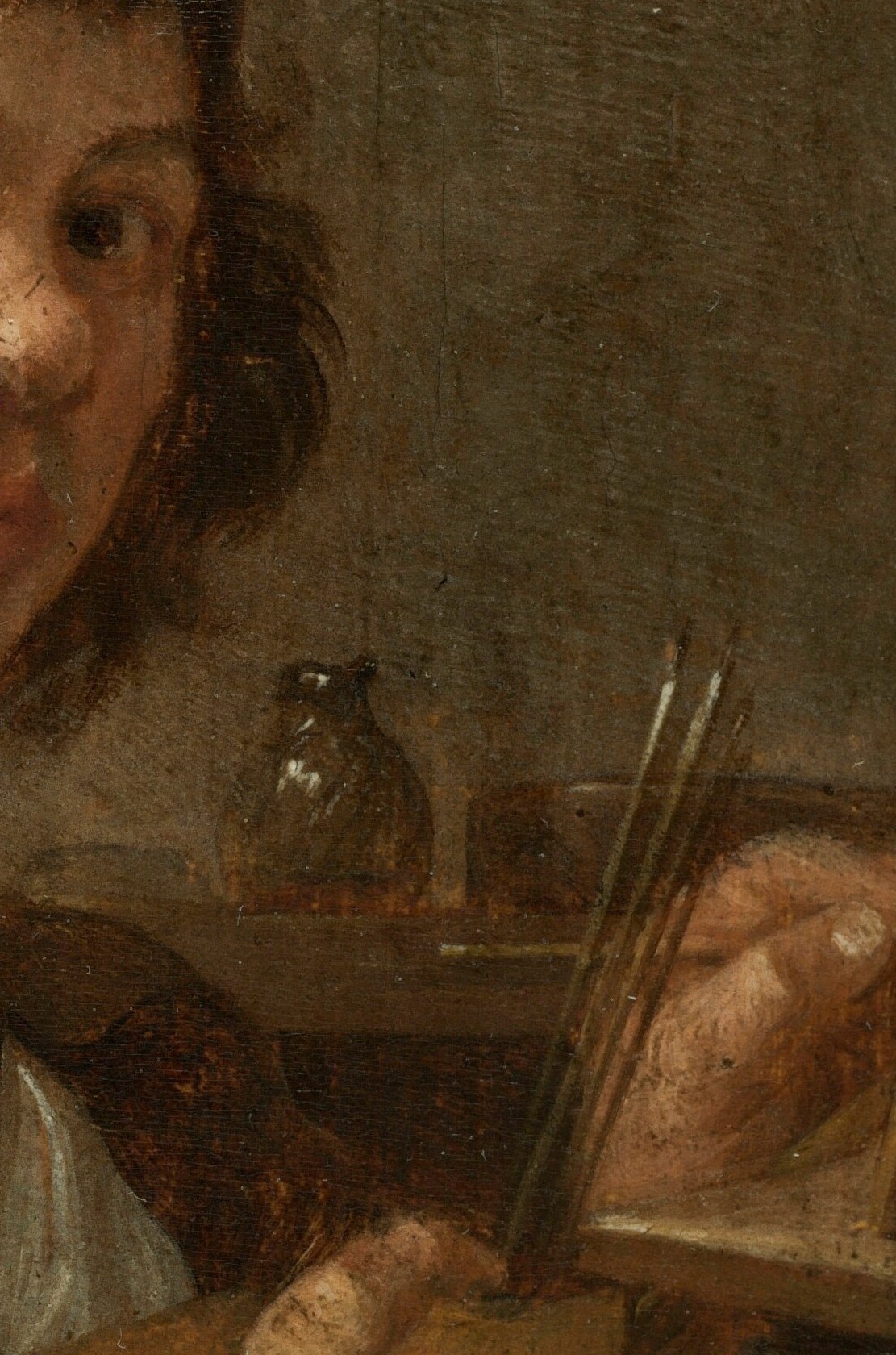
Look first at the boy's face. The direct gaze and the flushed cheeks are unusually naturalistic for the period, this is not an idealized image but a record of a real adolescent in a working studio. His left hand grips the palette and brushes at the very bottom edge of the panel, a trompe-l'oeil trick that collapses the painted space into the viewer's space.
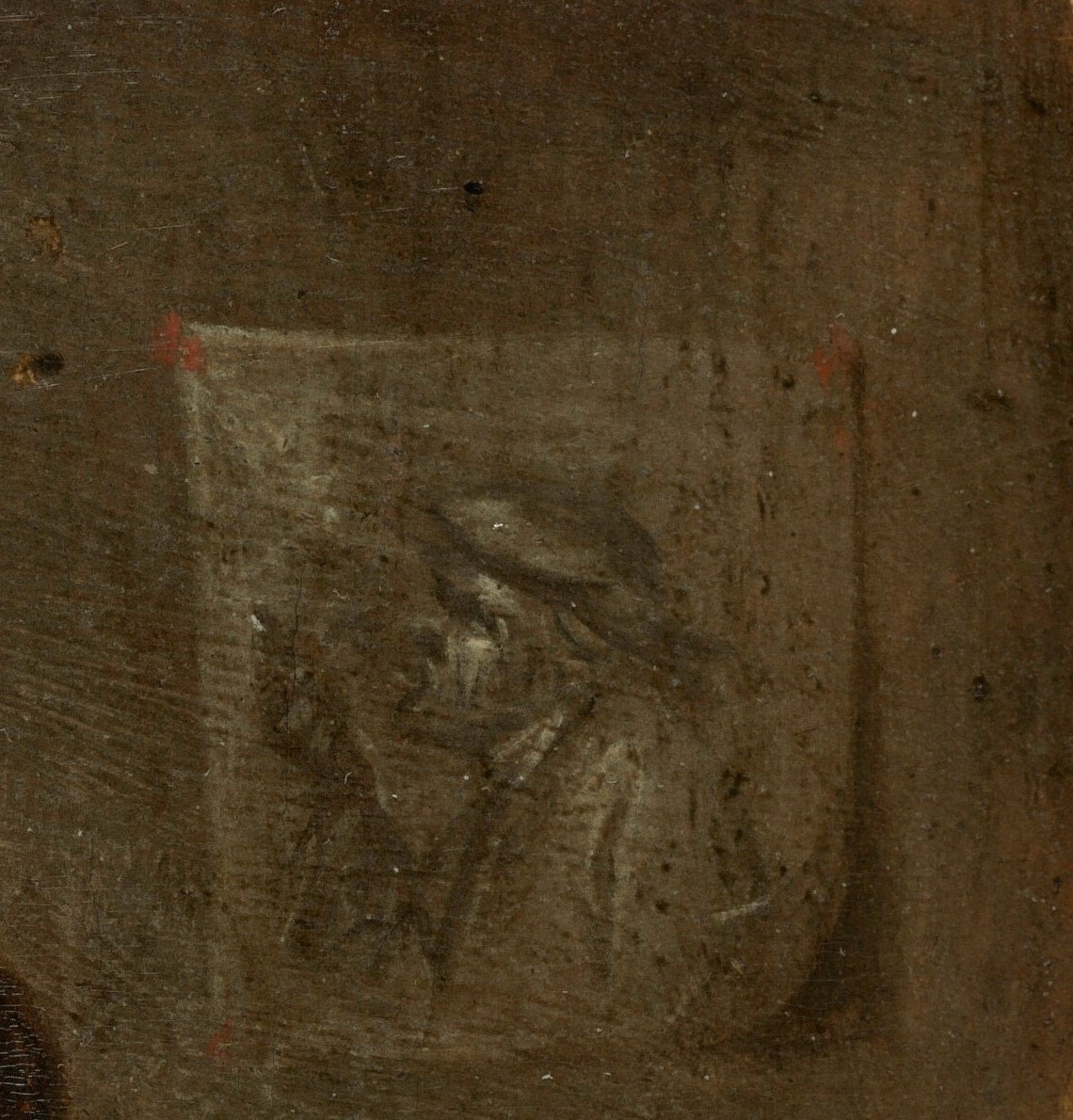
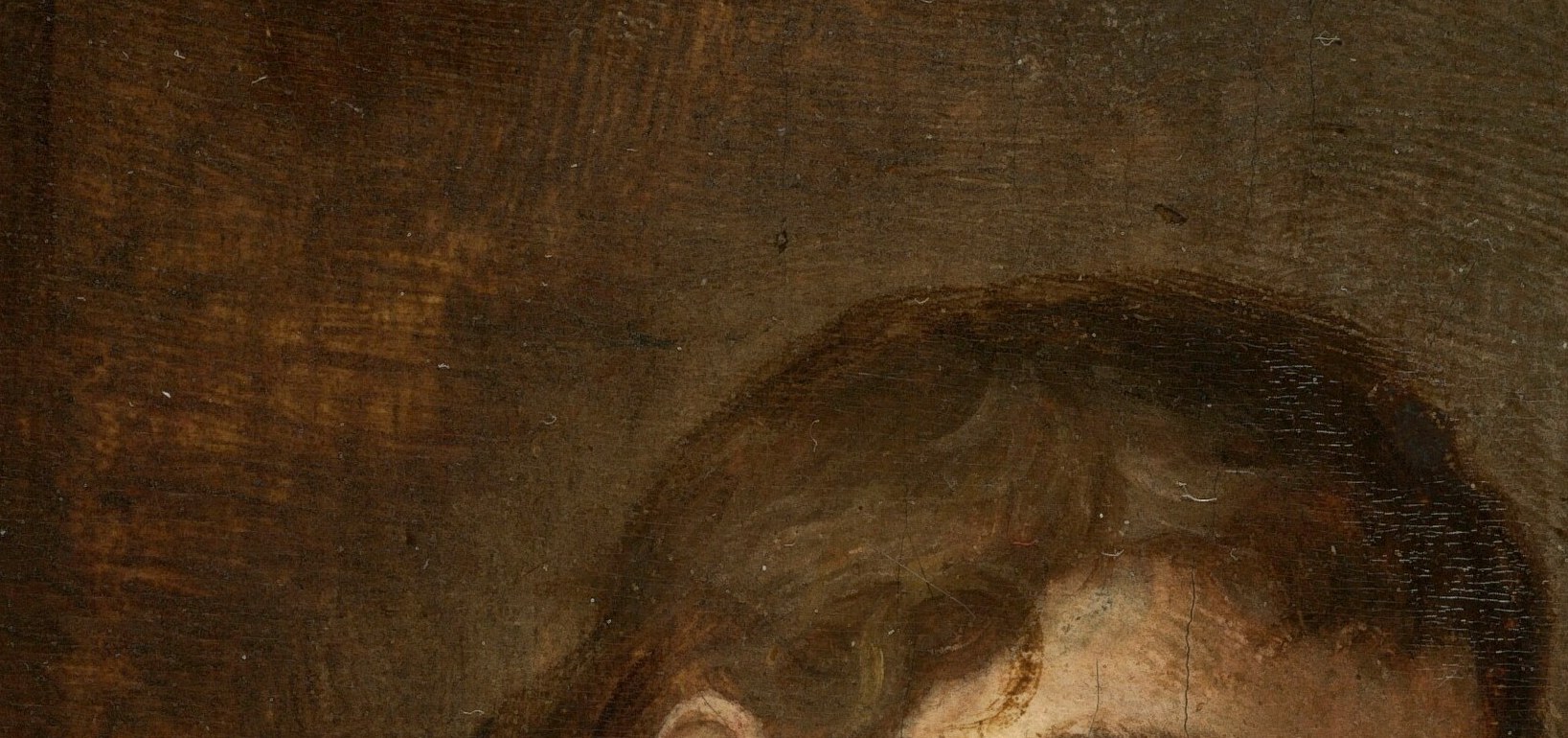
The real hidden detail is in the shadowy upper right. Where the background goes nearly black behind the easel, a second figure is standing in the dark. The shape is indistinct, it could be a studio assistant, a visitor, or perhaps the artist's father, but it is deliberate. Seventeenth-century painters routinely embedded secondary witnesses in the margins of self-portraits as a way of complicating the idea of being seen.
A boy stares out from his own canvas, claiming the role of maker and subject at once, while an unnamed presence watches from the shadows. After you spot that figure, the painting is no longer a solo act.
Details
Transcript
He looks straight at you. He's maybe fifteen. This is a self-portrait, painted around 1645. His name was Gillis van Tilborgh the Younger. He's showing you the tools that make the painting exist. Now look into the shadow behind the easel. There. A second person is standing in the dark. A studio assistant, or a visitor, or even the boy's father. A teenage painter, watching you watch him, with someone at his back.