La Bretonnerie in the Department of Indre by Courbet, Gustave
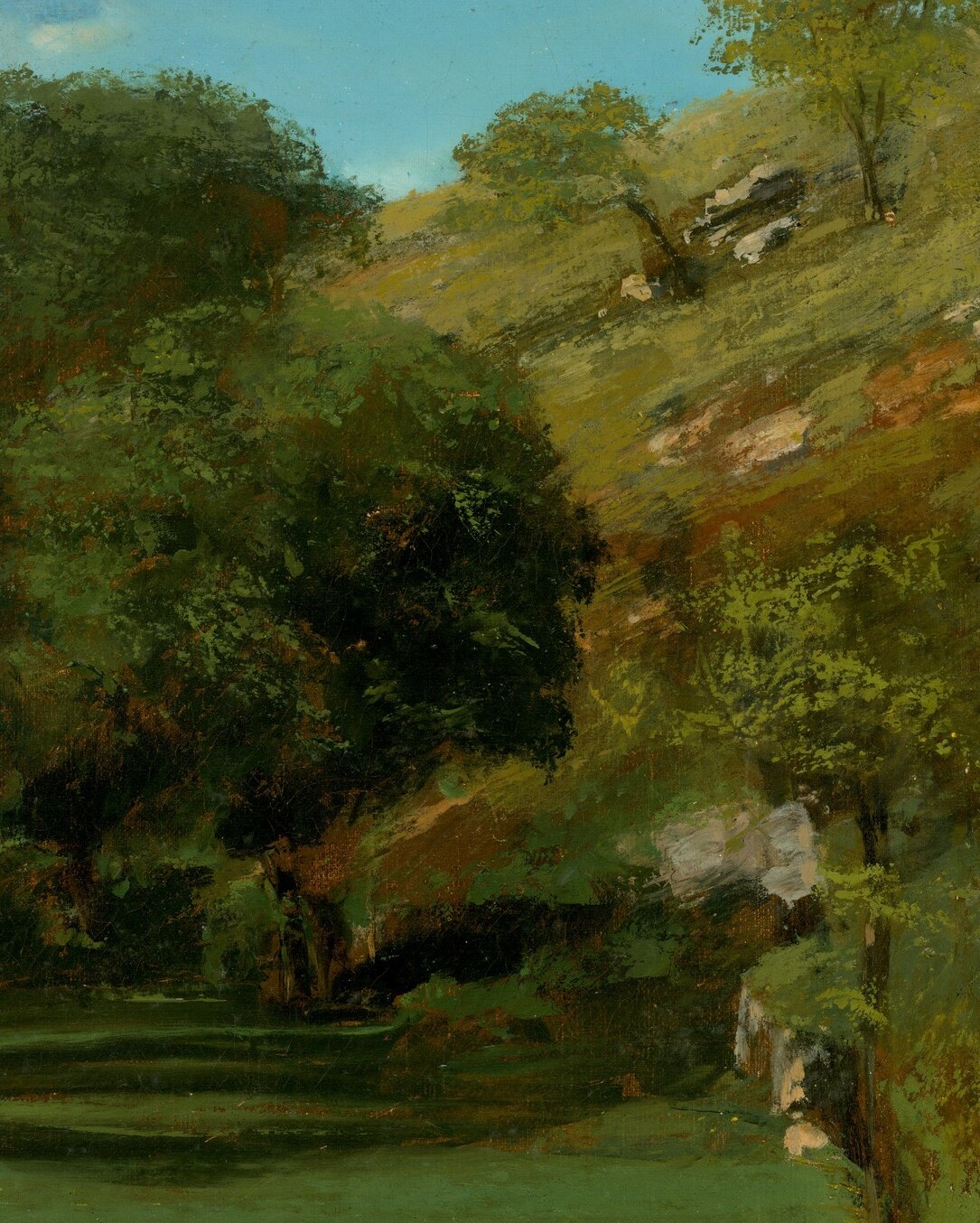
Gustave Courbet's *La Bretonnerie in the Department of Indre*, painted in 1856, is a key example of 19th-century Realism. This oil on canvas, housed at the National Gallery of Art, Washington, D.C., invites us to see the French countryside through the eyes of an artist committed to unvarnished truth.
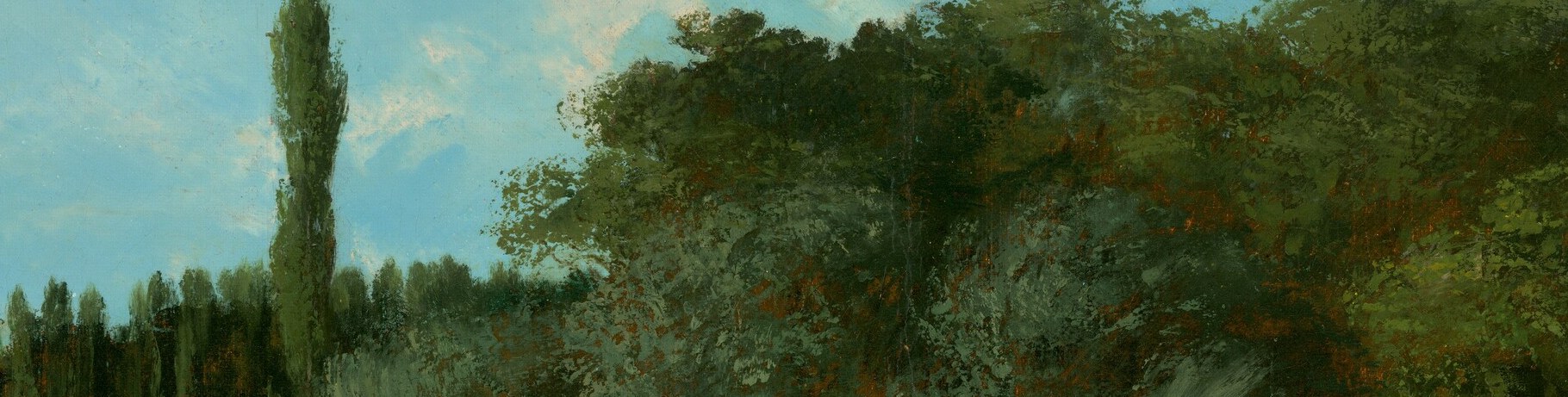
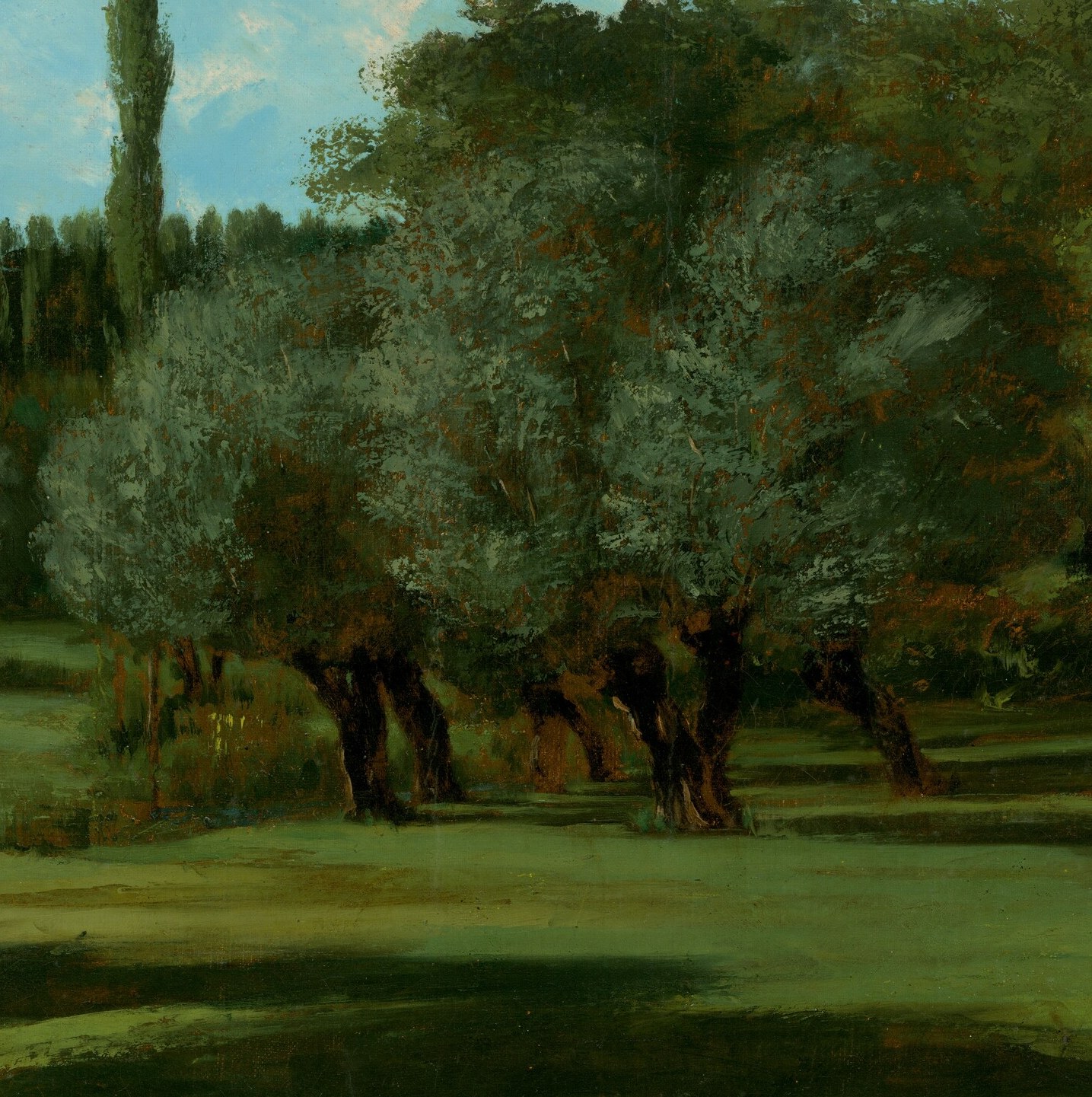
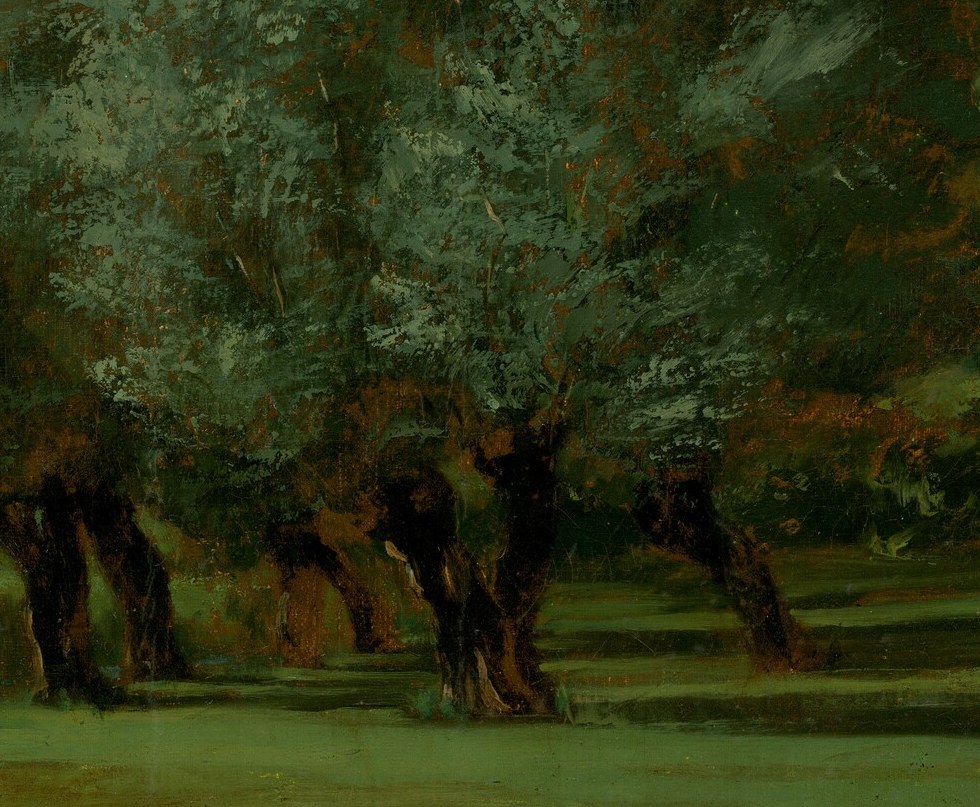
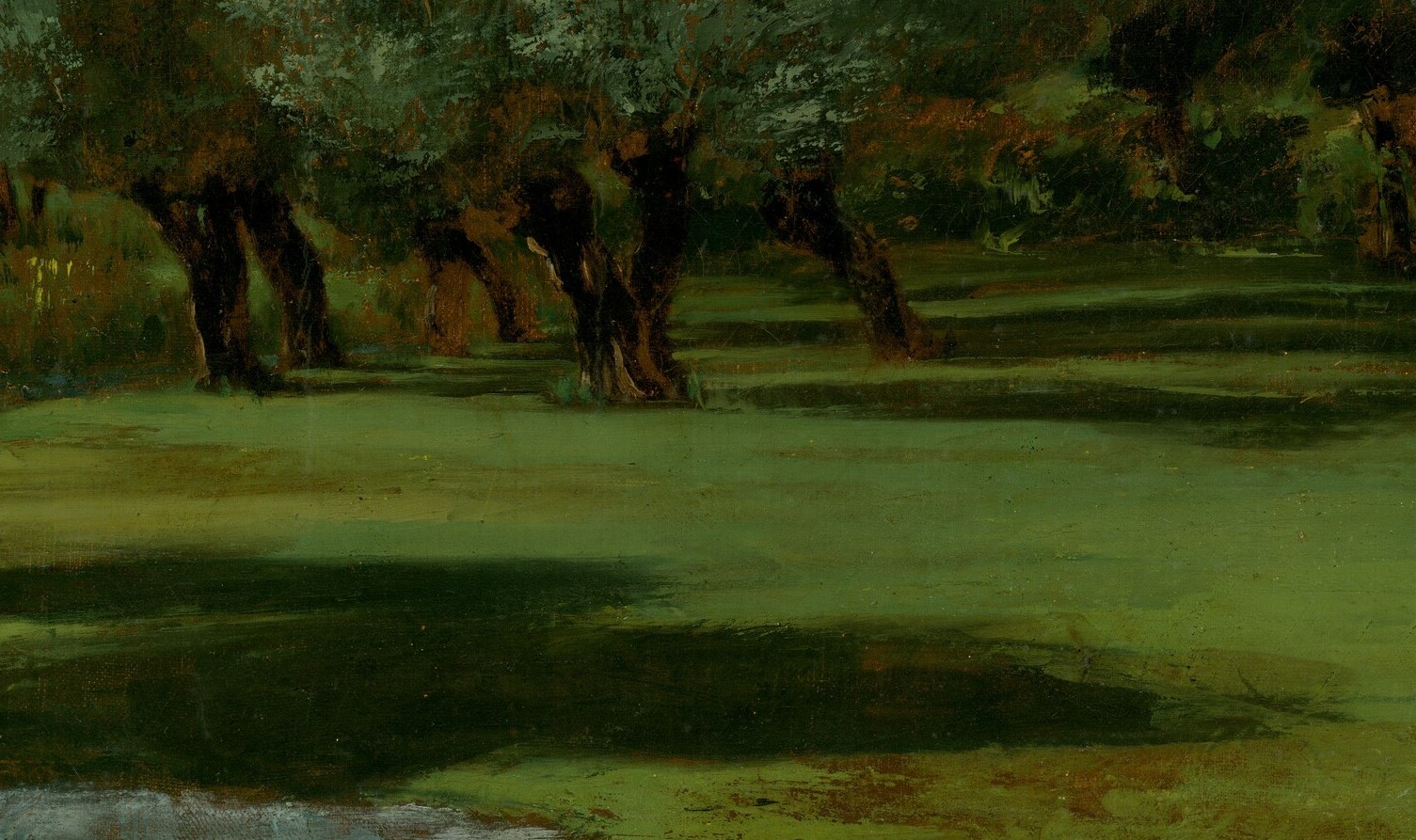
Courbet, a leading Realist, rejected traditional academic styles to depict life as he observed it. In this painting, pay attention to the gnarled oak tree and the dappled light on the leaves and grass. His technique, visible in the thick, rough brushwork, especially in shadowed areas, enhances the painting's sense of materiality and immediacy, giving us a direct connection to the landscape.
Created during Courbet's travels through rural France, this work reflects his dedication to capturing everyday subjects with inherent dignity. It was a bold statement, challenging the era's preference for idealized or heroic scenes.
What do you notice first when you look closely at this depiction of nature?
Details
Transcript
This painting, from 1856, shows the French countryside. It's a typical scene from the Indre region of France. The painter was Gustave Courbet, a Realist. Realists painted exactly what they saw, without idealizing. Notice the thick, rough paint in the shadows. This captured the raw truth of the landscape.