狩野常信筆 潇湘八景図巻|Eight Views of the Xiao and Xiang Rivers by Kano Tsunenobu
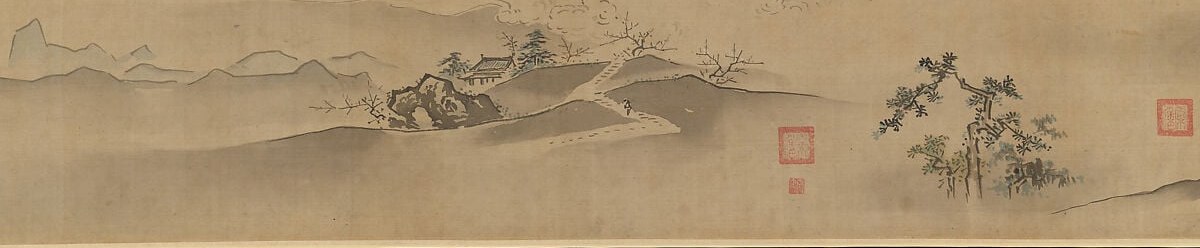
This is a section of a Japanese handscroll painted in 1674 on silk: Eight Views of the Xiao and Xiang Rivers by Kano Tsunenobu. It lives at the Metropolitan Museum of Art.
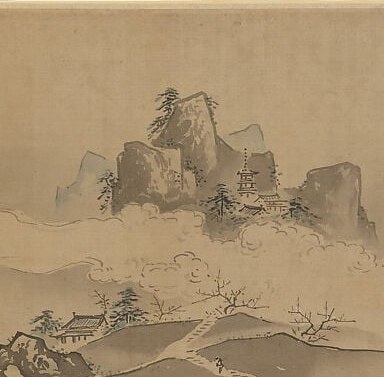
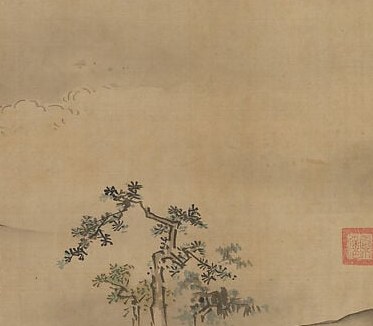
The trick that stops you is the mist. That pale band spanning the lower half of the composition looks like fog settled over water, but it is simply the raw silk ground left unpainted. Kano Tsunenobu graded his ink wash so precisely that the eye fills in atmosphere the brush never touched.
Painting on silk is a high-wire act. The surface is absorbent and quick; a loaded brush deposits ink that feathers and spreads before you can correct it. To carve a clean void out of wet wash, mountain dissolving into cloud, water into air, requires absolute control of the water balance in every stroke. One moment of hesitation leaves a stain where emptiness should be.
Kano Tsunenobu headed the Kano school in Edo at the turn of the eighteenth century, inheriting a tradition that prized ink economy above all. Here, the missing ink carries as much weight as the mountain itself. The scroll was meant to be unrolled section by section, so this quiet opening would arrive as a held breath before the landscape begins.
Details

Transcript
You are looking at a painting on silk. Silk is unforgiving. Wet ink bleeds instantly. Now look at that pale band at the bottom. It reads as fog, water, and empty air. Simultaneously. The painter created depth by leaving the silk bare. One wrong pass of the brush, and the void would vanish. The heavier the mountain, the lighter the air around it feels.