Angel Supporting a Heraldic Shield by http://www.wikidata.org/.well-known/genid/b01263c6160e0913508ff8c0ed32610c
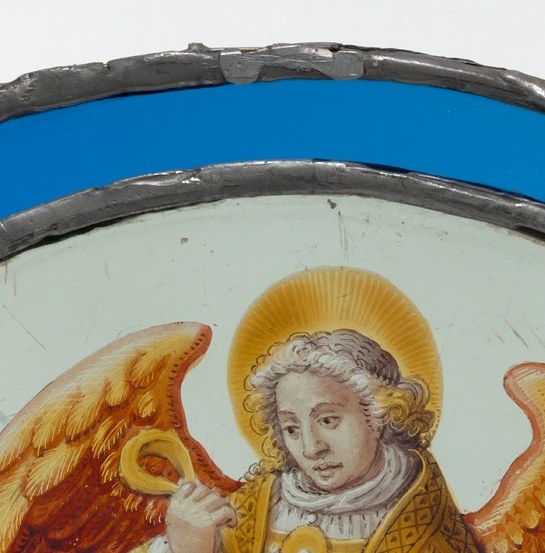
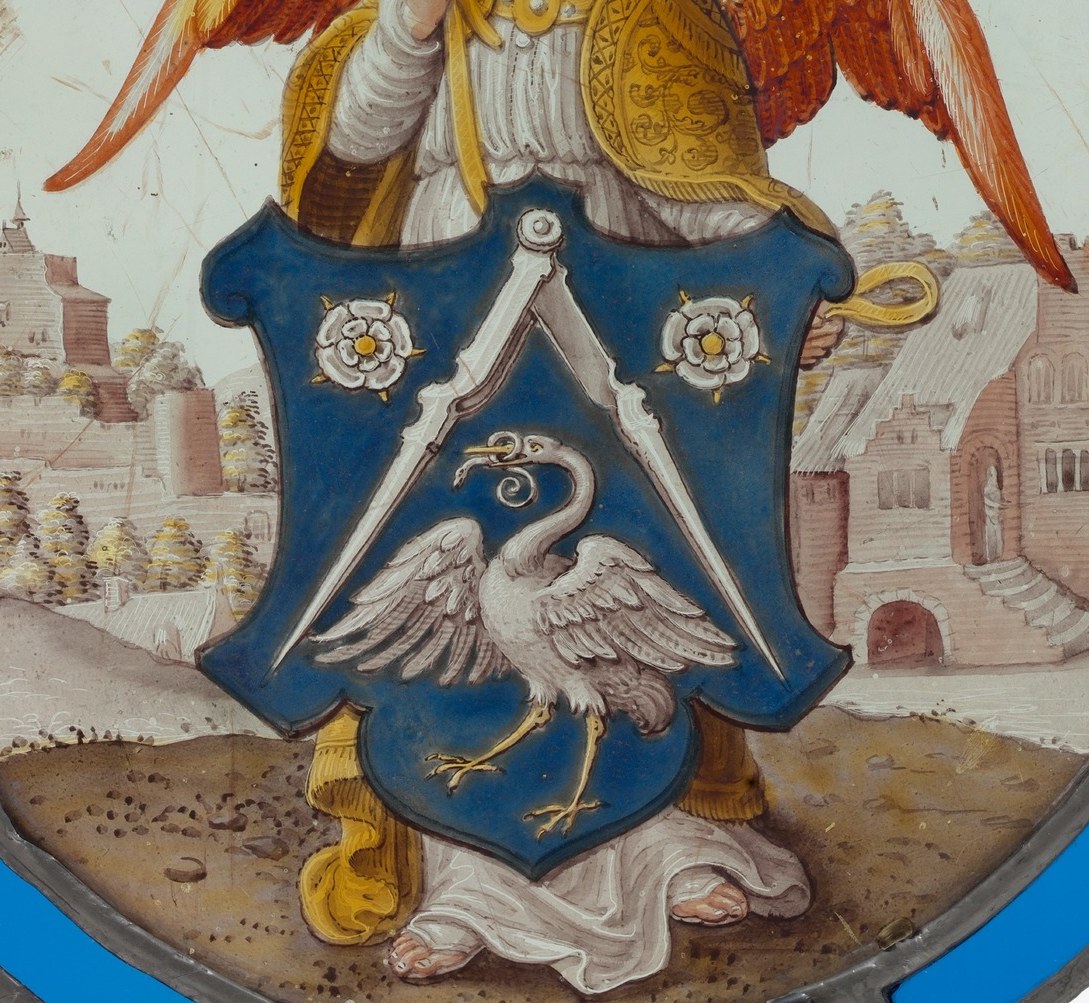
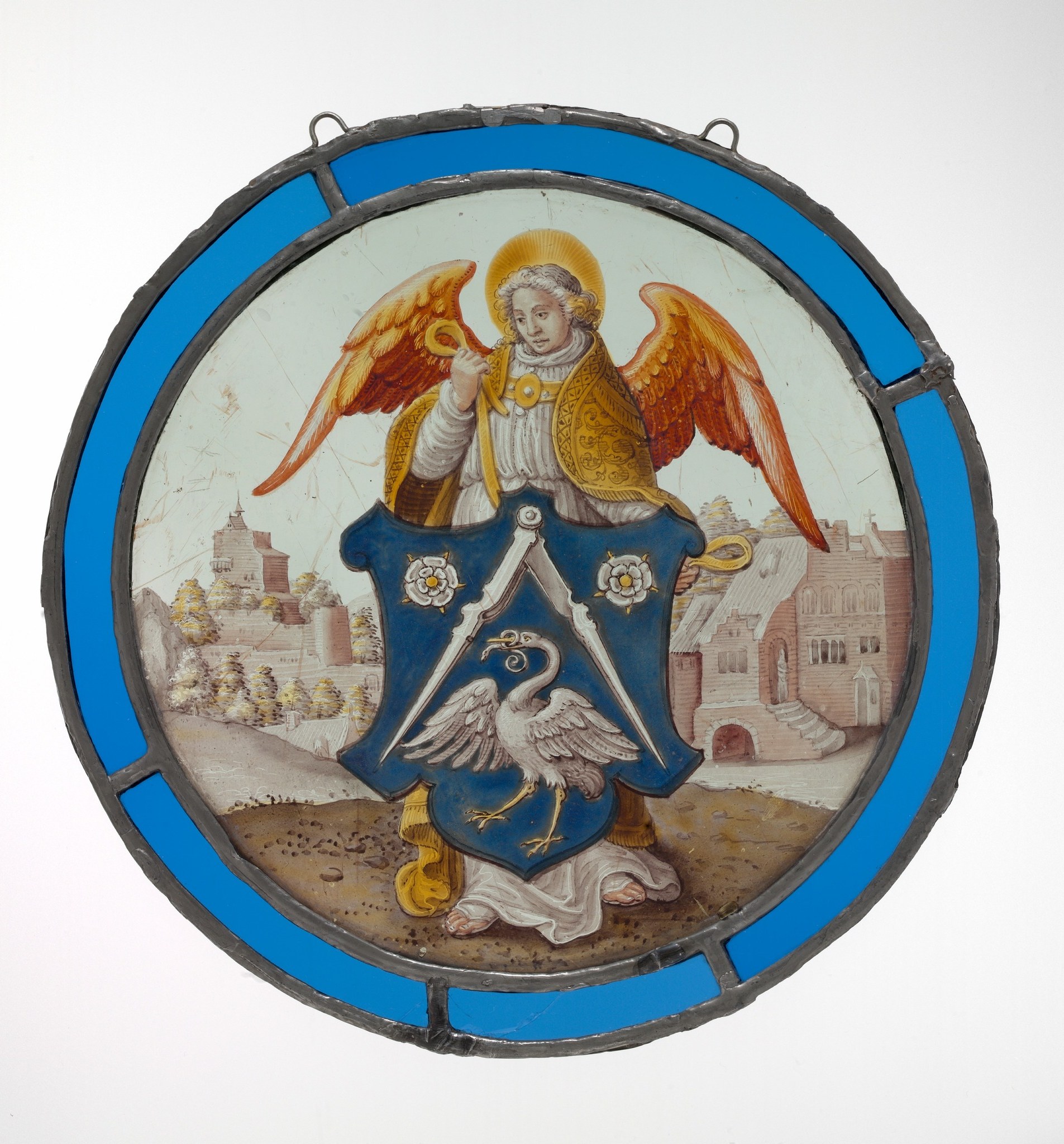
This is "Angel Supporting a Heraldic Shield," a German roundel painted around 1510. It hangs in the Metropolitan Museum of Art as one of the most exquisite surviving examples of late-medieval heraldic glass.
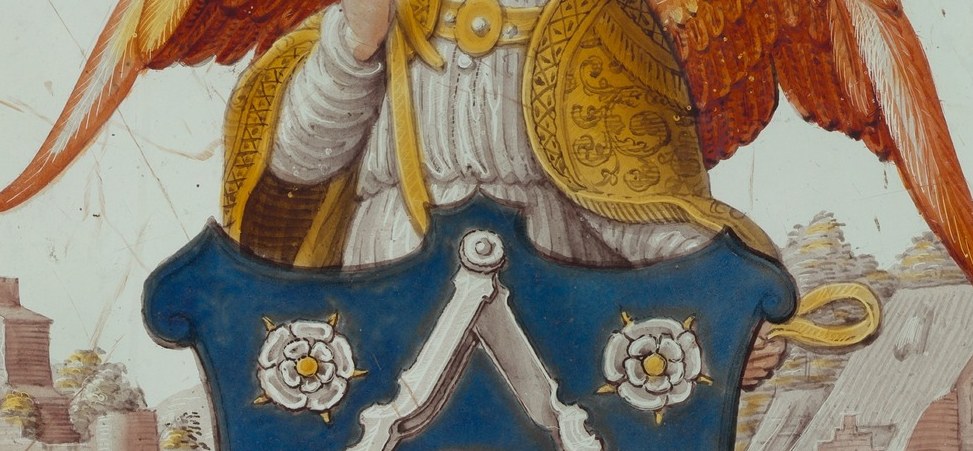
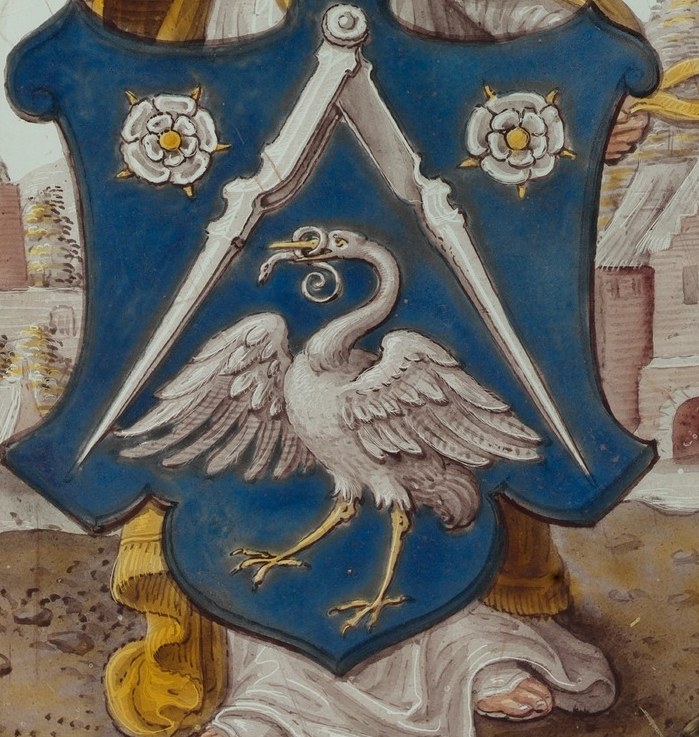
Look first at the angel’s hands. They grip the shield’s top edge, not hovering in adoration, but actively presenting. Every detail from the bird’s stance to the blue rosettes in the corners is a legible sign. A swan meant purity; a heron meant vigilance. The angel-bearer herself declares that this family’s status was divinely ordained.
The medium is the real surprise. That bright blue outer ring shows visible structural divisions, this is not a panel painting but stained glass, likely made for a domestic window or a small chapel. The circular format was fashionable in Southern Germany and Switzerland at the dawn of the 16th century, and the artist lavished expensive azurite pigment across the glass to signal both celestial rank and the patron’s wealth.
The family has never been identified with certainty. The bird remains the key, swan or heron, and the church spire at the right margin may hold a clue about where they lived. A 500-year-old puzzle, still waiting for someone to look closely enough.
Details
Transcript
This is not just an angel. It is a 16th-century heraldic machine. Her hands grip a shield. She is the bearer. In Renaissance heraldry, an angel-bearer meant divine sanction. On the shield: a white bird standing in profile. A swan meant purity. A heron meant vigilance. Identify the bird, and you identify the family. A code, painted in azurite and gold, holding a lineage in place.