A Small Tobos Village by Catlin, George
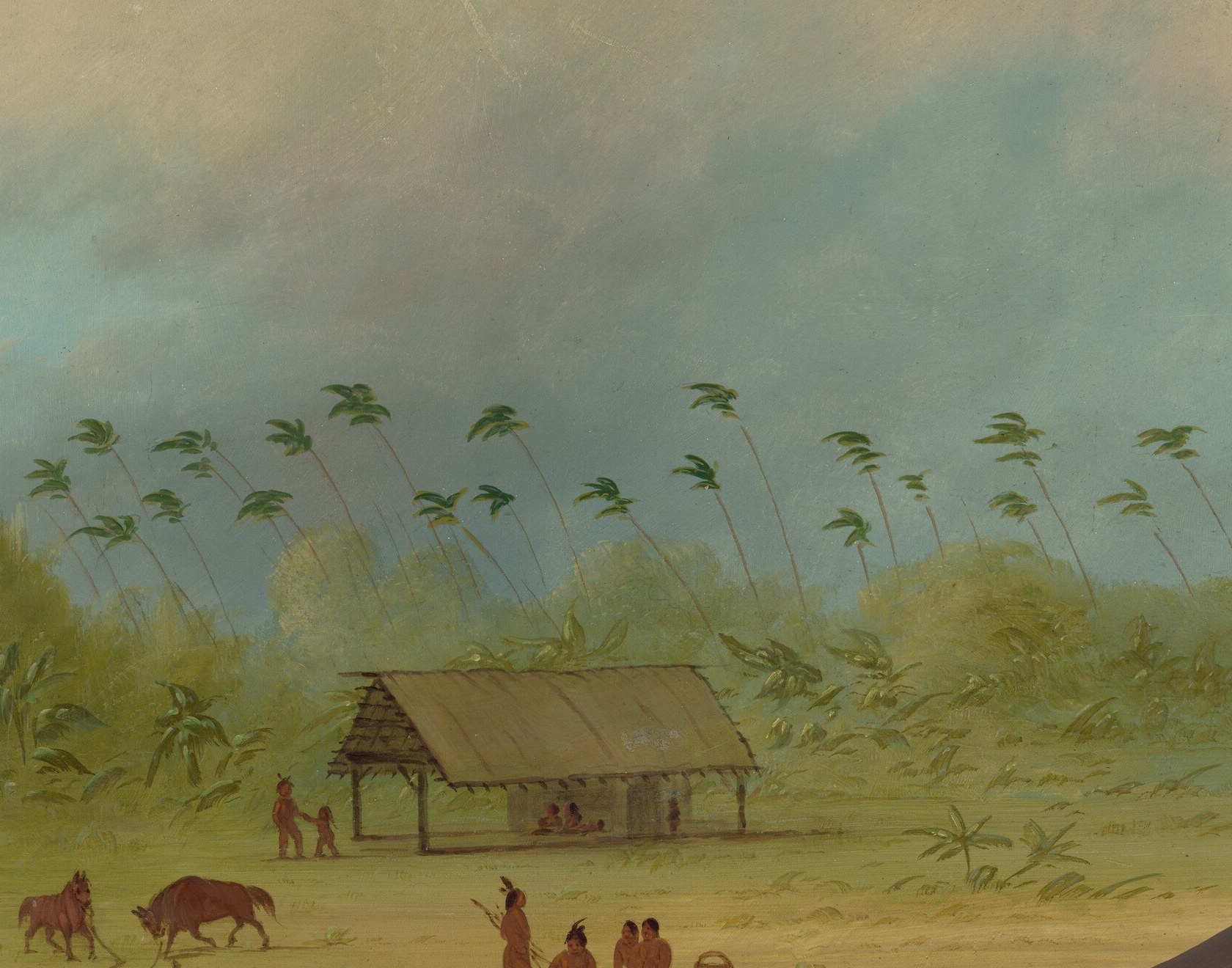
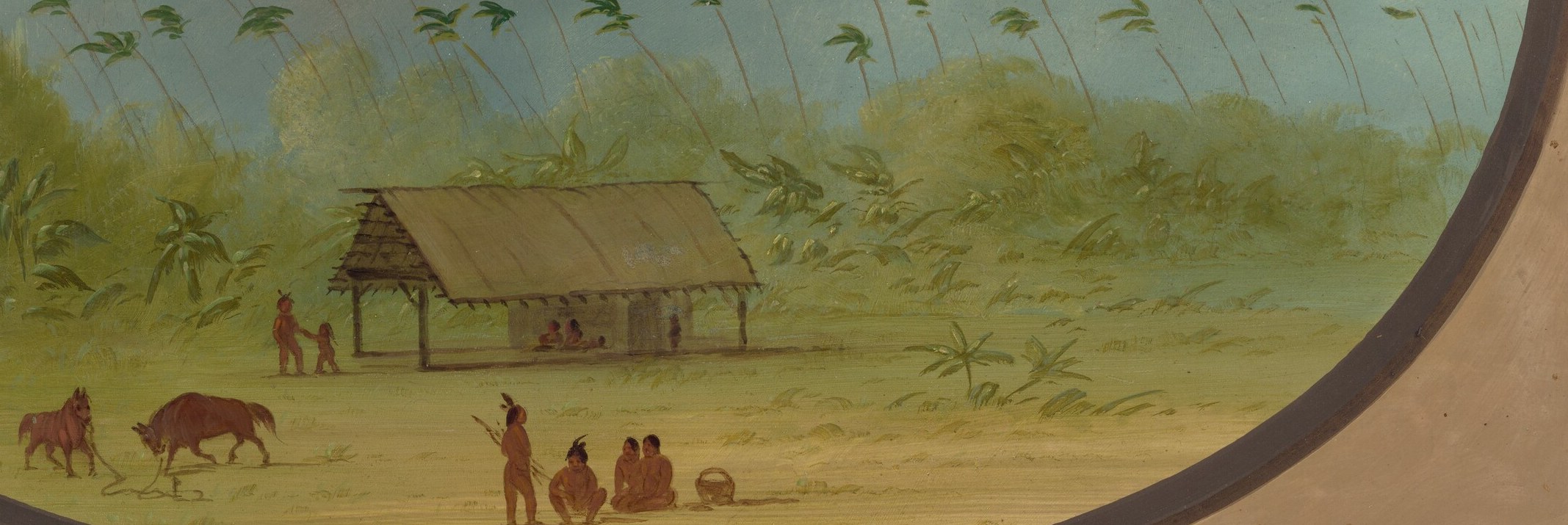
George Catlin painted A Small Tobos Village in 1862, but the scene lived in his mind far longer. Catlin was a lawyer who became a painter and spent the 1830s traveling the American frontier five times, documenting the lives of Plains Indians in portraits and landscapes. This small oil on card, now mounted on paperboard, belongs to his later years, when his crowded frontier scenes gave way to quieter, more solitary images.
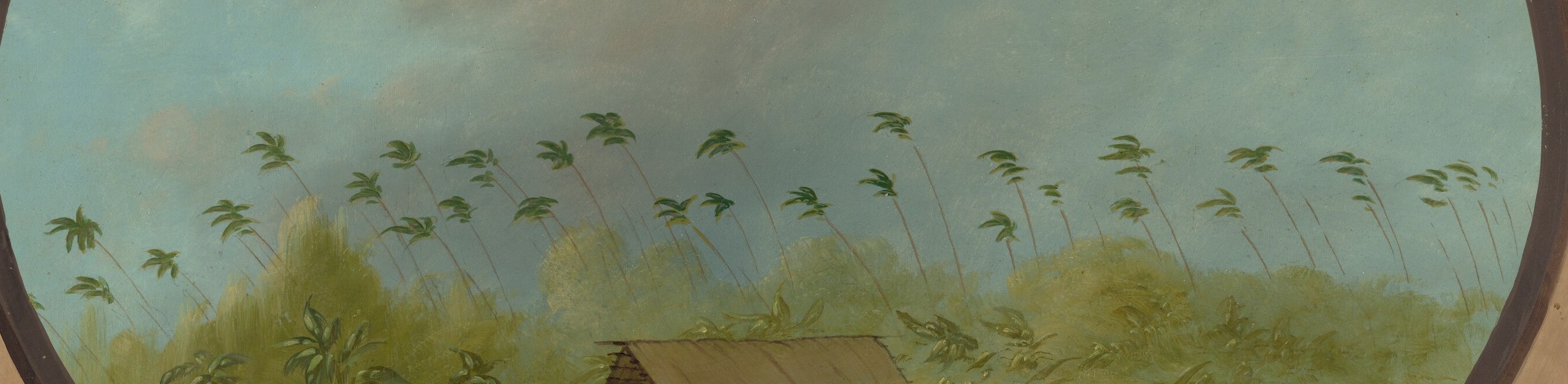
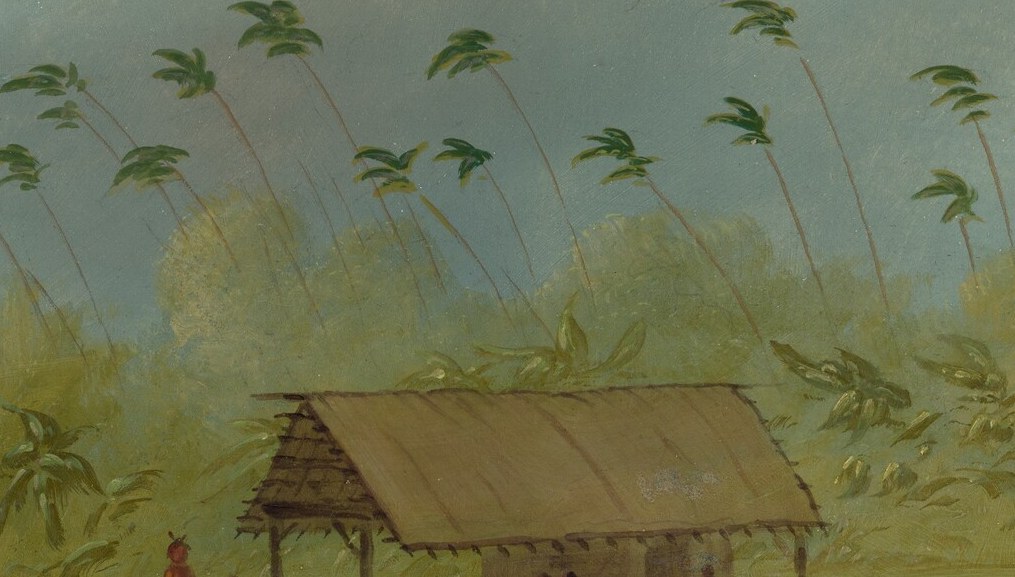
Look at the tree at the center. Its trunk is thick, its canopy wide and leafy, and Catlin gave its bark and leaves precise attention. The modest thatched structures and the few seated figures beneath it feel almost secondary. The tree does the work of holding the memory together. In the distance, wind-swept palm trees lean into the open sky.
Catlin had returned east long before he painted this. The 1830s fieldwork was decades behind him. This painting is not a document made on the spot; it is a recollection, finished on a modest piece of card. A Tobos village he saw once, and then carried with him.
Some paintings are records. This one is a return.
Details
Transcript
This is a village the painter carried in his memory for thirty years. George Catlin traveled the frontier in the 1830s, painting Plains Indian life. He filled notebooks with scenes he could not let go. This one tree holds the whole composition together. Sturdy, spread wide. It shelters everything beneath it. The village sits quietly in its shadow. A few figures rest. Catlin finished this painting in 1862. He had been back east for decades. A place he saw once, returned to on a small piece of card.