八橋図屏風 |Irises at Yatsuhashi (Eight Bridges) by Ogata Kōrin
A pair of shimmering gold screens by Ogata Kōrin, painted after 1709, was stolen from a Tokyo museum in 1964 and recovered in an unlikely place: a small jazz bar called The Check.
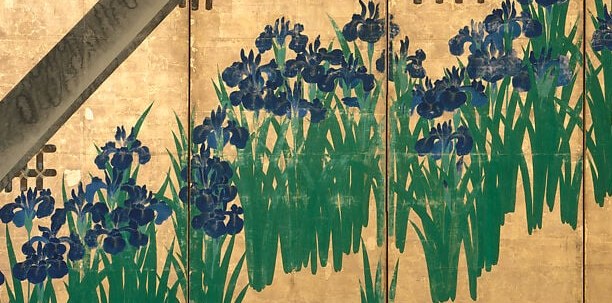
Look at the screen itself and the theft makes a strange kind of sense. The gold leaf background eliminates depth entirely, turning the whole marsh into a luminous, timeless void. The irises are not botanical studies but flat heraldic shapes in mineral blue. This is an object that glows in low light, you can see why someone wanted it behind a bar.
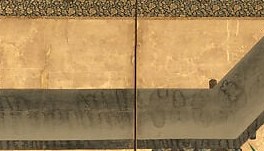
Kōrin painted this as a direct reference to the Tales of Ise, where the poet Ariwara no Narihira stops at a place called Eight Bridges, named for its zigzagging walkways through the irises. The bridge planks here are abstracted to near-geometry, but a Japanese viewer would recognize the shape immediately. The painting is as much literature as it is decoration.
After its recovery, Irises at Yatsuhashi returned safely to the museum. It remains one of the definitive works of the Rinpa school, and proof that great art does not always stay quietly on the wall.
Details


Transcript
Tokyo, 1964. A museum guard locks up for the night. By morning, this national treasure screen is gone. The wooden bridge marks the famous Eight Bridges from the Tale of Ise. The irises are not just flowers. They are pure pattern. Police search for weeks. Nothing. Then a tip: look inside a jazz bar called The Check. Behind the bar, illuminated by neon, the gold leaf still glowed.