Landscape by George Inness
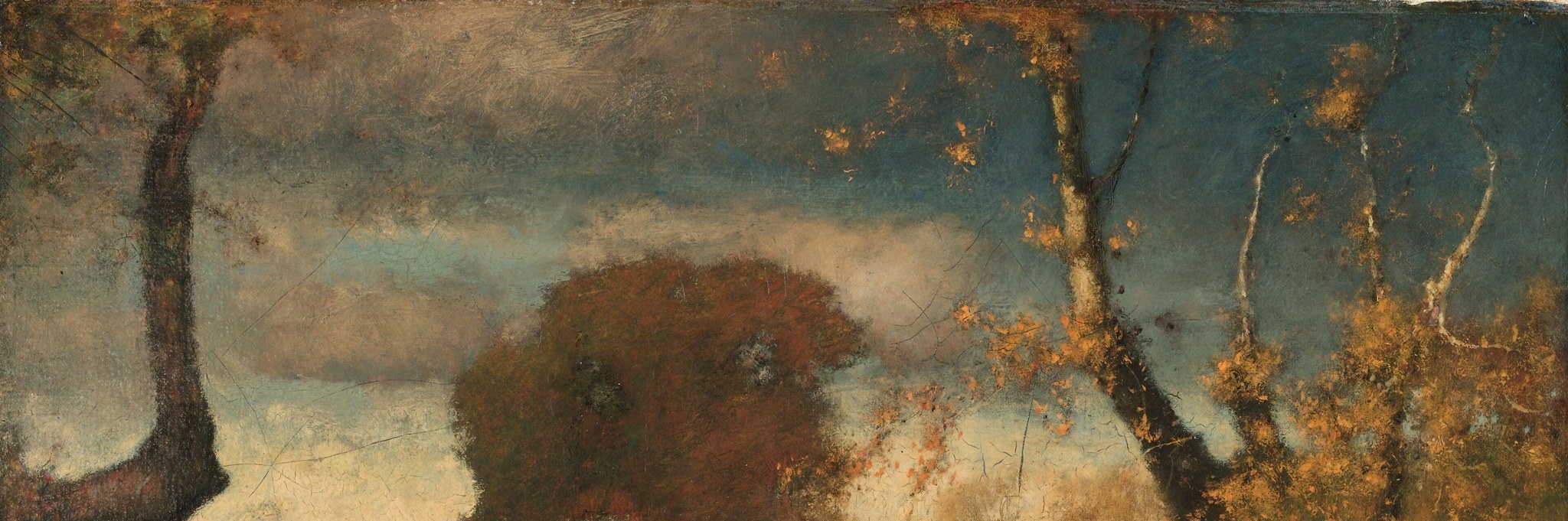
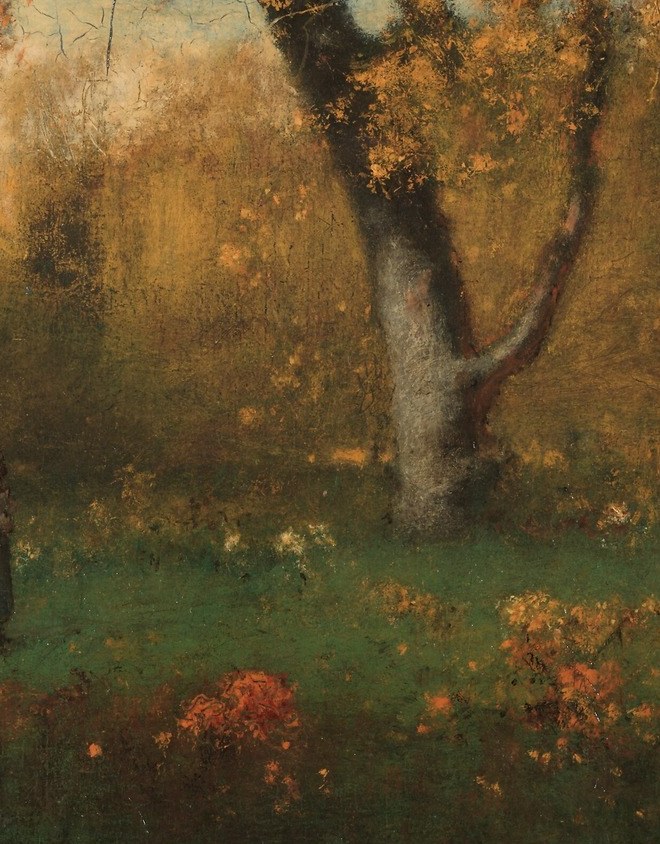
George Inness's "Landscape," painted around 1888, is a serene example of his later work, now held at The Cleveland Museum of Art. This painting moves beyond mere depiction, inviting viewers into a contemplative experience through its soft atmosphere and evocative use of color.
Observe the vibrant red foliage of the central tree and the gentle, blurred quality of the sky. Inness achieved this luminosity and depth by applying multiple thin layers of oil paint, a technique known as glazing, which allows light to interact subtly with the colors beneath.
Inness, a pivotal American landscape painter, evolved from the Hudson River School's detailed realism to a more subjective style after studying European masters. His mature works, like this one, are often imbued with spiritual themes derived from the theology of Emanuel Swedenborg, aiming to capture both the earthly and ethereal essence of a place.
This painting beautifully illustrates Inness's ambition to create scenes that resonate with mood and emotion, inviting us to look deeper into the quiet grandeur of nature.
Details

Transcript
This American landscape was painted late in the artist's life. He moved from detailed realism to atmospheric, spiritual scenes. Look closely at the rich, warm color of these autumn trees. The artist used many layers of oil paint to create this glow. His work was deeply influenced by Swedish spiritual philosophy. He sought to combine the physical and the spiritual in one view.