Virgin and Child on a Crescent Moon by http://www.wikidata.org/.well-known/genid/419a7cb5588ca928fd897549018992dc
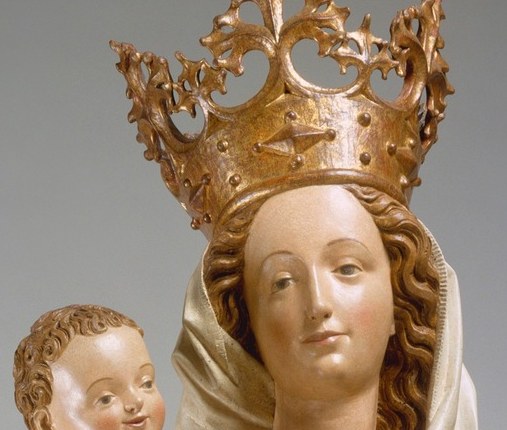
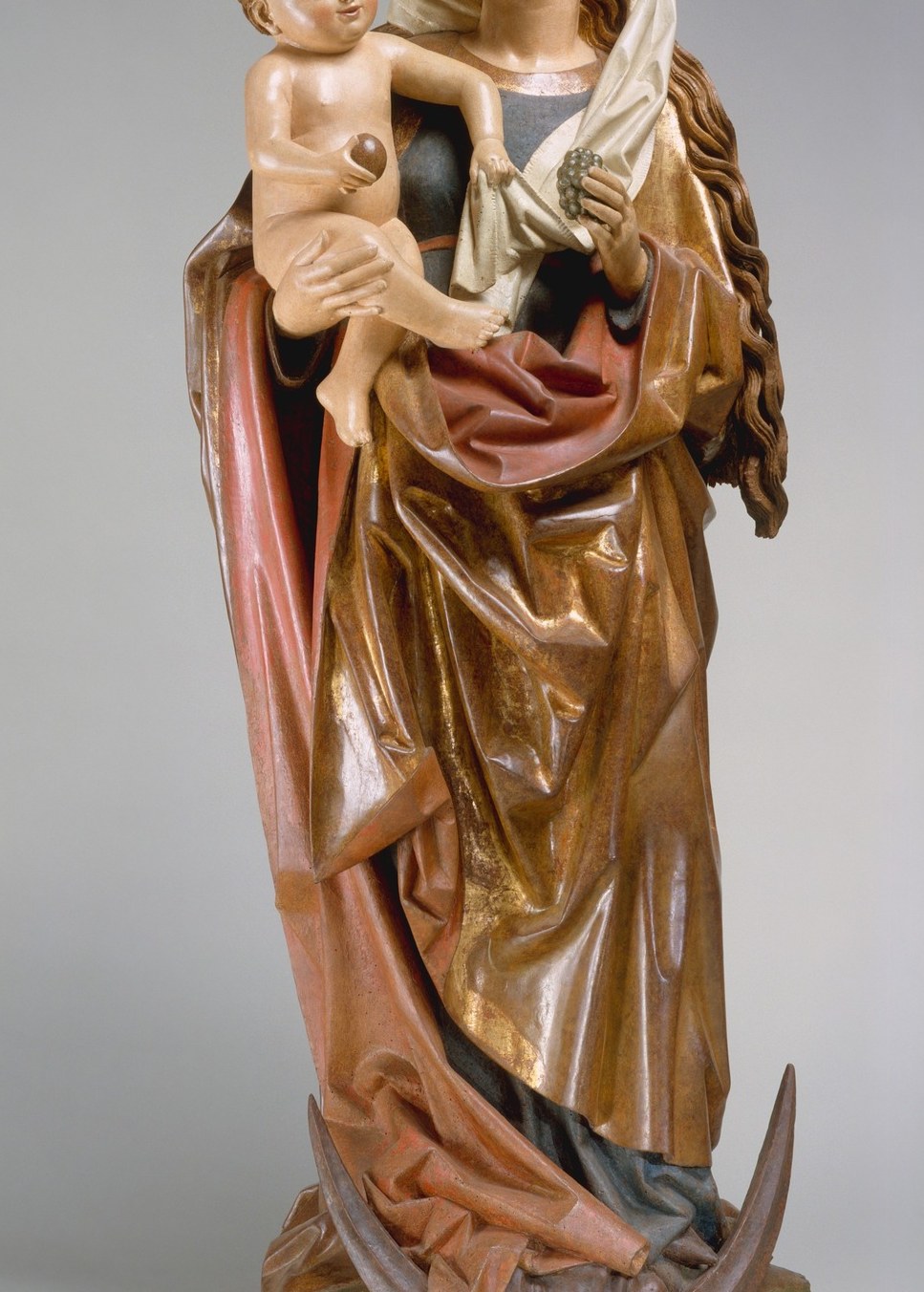
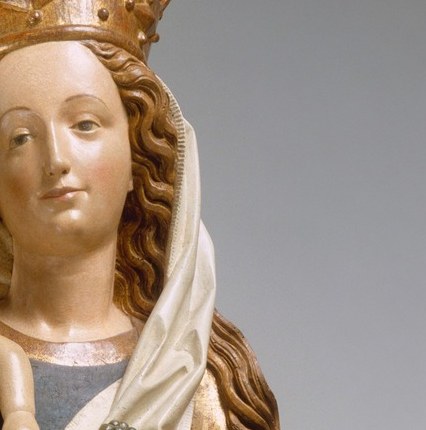
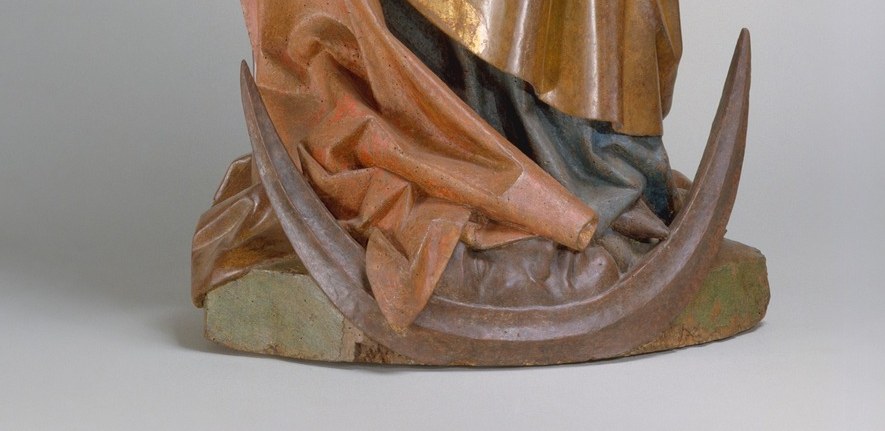
This is "Virgin and Child on a Crescent Moon," carved by an unknown Rhenish sculptor around 1480. At first glance it reads like any late Gothic Madonna, gilded, serene, standing on a moon. The surprise is tucked into the Christ Child's hands.
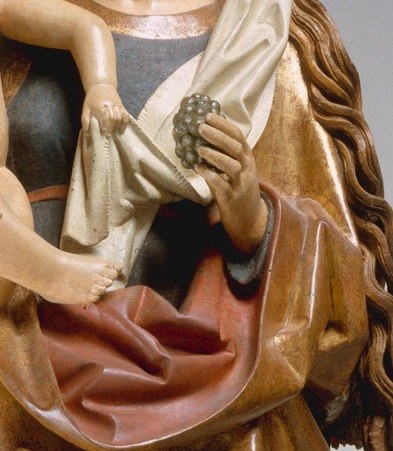
Look closely at the dark form he holds. It is a European goldfinch. In Renaissance iconography the goldfinch had a very specific job: its red face spot and its diet of thistle seeds made it a symbol of the crown of thorns and the Passion. Painters and sculptors across Northern Europe slipped this bird into images of the infant Christ as a quiet prophecy, a death omen cradled by the child himself.
The sculpture belongs to a regional workshop in the Upper or Middle Rhine. You can see the workshop's hand in the deep angular folds of the robe, carved to catch raking candlelight in a church interior, and in Mary's particular downturned face, a local facial type repeated across surviving examples. The polychrome painter added an unusual warm pink mantle lining, a chromatic accent most workshops did not bother with.
Everything about this piece is painted wood, but the carver understood how to make pigment and shadow simulate the weight of stone and cloth. Next time you see a Madonna and Child, check the infant's hands. The smallest object is rarely an accident.
Details
Transcript
She looks like any serene Virgin and Child. But this is no generic holy picture. The sculptor carved gilded robes so deep they feel like solid stone. Now look at the dark shape in the child's hands. It is a goldfinch. The bird that eats thorn seeds. In countless Renaissance paintings, the goldfinch foretells the Passion. So the infant holding it is already cradling his own death.