Marchesa Brigida Spinola Doria by Rubens, Peter Paul, Sir

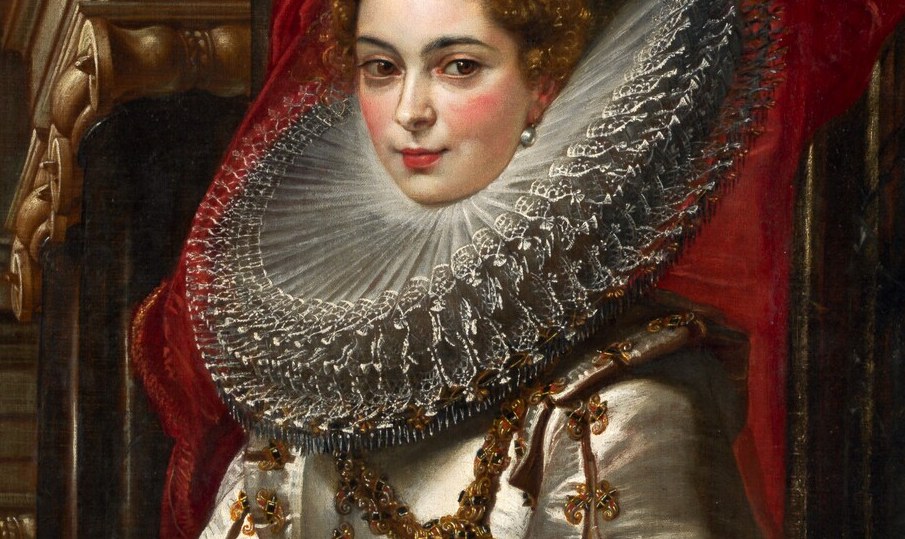
What looks like a standard aristocratic portrait is actually a fragment of a much larger picture. Rubens painted Marchesa Brigida Spinola Doria in 1606, shortly after her marriage into Genoa's powerful Doria family. The work now hangs in the National Gallery of Art in Washington, D.C., part of the Samuel H. Kress Collection.

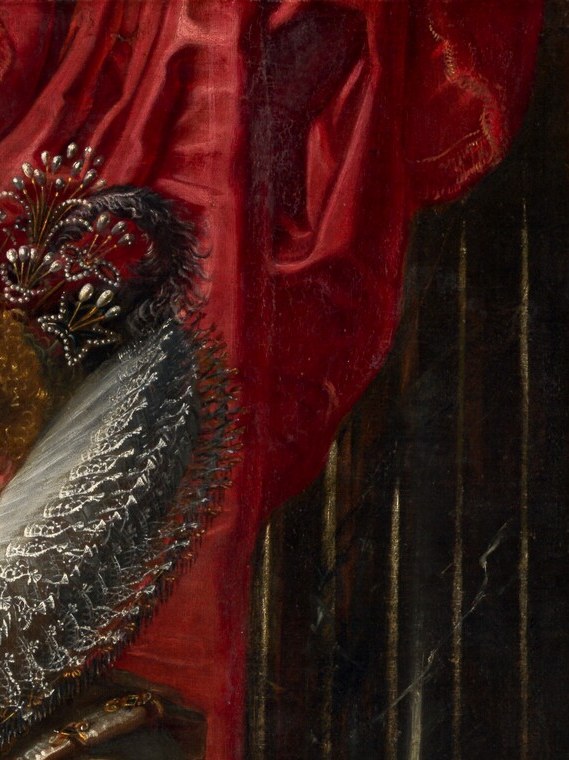
Look for the clues. On the left edge, a stone pilaster is cut off mid-column. Behind her right shoulder, a curtain billows over what was once a deep garden vista. These are not decorative choices. They are the amputated edges of an original full-length portrait set in a palatial loggia, a format Rubens used for his grandest Genoese commissions.

At some point, likely to fit a new interior or frame, the canvas was trimmed on all four sides. The lower portion of her skirt was removed, and the garden that once framed her disappeared almost entirely. What remains is a portrait that feels like a bust when it was designed to be a full architectural statement of dynastic power.

Brigida herself outlived her first husband, who died in 1613, and remarried another Doria. Her painted garden did not survive at all.

#arthistory #rubens #portraitpainting

Details
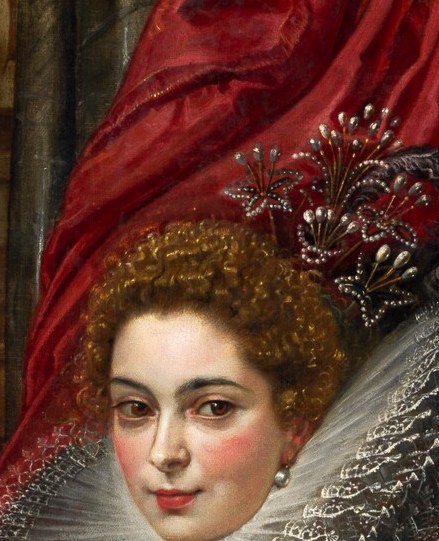
The psychological anchor of the portrait; her calm, slightly cool gaze across the picture plane projects the dignity expected of a newly married Genoese noblewoman.
One of the most elaborate ruffs in Rubens's early portraiture; the stacked, starched pleats radiating around her neck telegraph extreme wealth and Spanish court fashion of 1606 , a social statement in linen.
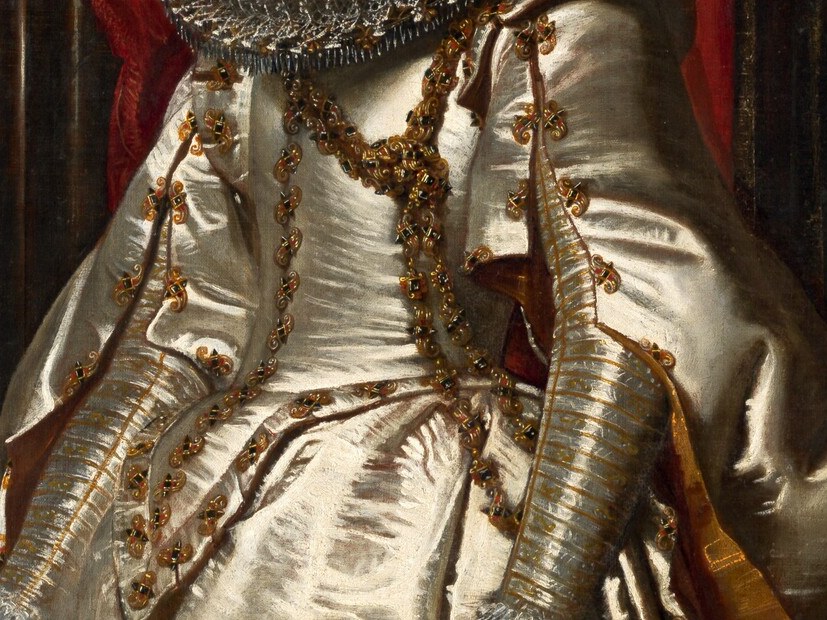
Rubens's virtuoso trick passage: the broken highlights on liquid silk convey the weight and sheen of expensive satin through broad, confident brushwork , a technical showpiece.
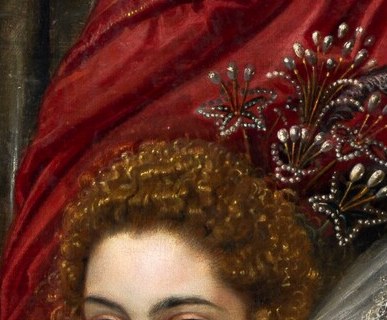
The warm red counterbalances the cool silver gown and frames the composition; it also implies an outdoor loggia setting , what remains of a garden background that subsequent trimming removed.
Rubens models the whites and irises with subtle cool light; the gaze feels calculating rather than demure , remarkable directness for a female portrait of this period.
Transcript

She looks every inch the Genoese marchesa. Rubens painted her in 1606, just after her wedding. Her husband paid for a full-length portrait in a garden. But what we see today is only a fragment. This column on the left is a severed remnant of a loggia. And this curtain once billowed over a deep garden vista. The canvas was cut down on all four sides, probably for a new frame. Her original garden is gone. Only these ghosts at the edges remember it.