Wandering Saltimbanques by Daumier, Honoré
This is Honoré Daumier's "Wandering Saltimbanques," painted around 1848 and now held in a private collection. Painted on a modest wood panel, it captures two itinerant street performers slipping through a dim alley while, elsewhere in Paris, a revolution was overthrowing the monarchy.
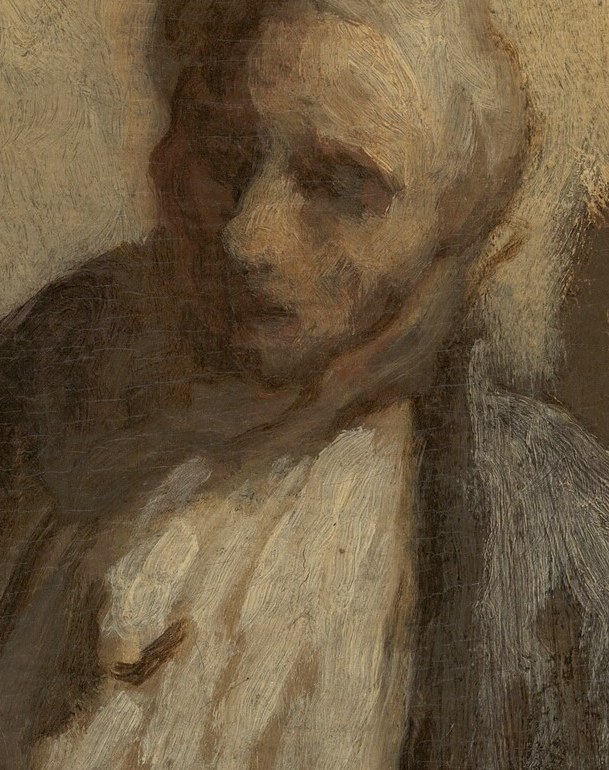
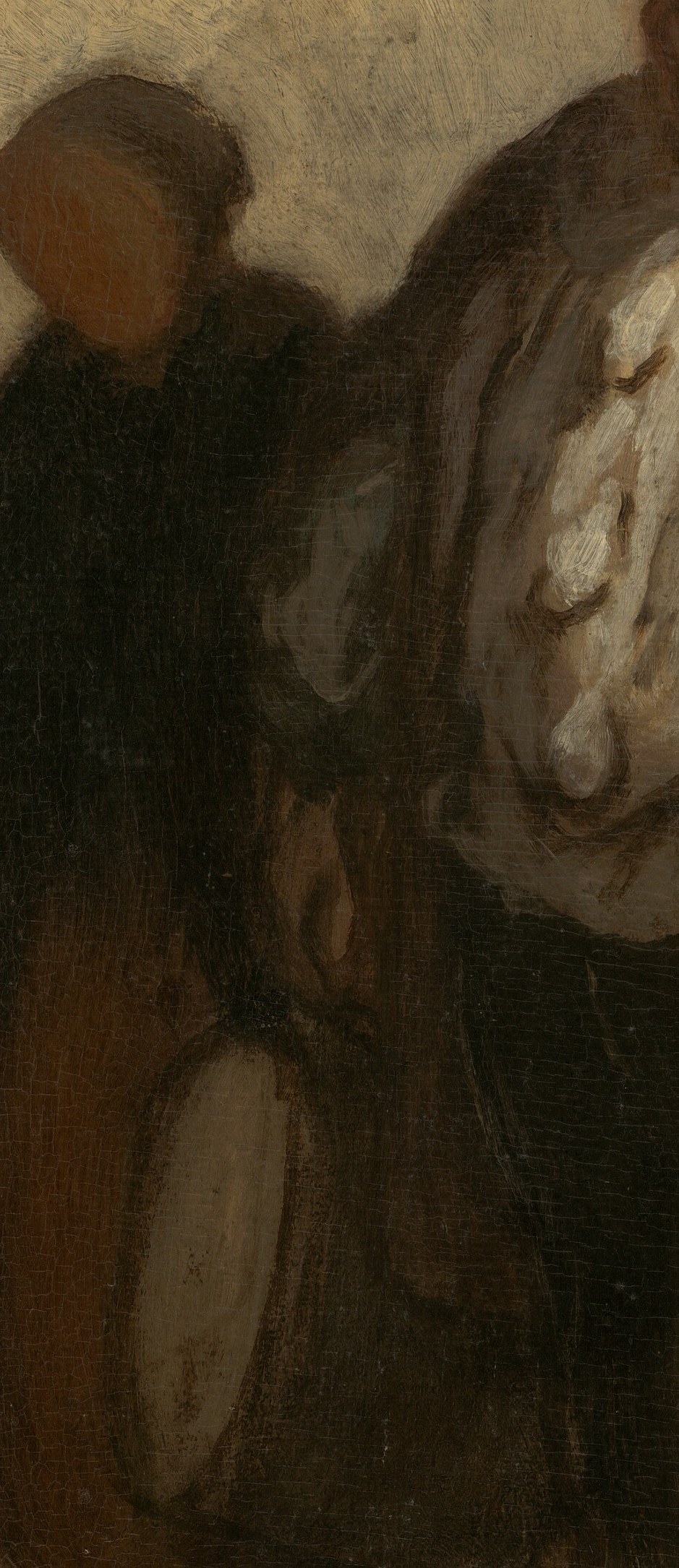
Look first at the tall-hatted man's hand clutching his threadbare coat. His face is exhausted, his gaze turned inward. Behind him, a companion steadies his arm. A leaning ladder and rough, scumbled wall make the entire scene feel temporary, a makeshift existence between performances. And in the upper right, a single dash of bright blue paint is the only hint of the costume and spectacle they sell to survive.
Daumier was a committed republican who spent his career satirizing the powerful. He was even jailed for a caricature of King Louis-Philippe. But his paintings turned that same clear-eyed attention onto the poor and the overlooked, people the official art world preferred not to see. This small oil on wood was not meant for a salon wall; it was meant to tell the truth.
When you look at his face, you are looking at a year of hunger, upheaval, and survival. What do you think the man in the tall hat is looking toward?
Details
Transcript
Paris, 1848. Barricades are rising in the streets. But here, far from the fighting, two men move through a quiet alley. He holds his worn coat closed like a private shelter. The painter, Honoré Daumier, was arrested for mocking the king. He knew what it meant to live on the edge of society. That smudge of blue paint is the single trace of their stage life. These are the faces the revolution left behind.