John Adams by Stuart, Gilbert
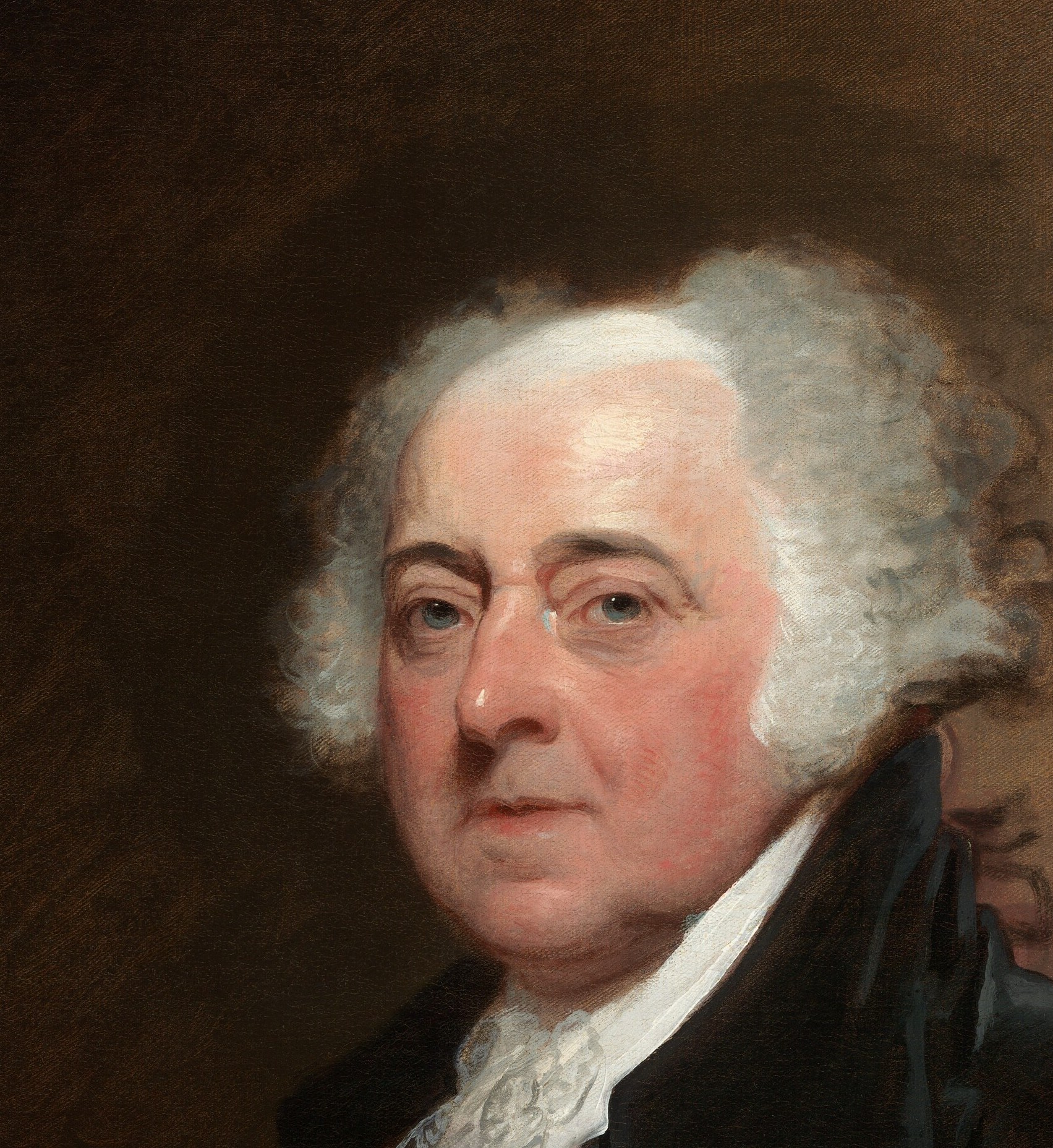
This is Gilbert Stuart's portrait of John Adams, painted around 1808. It is an image of a founding father exhausted by a lifetime of public service. Adams was in his early seventies when he sat for this, a decade after his presidency, and he famously disliked Stuart's unflattering fidelity.
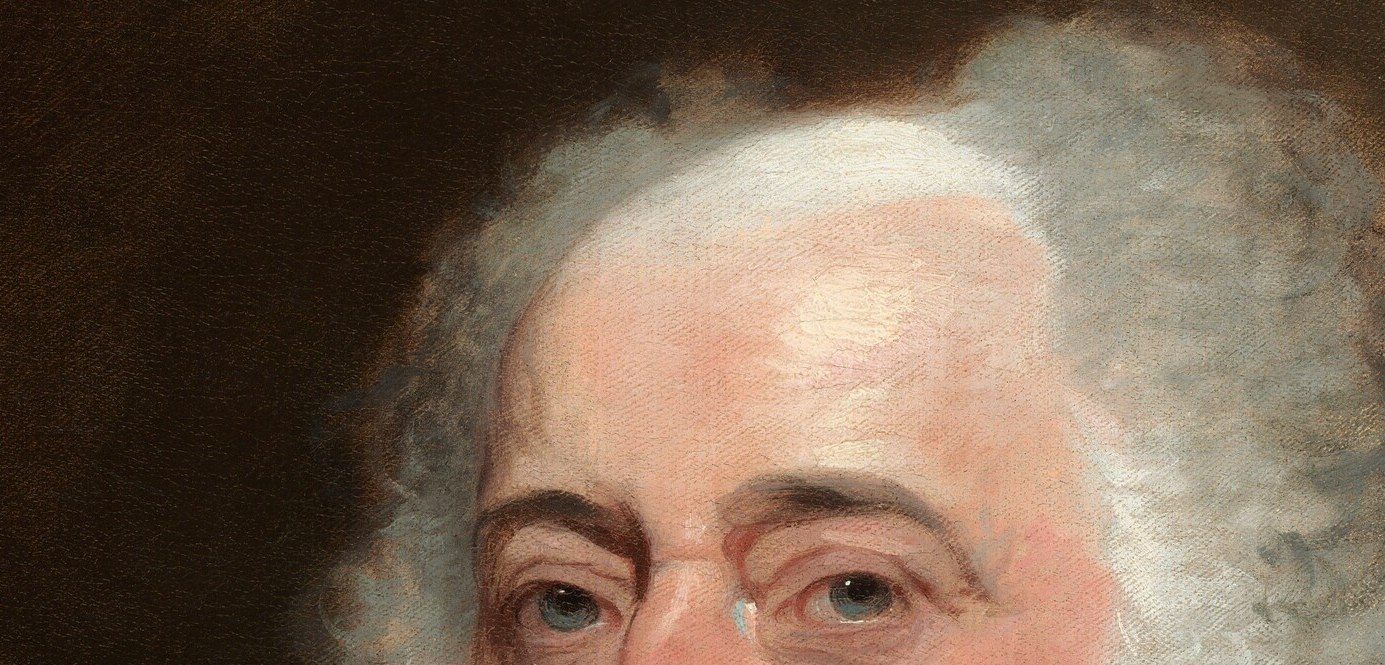
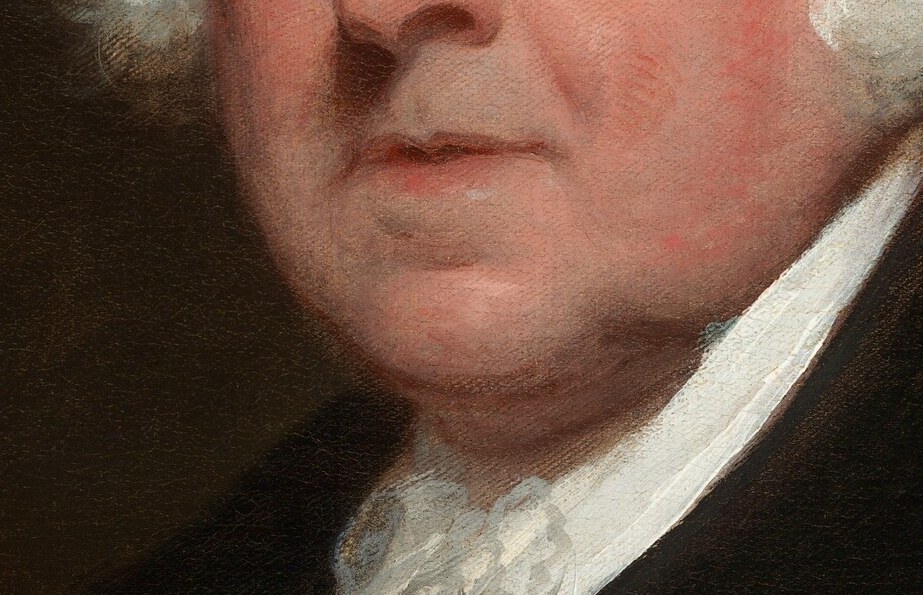
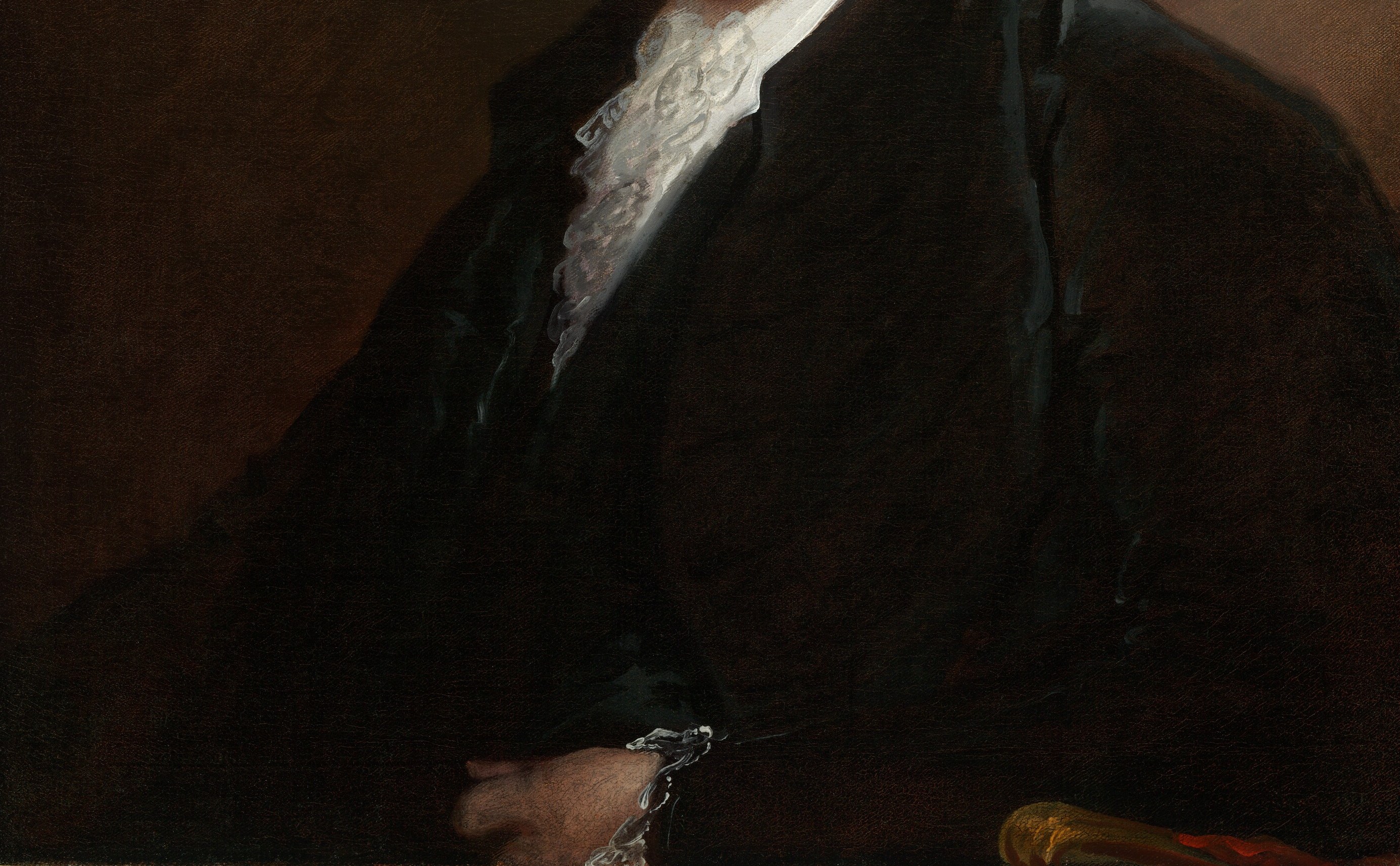
Look at how much of the story is told in the face itself. The eyes are still alert, even confrontational, but the flesh around them sags. The mouth is a thin, downturned line, compressed in a way that reads as stern because Adams had lost his upper teeth by this time. The white cravat is the only bright passage in the lower half of the painting, anchoring you to his status while the near-black coat recedes into the background.
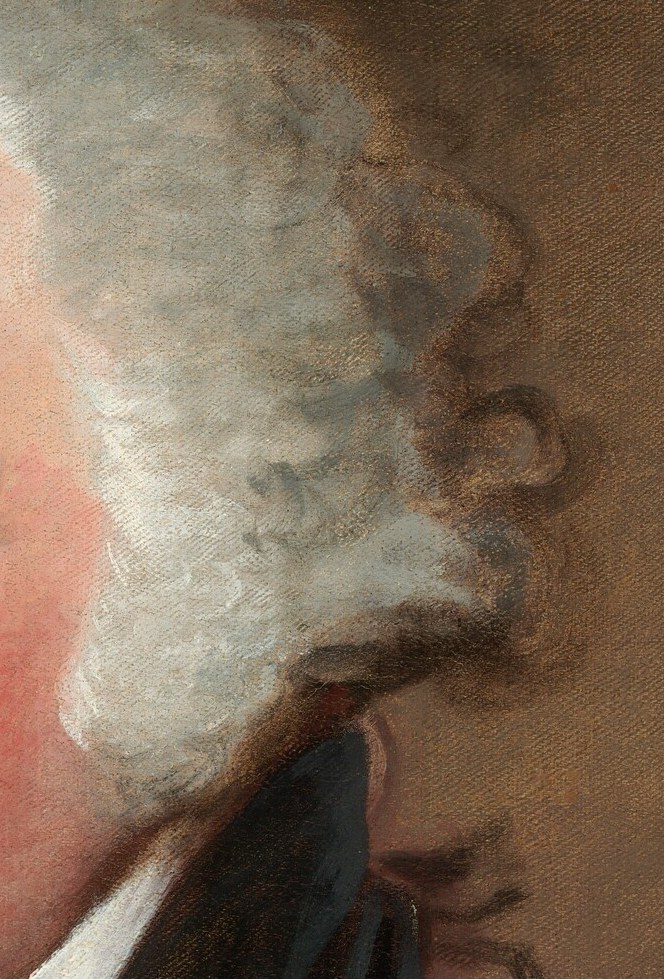
Gilbert Stuart was the preeminent portraitist of early America, but this painting is not just a record of a famous face. The real virtuoso move is nearly invisible on screen. Where Adams's right ear and temple meet the shadowed background, Stuart dissolves the edge. The head seems to emerge from the darkness and then fall back into it. This 'lost edge' technique was a deliberate, sfumato-adjacent skill, a shortcut to gravitas that reads as photographic life at a distance and reveals pure painterly confidence up close.
The painting is a paradox: an unflinching record of physical decline, rendered with a technique that makes the image feel eternally present. What did you first notice about his expression?
Details
Transcript
He was the second President of the United States. Look at the directness of his stare. The mouth is set in a wry, toothless severity. But the real magic is up here, in the shadows. Stuart lets the right side of the head just disappear. A deliberate 'lost edge', a painterly trick for gravitas.