New England Village by American 19th Century
This is "New England Village," painted on a wood panel by an unknown American artist around 1835. It is held by the Smithsonian American Art Museum.
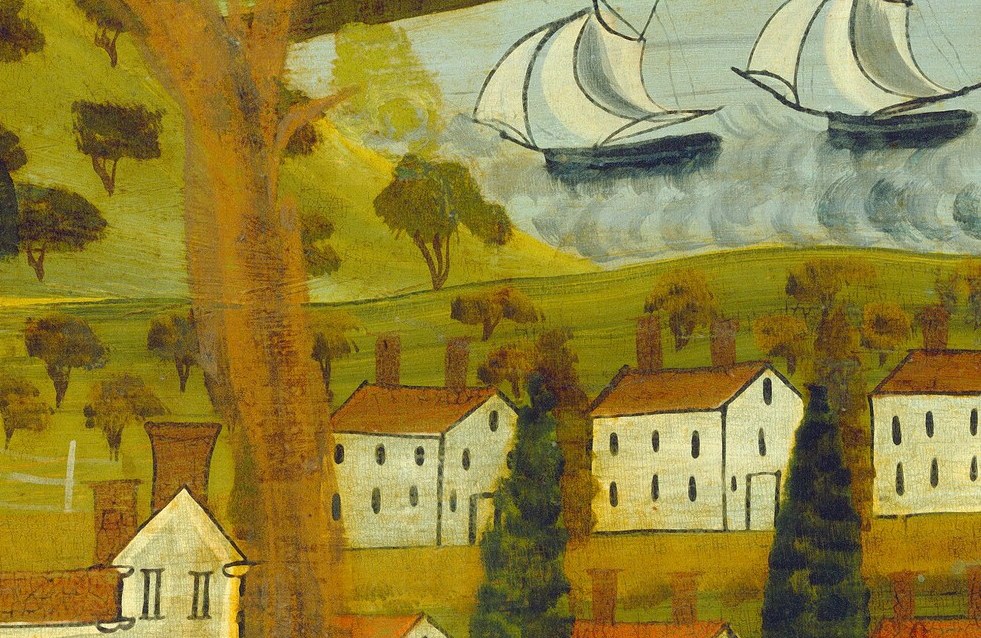
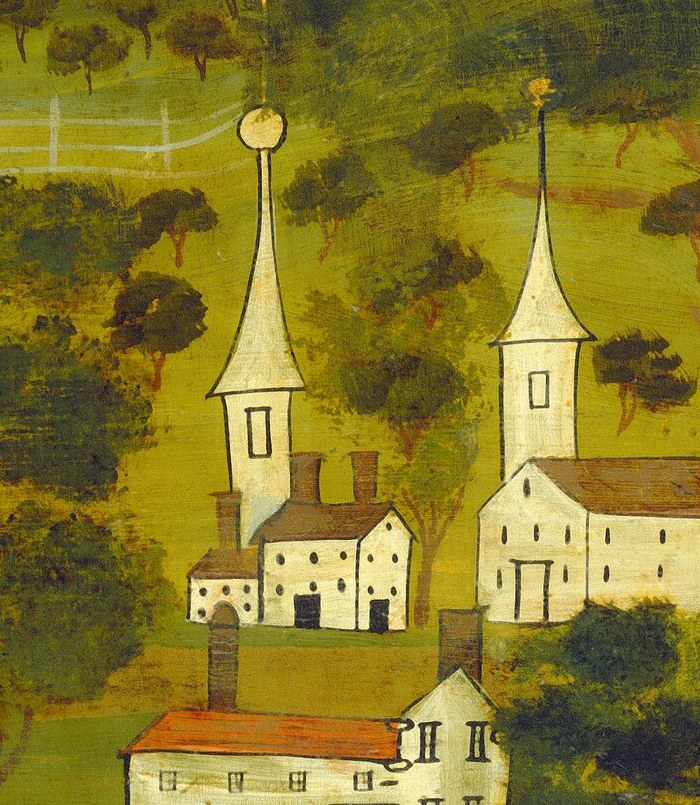
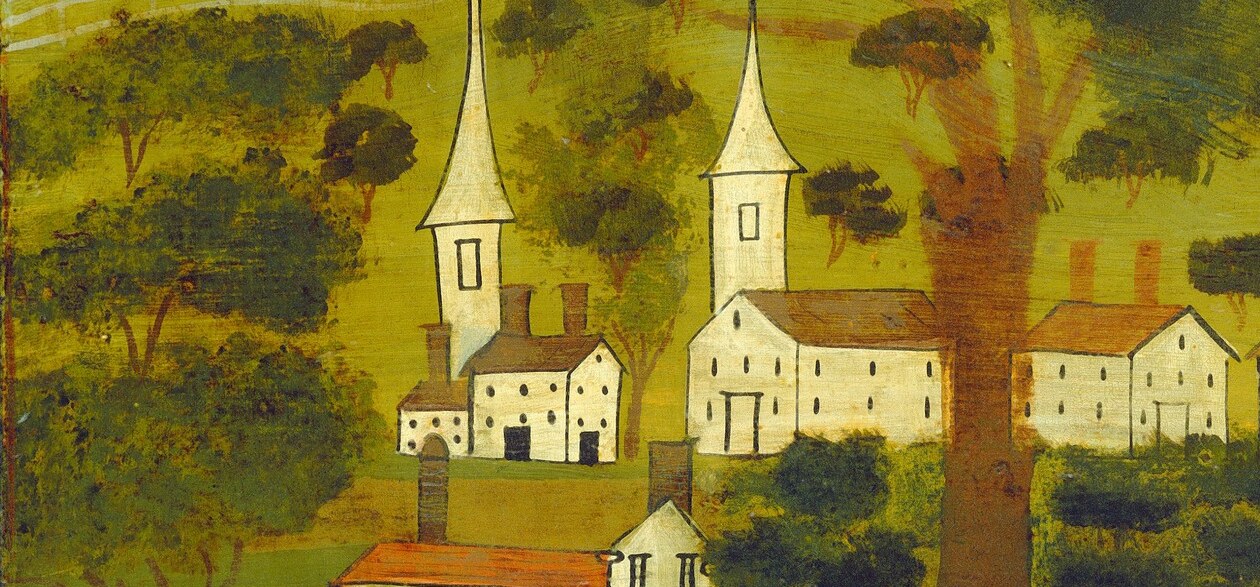
The canvas is split in two by a thick stand of trees painted in a flat, folk-art style. On the left, a white church with a sharp steeple. On the right, a grand clapboard house. The ground is empty: no roads, no wagons, no people. The stillness is the point.
Local legend links the scene to a real crime. A prosperous merchant living in a house like this one was murdered in his barn in 1821. His wife was tried and convicted, but a single vote spared her from hanging. The case fractured the village for a generation.
This painting may be a quiet memorial to that break. A town portrait without a soul in it, as though the whole place had agreed to forget. Look at the empty ground strip and ask yourself what a painter leaves out on purpose.
Details


Transcript
A snow-muffled village, cut down the middle by a murder. This grand white house belonged to a prosperous merchant. In 1821 he was found dead in his own barn. The church pews emptied for a trial that gripped the valley. His wife was convicted, but escaped the noose by one vote. An anonymous painter returned years later and painted this. No roads, no people. Just a town holding its breath.