Still Life with Flowers Surrounded by Insects and a Snail by Peeters, Clara
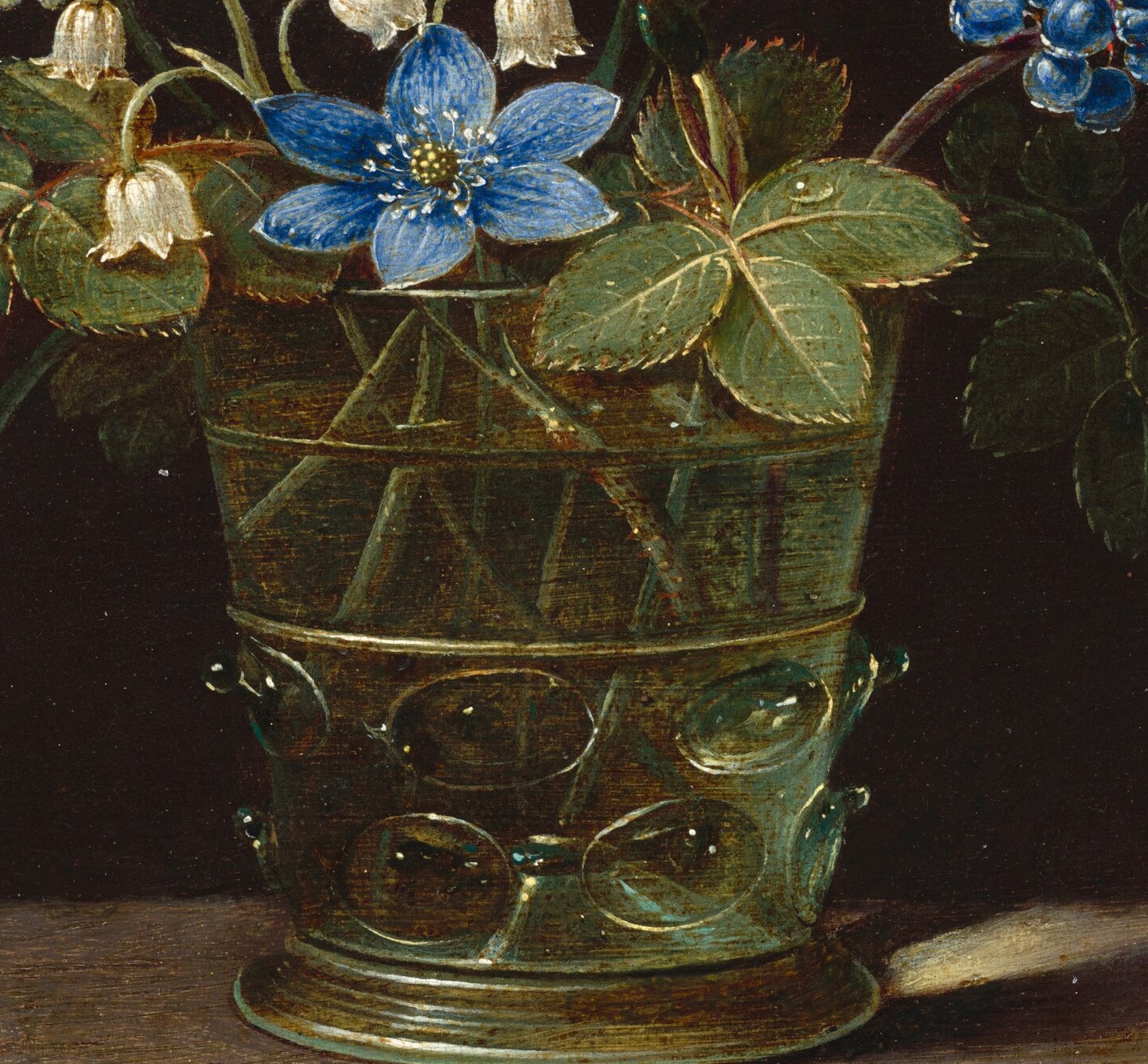
This is Still Life with Flowers Surrounded by Insects and a Snail, painted around 1610 by Clara Peeters. It measures only about 16 inches high and was painted on copper, a surface so smooth that paint sits on top instead of soaking in. That surface let Peeters do something that still startles: she painted a transparent glass vase holding water and stems, and she painted the way light bends as it passes through.
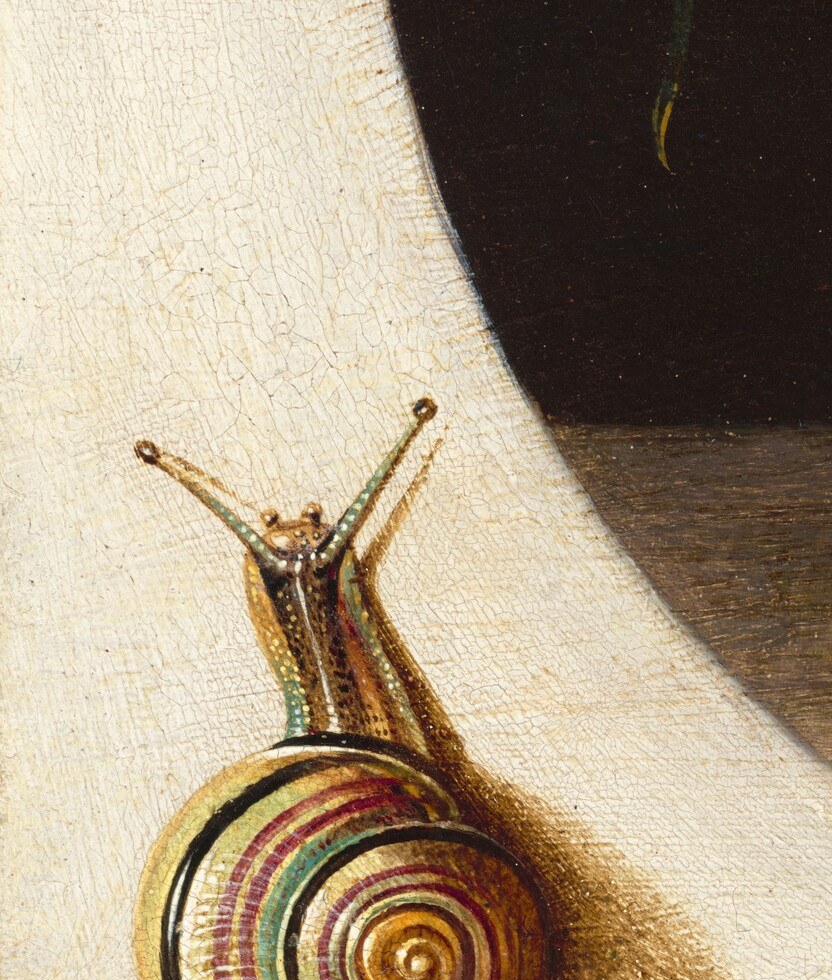
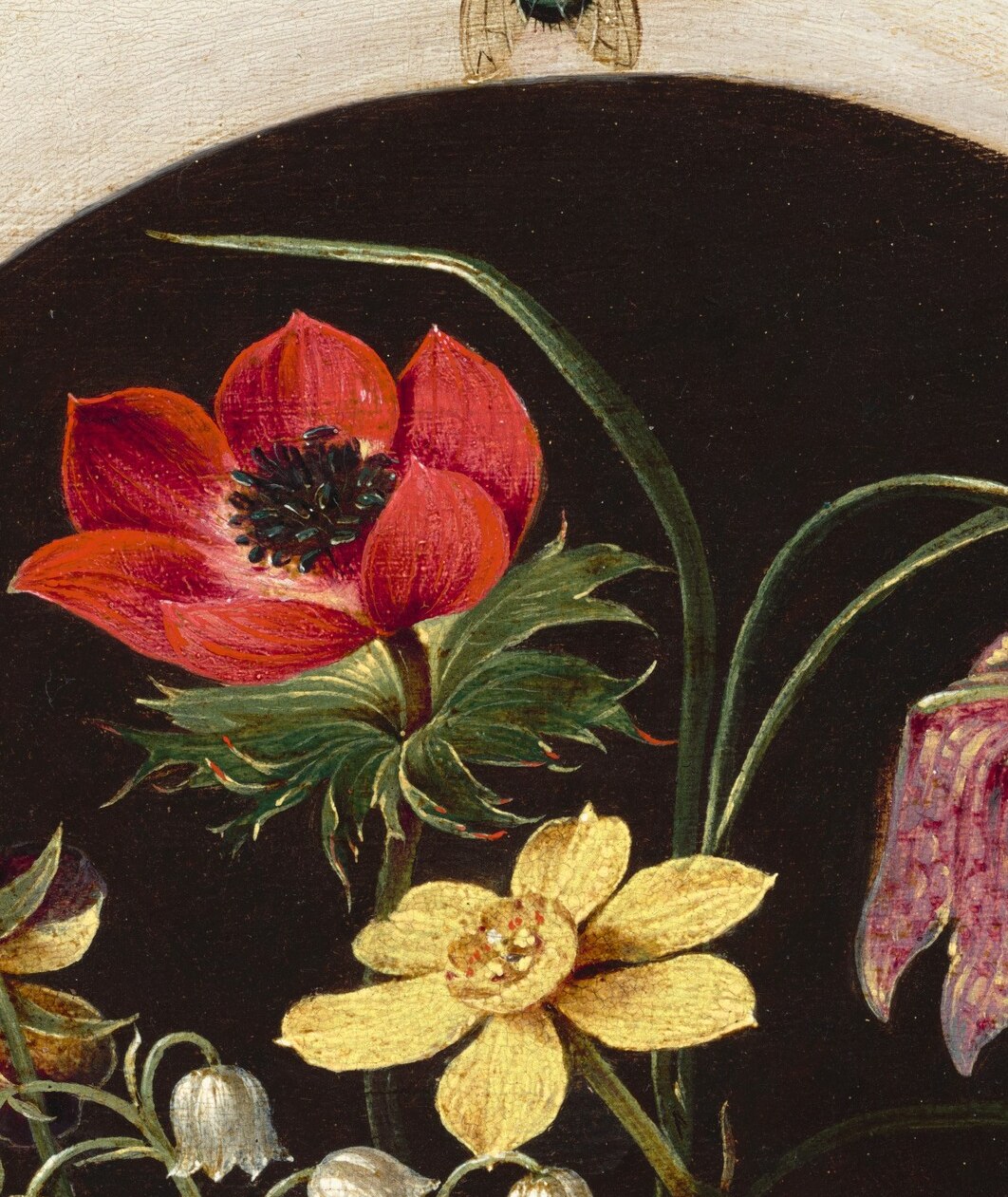
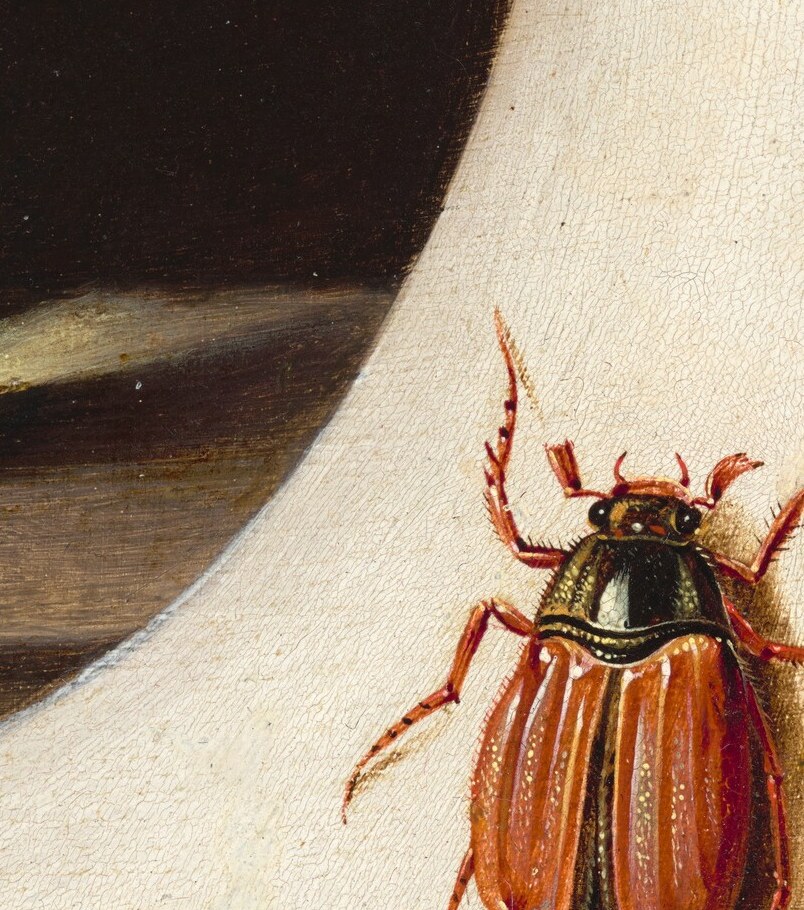
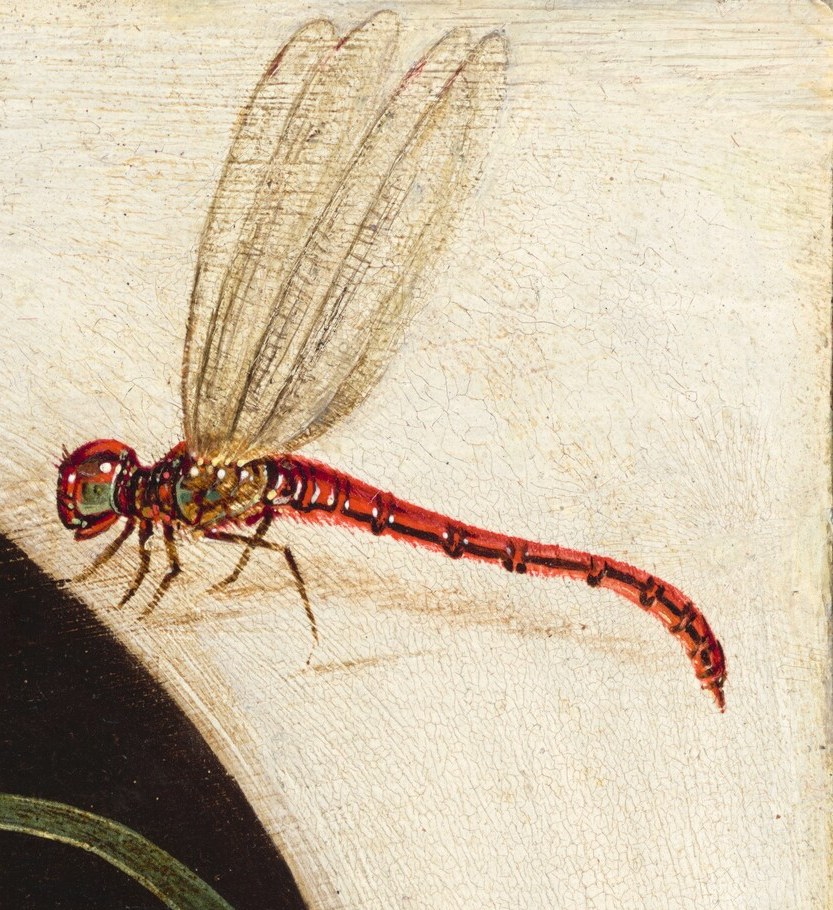
Watch the stems as they enter the water. They don't continue straight. They shift, widen, and break at a slightly different angle, exactly where the water line sits. That is refraction, observed and translated into oil paint over four hundred years ago. Every creature arranged around the vase, the snail, the iridescent beetle, the two dragonflies with diaphanous wings, is its own small demonstration of the same patience and precision.
Peeters is the best-known female Flemish painter of the early seventeenth century. She worked at a time when women were excluded from guild membership and from life drawing classes, which made still life one of the few genres open to her. She responded by becoming a virtuoso of it. Her signature trick was oil on copper, a support she used to build illusions almost too fine for the naked eye.
A vase of water in paint is always a brag. This one has lasted four hundred years. If you're in a museum and you pass a small, dark, intensely crisp still life on a metal plate, stop. Check if the stems bend.
Details
Transcript
Flowers, insects, a snail. All on a stone ledge. But the real subject is what holds them up. Look at the water line. Now look below it. The stems shift and thicken. That is refraction, painted in oil on a copper sheet. On copper, paint doesn't sink in. Every brushstroke sits proud. So she could build a window of glass, one hair-fine layer at a time.