Harpsichord Lid showing an Allegory of Amsterdam as the Center of World Trade by Karel van Mander the Elder
This striking Allegory of Amsterdam as the Center of World Trade, painted by Karel van Mander the Elder in 1606, is actually a harpsichord lid. It now resides in the Rijksmuseum.
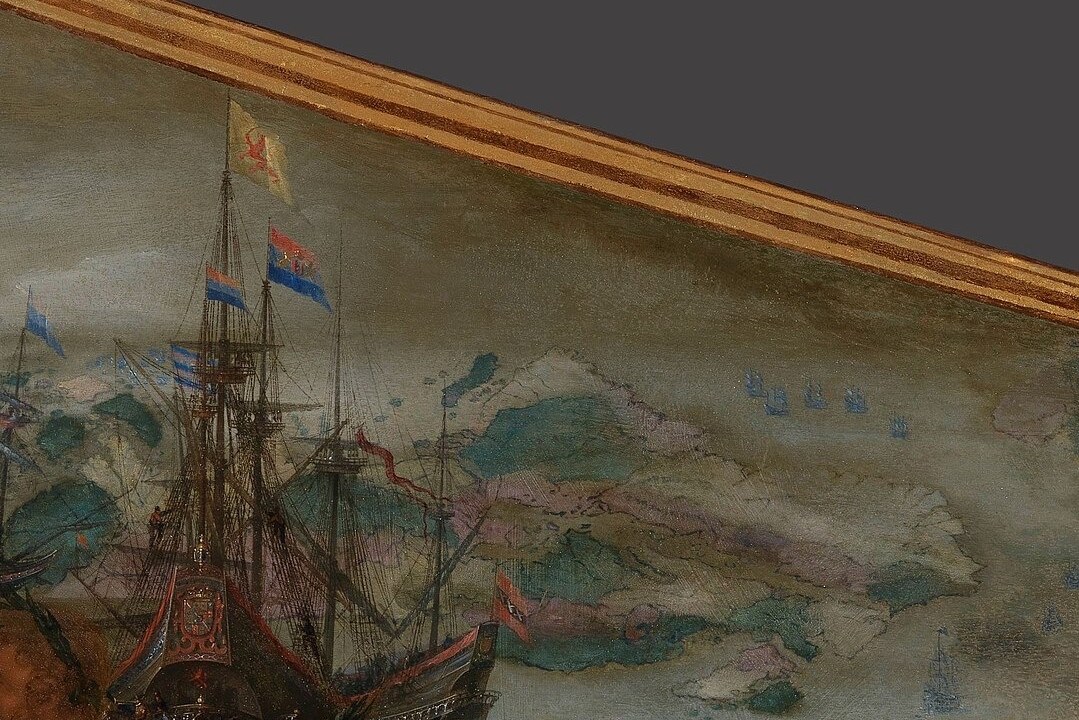
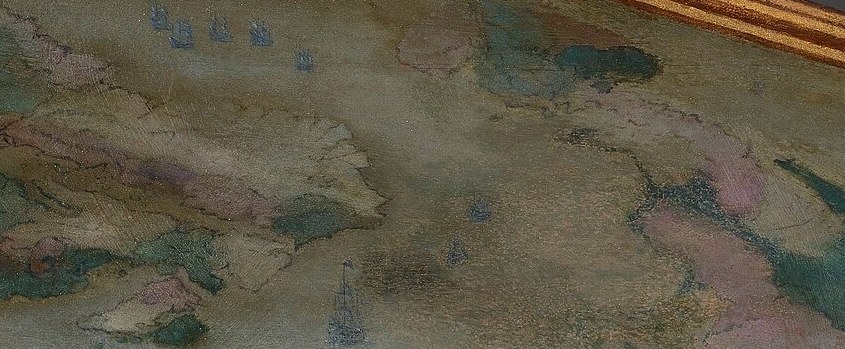
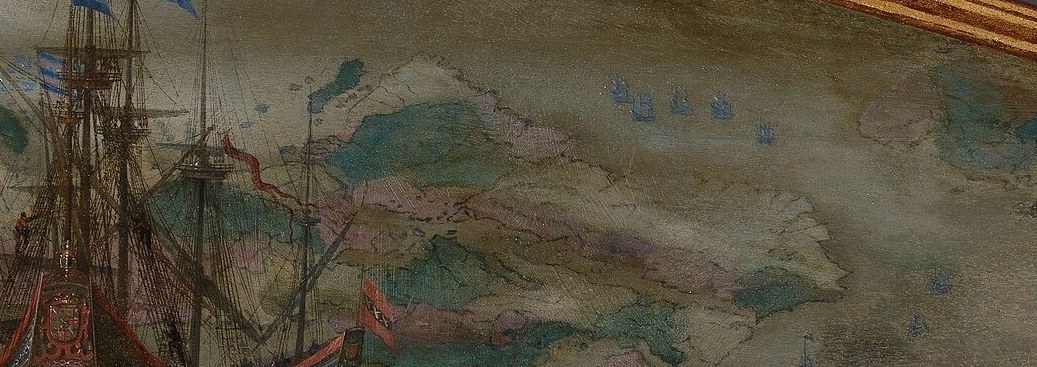
Look closely at the golden-clad female figure seated on a globe; she personifies the city of Amsterdam, asserting its central role in international commerce. The ships in the background harbor and the globe beneath her emphasize the city's maritime strength and global reach.
Completed in the final year of the artist's life, this work reflects the intricate detailing characteristic of Northern Mannerism. It was created at the outset of the Dutch Golden Age, celebrating Amsterdam's commercial ascendancy through rich allegorical personifications.
Every element in this painting, from the cornucopia of plenty to the cherubs, reinforces the powerful message of prosperity and dominance. What other details can you spot?
Details
Transcript
In 1606, this harpsichord lid celebrated Amsterdam's global reach. The golden figure on the globe embodies Amsterdam itself. Beneath her, the globe signifies the world, open for trade. Behind her, the ships in the harbor represent maritime power. A figure in the foreground holds a cornucopia, for prosperity. A cherub with a garland adds to the scene of abundance. Every detail tells a story of the city's emerging status.