Madame Moitessier by Ingres, Jean-Auguste-Dominique
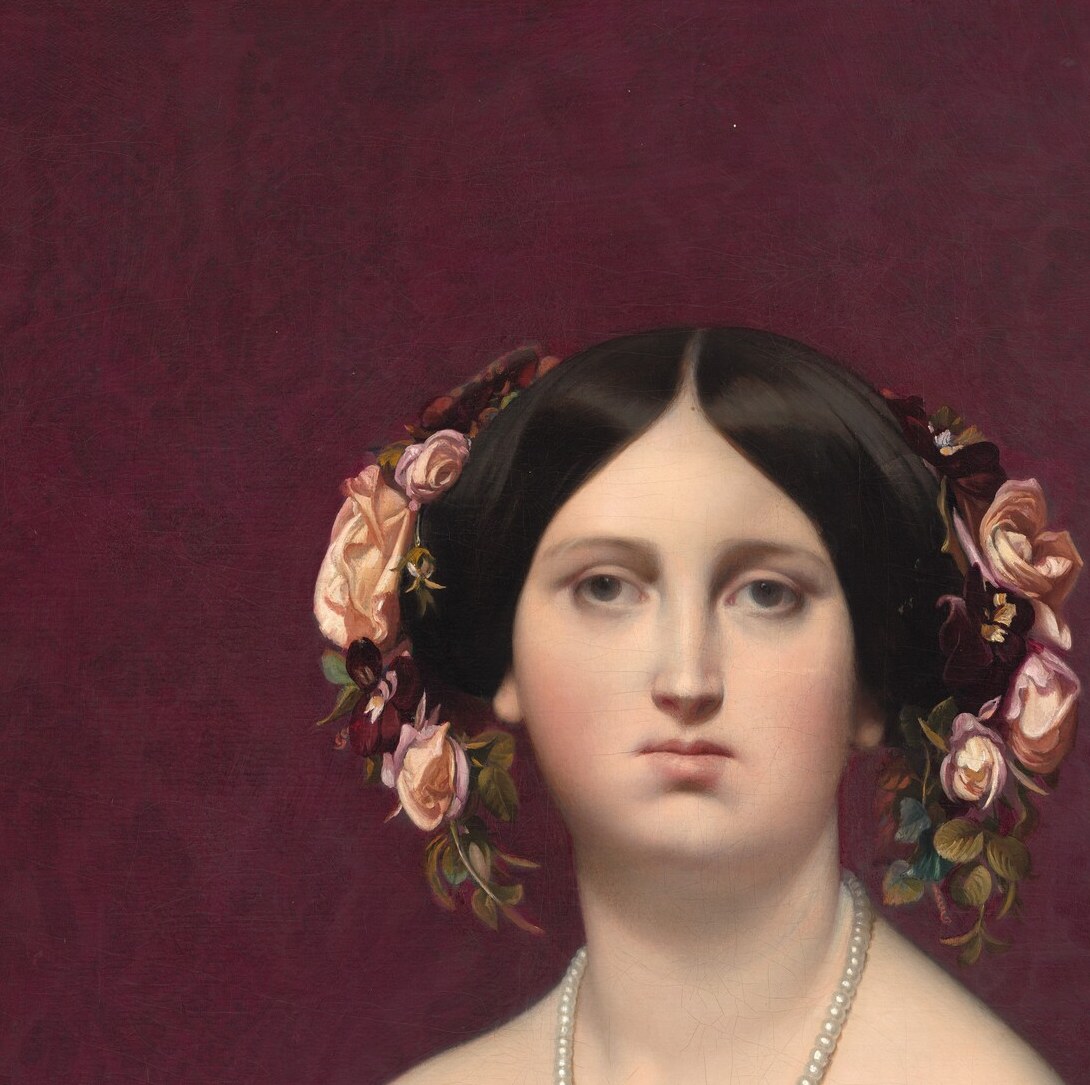
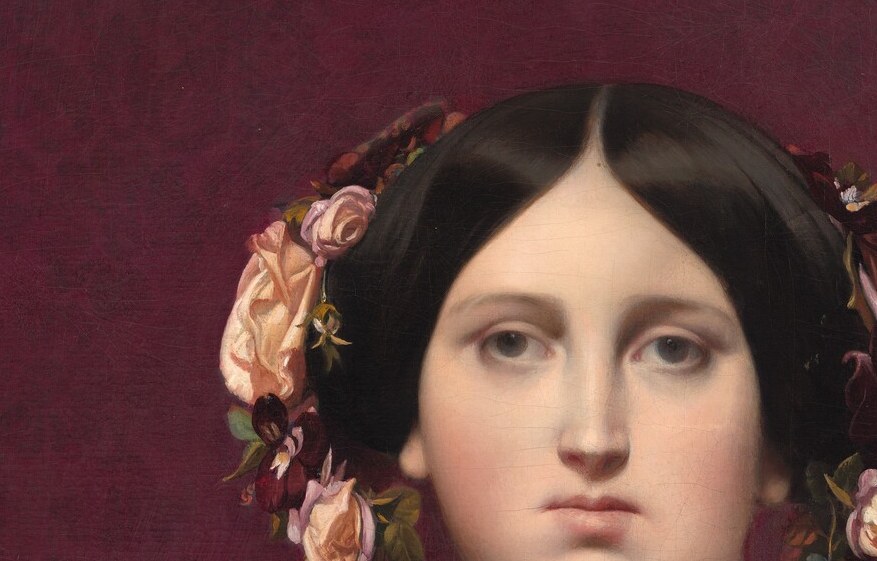
This is Madame Moitessier by Jean-Auguste-Dominique Ingres, completed in 1851. It hangs in the National Gallery, London, and it contains one of the quietest technical feats in 19th-century portraiture: a face painted with no visible brushwork at all, resting above a dress pushed almost to the edge of abstraction.
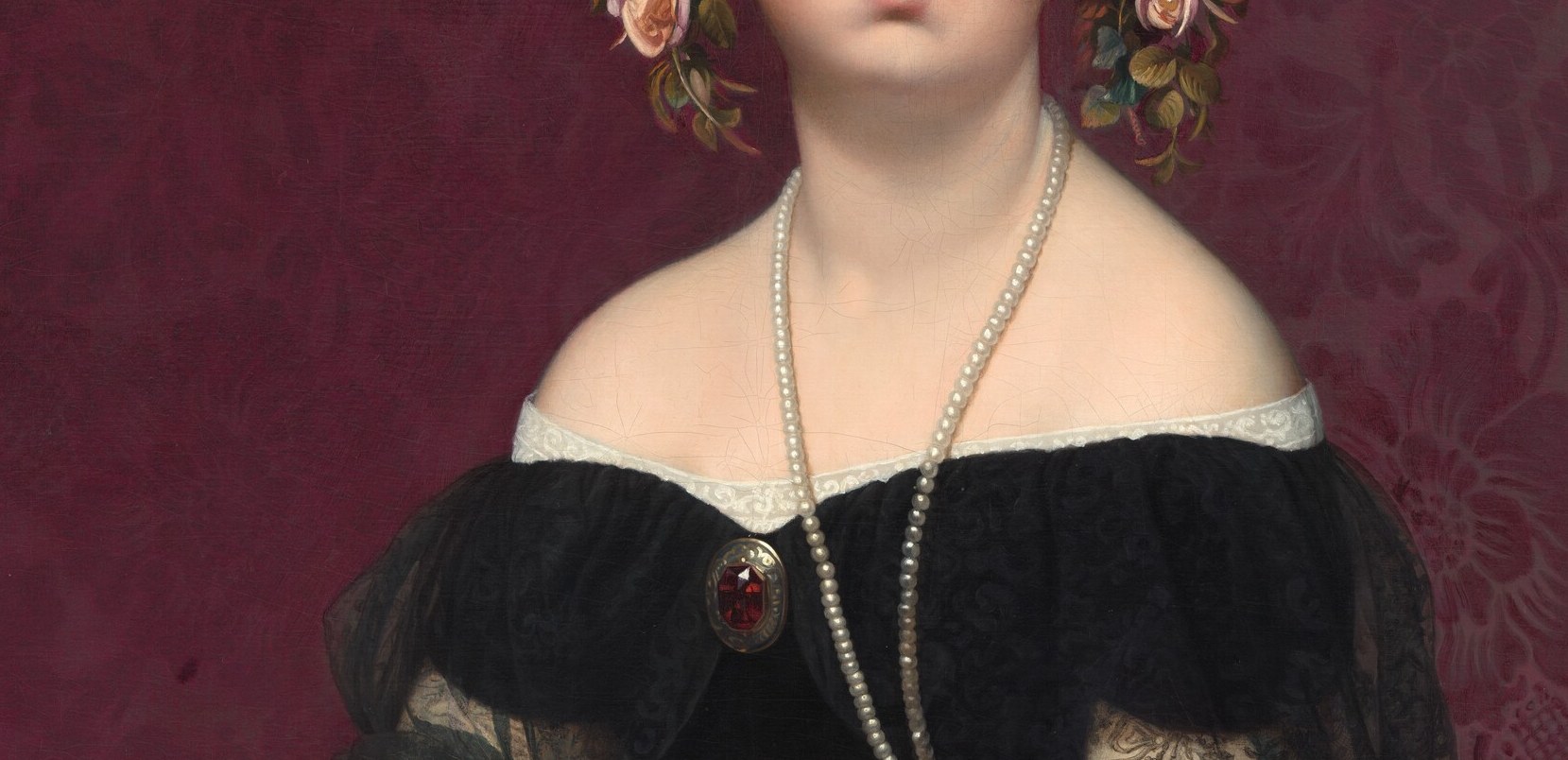
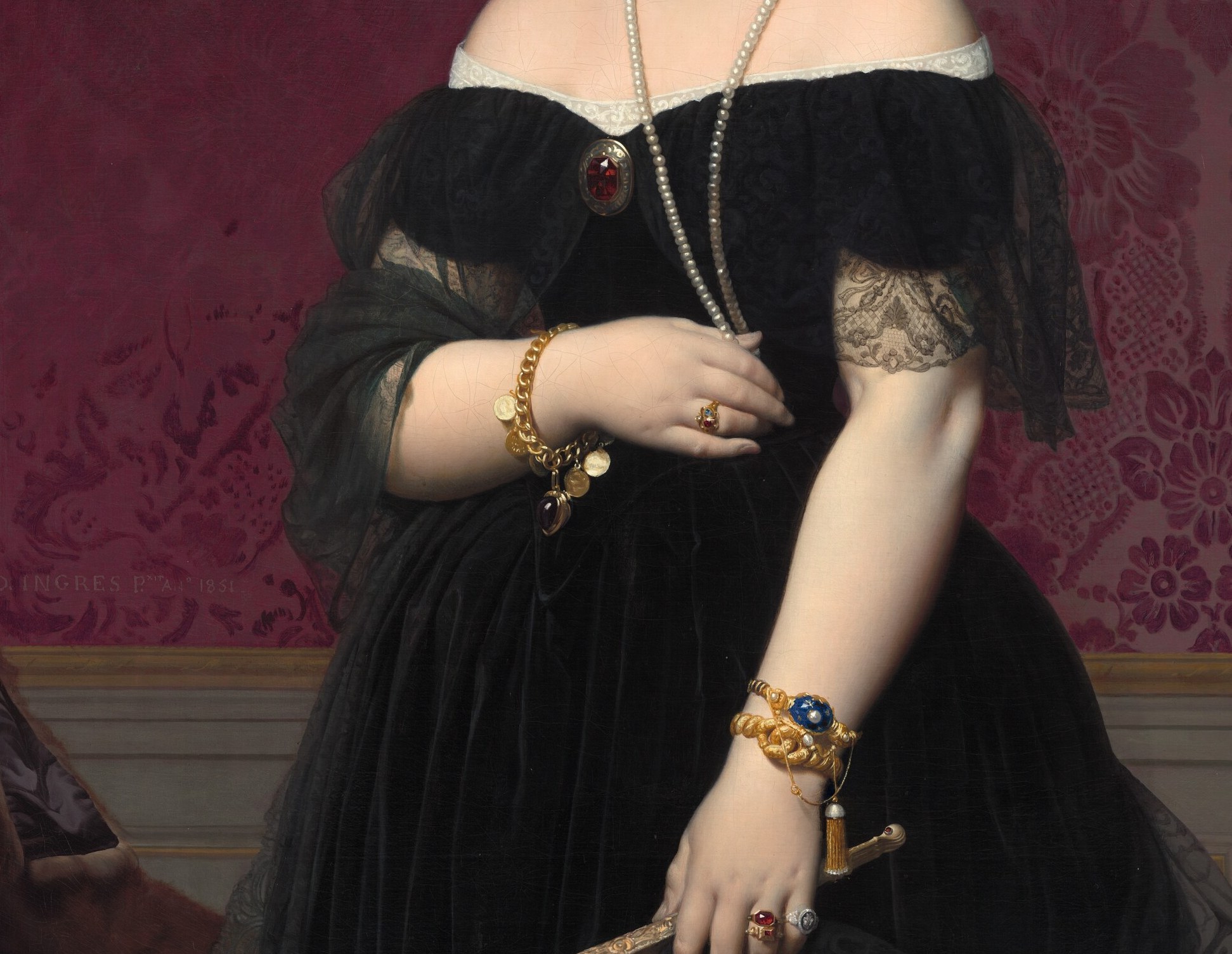
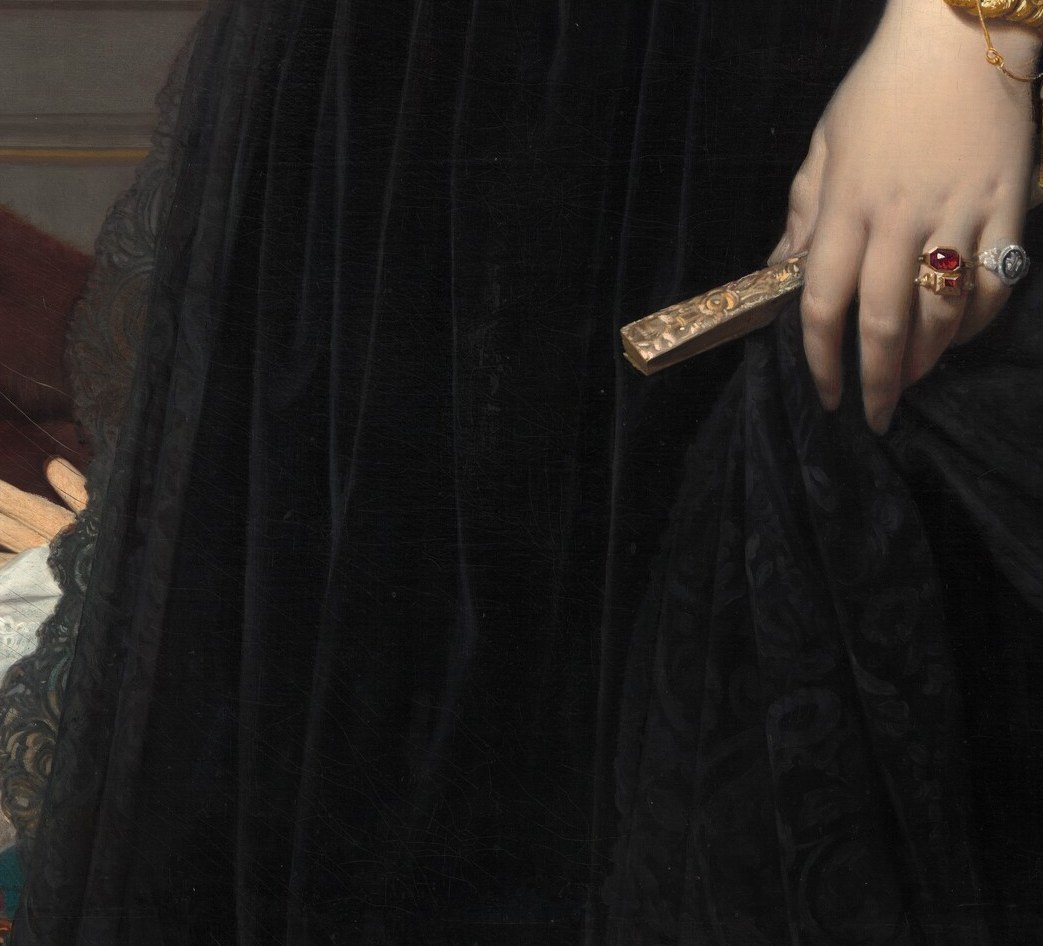
Look at the transition where her bare shoulders meet the black silk. Ingres built the skin with transparent glazes, thin layers of oil paint that catch light inside the film rather than on the surface. The result is a ceramic smoothness that reads as living flesh. The gown, by contrast, is optically flat. Ingres worked on it for years, chasing a faint sheen that would register as watered silk without ever breaking the surface with a visible stroke.
Ingres was 71 when he finished this portrait. He had begun it seven years earlier, paused to complete another commission, and returned to it. By then he was the most famous teacher in France, the self-appointed guardian of academic tradition against Delacroix and the Romantics. He believed drawing was the probity of art, and you can feel that conviction in the architecture of her coiled hair and the precise, linear contour of her shoulder.
The tension is what makes the painting modern. The face is idealized, almost mask-like, while the dress begins to behave like a color field. Matisse and Picasso both studied Ingres closely. The distortions that puzzled his contemporaries, the impossible smoothness, the slightly elongated fingers, turned out to be the parts that lasted.
Details
Transcript
She is painted with a surface so smooth it barely registers as paint. No visible brushwork. Glazes built up until the strokes dissolve. Now look at the black silk gown beneath those shoulders. It is optically flat. Almost abstract, a void cut into the canvas. Ingres spent years on this portrait. He obsessed over the dress's faint sheen. Two textures, one human, side by side. Tactile life against pure stillness. The technique he used is called glazing: translucent layers of oil. He made flesh out of light and left the dress as an idea.