Pansies by Henri Fantin-Latour (French, 1836–1904)
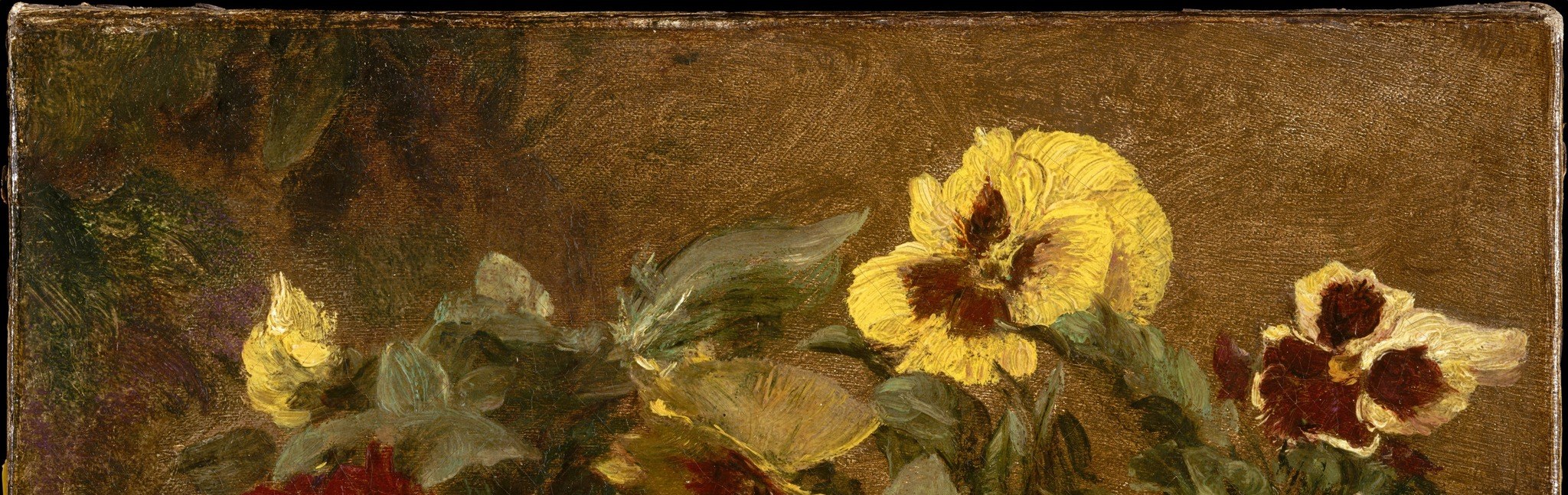
Henri Fantin-Latour’s *Pansies*, painted in 1903, exemplifies the artist's dedication to floral subjects, a genre for which he was particularly renowned. This oil-on-canvas still life is part of the collection at The Metropolitan Museum of Art.
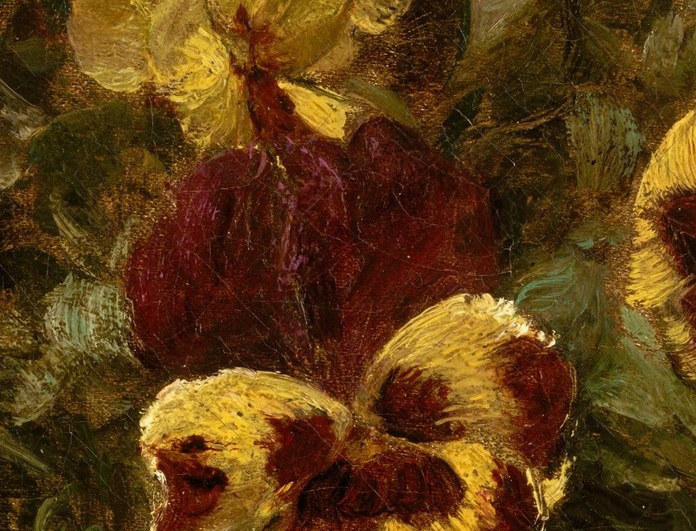
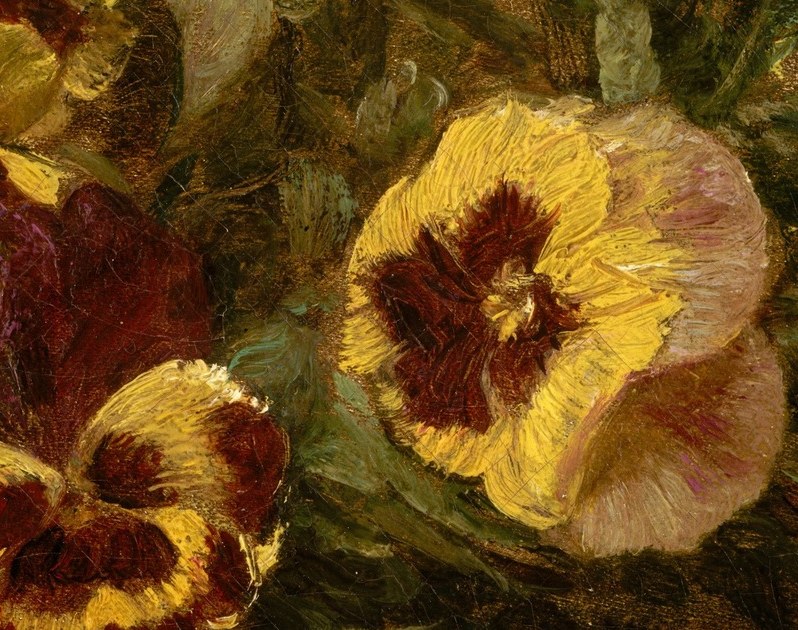
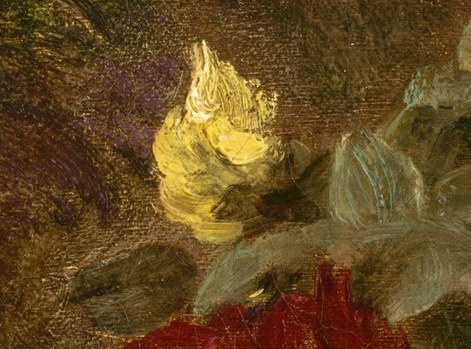
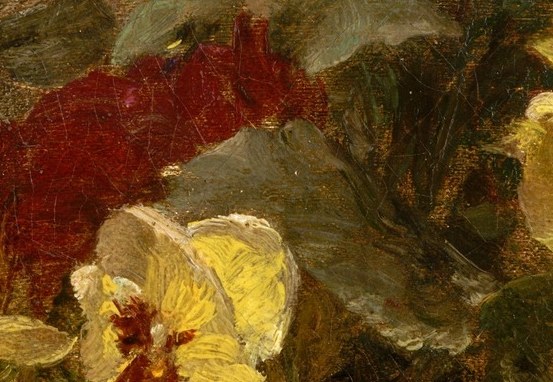
Look closely at how Fantin-Latour used thick brushstrokes, or impasto, to give the petals a velvety, almost tactile quality. Each bloom, from the vibrant yellows to the deep reds, seems to project from the muted background.
Associated with the Impressionist movement, Fantin-Latour cultivated a distinctive style in his flower paintings, establishing a refined reputation throughout the late 19th and early 20th centuries. His work offers a quiet, luminous moment, capturing the delicate beauty of the natural world.
What details do you find most striking in this intimate study?
Details
Transcript
In 1903, this painter was famous for his still lifes. He focused on flowers, like this dark red pansy. He used thick paint, called impasto, to build their texture. Each velvety petal was carefully arranged. His quiet studies earned him a refined reputation. He captures the flowers in a specific, luminous moment.