A Buffalo Wallow by Catlin, George
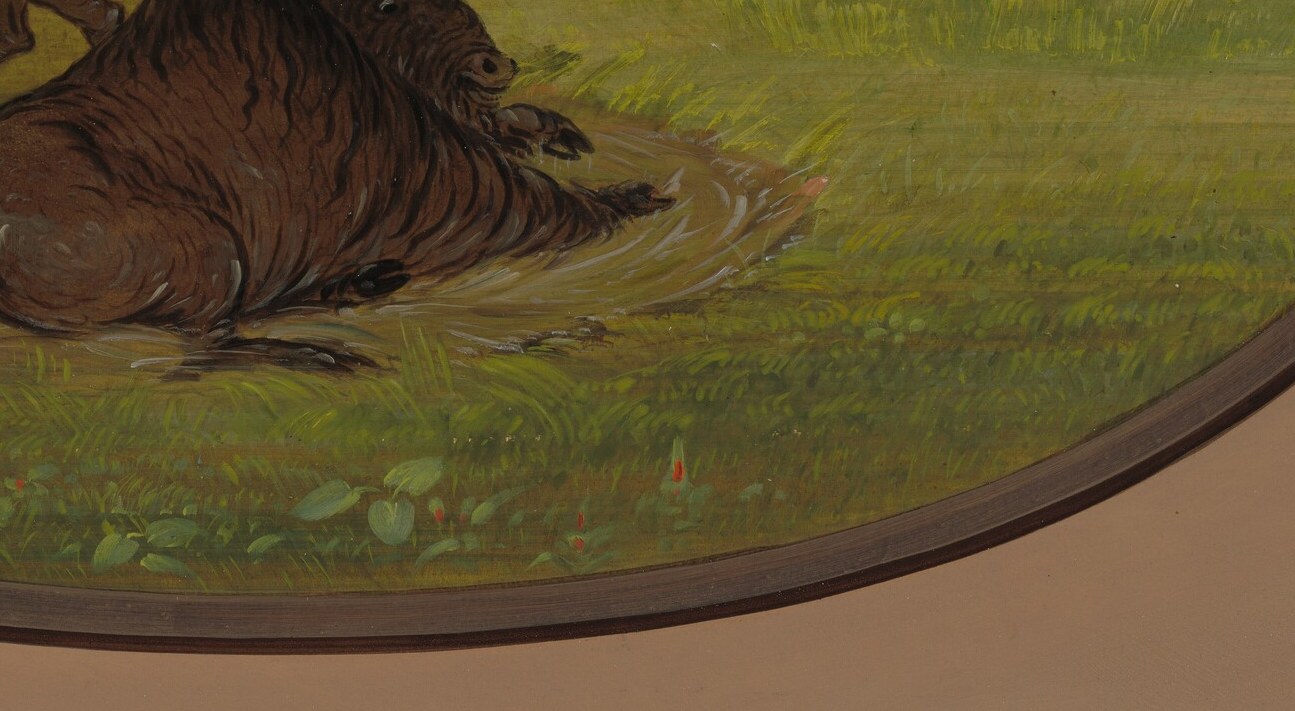
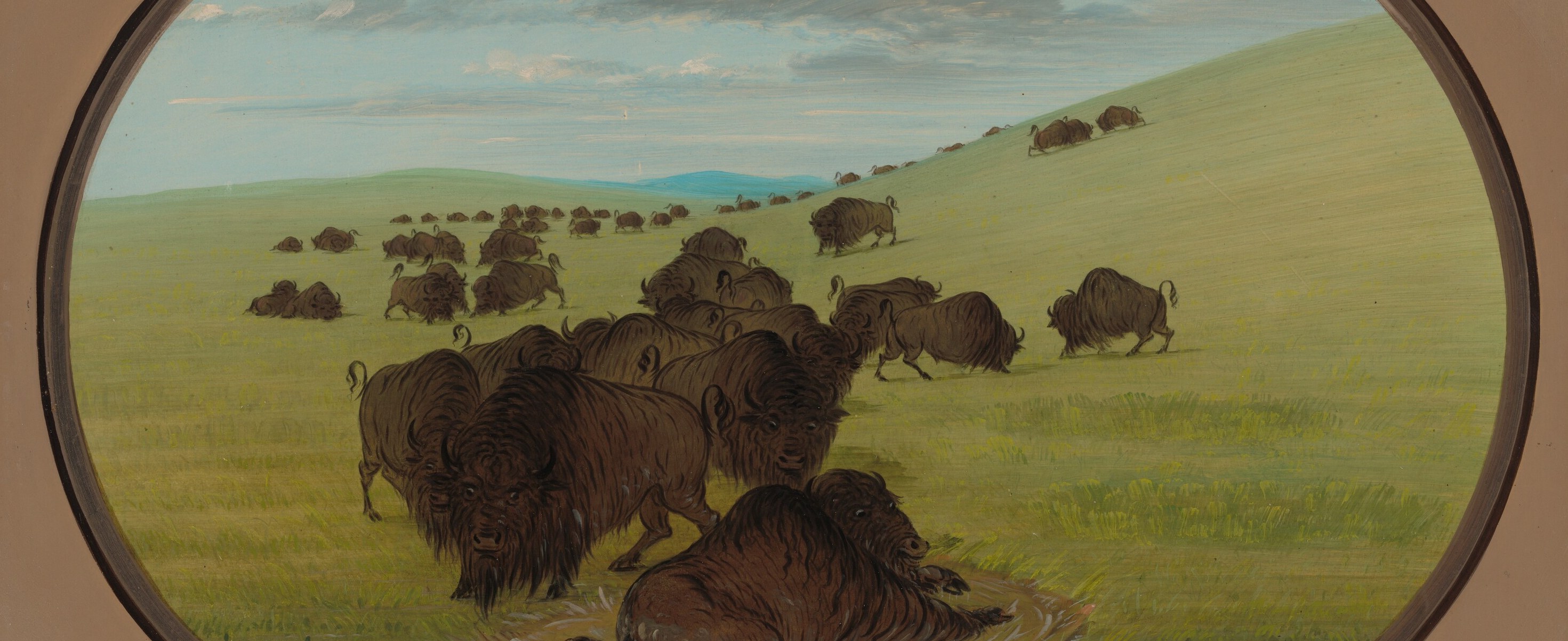
George Catlin's "A Buffalo Wallow" (1861/1869), at a private collection, offers more than just a glimpse of frontier wildlife. Catlin, an American lawyer turned painter, dedicated his career to documenting the American West, its Indigenous peoples, and its natural inhabitants.
While the painting's title draws attention to the central buffalo, observe the subtle details that enhance its realism. The textures of the wallow and the shaggy fur of the buffalo are depicted with a directness characteristic of Catlin's work.
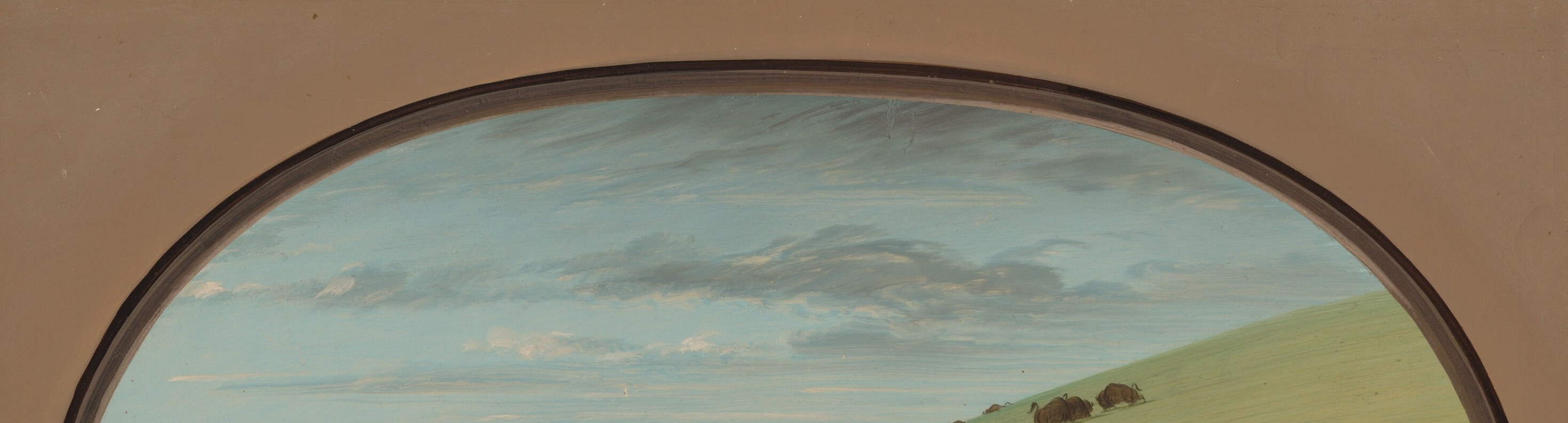
Beyond the prominent figures, a careful look at the far distant horizon reveals a thin blue line of water. This small element expands the landscape, hinting at the vastness and completeness of the prairie ecosystem. It's a reminder of Catlin's commitment to capturing the full essence of the frontier.
What other hidden details do you notice that tell a larger story?
Details
Transcript
This painting captures a quiet moment in the American West. It's called 'A Buffalo Wallow,' for this central figure. The artist, George Catlin, spent decades documenting the frontier. He was a lawyer who became a painter of wildlife and Indigenous life. Now, look closely at the far distant horizon line. Just there, a faint blue line suggests a body of water. This small detail completes the vast prairie ecosystem.