St. Nicholas Accuses the Consul from Scenes from the Life of St. Nicholas by http://www.wikidata.org/.well-known/genid/e14bf4eb9eca4343377a5395c4918b5a
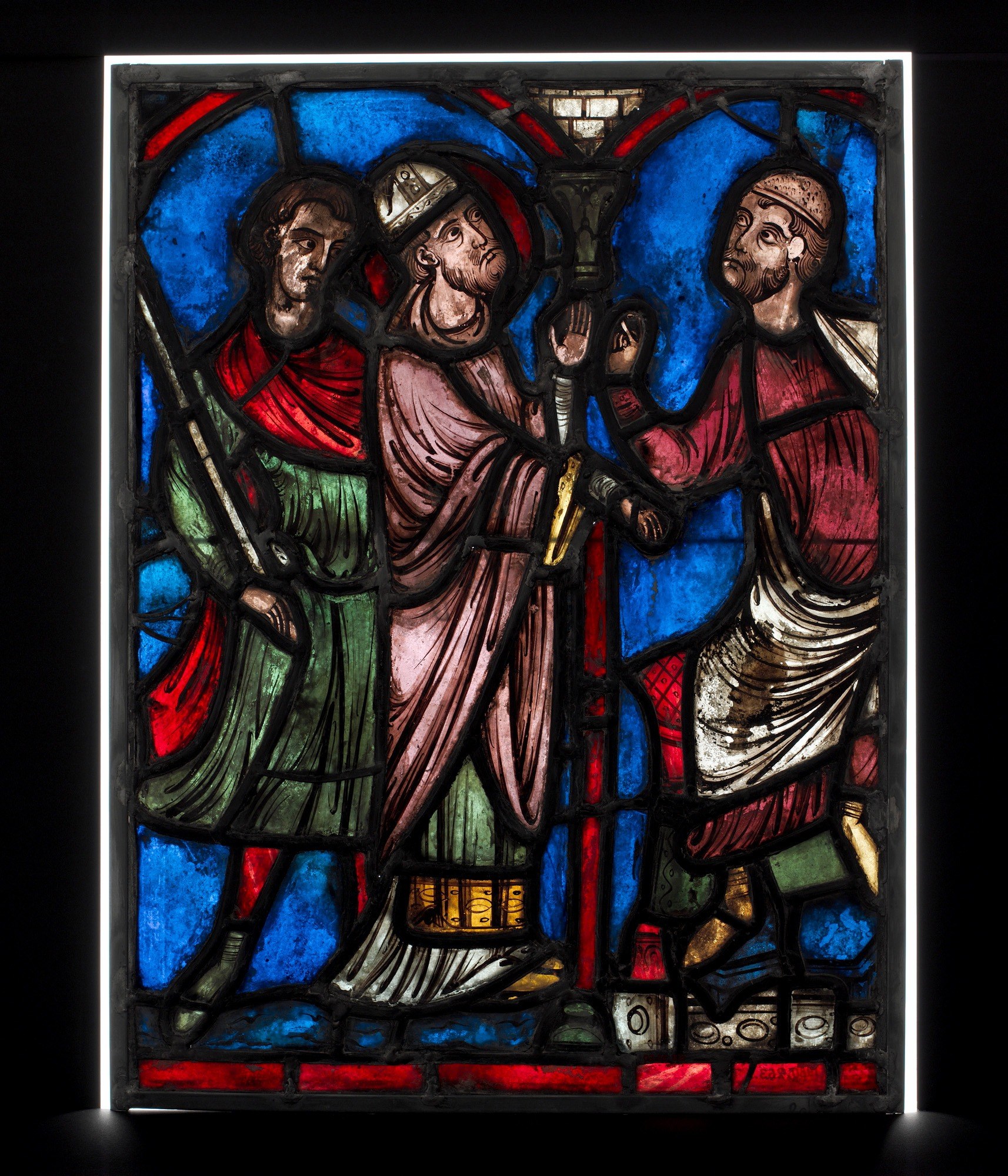
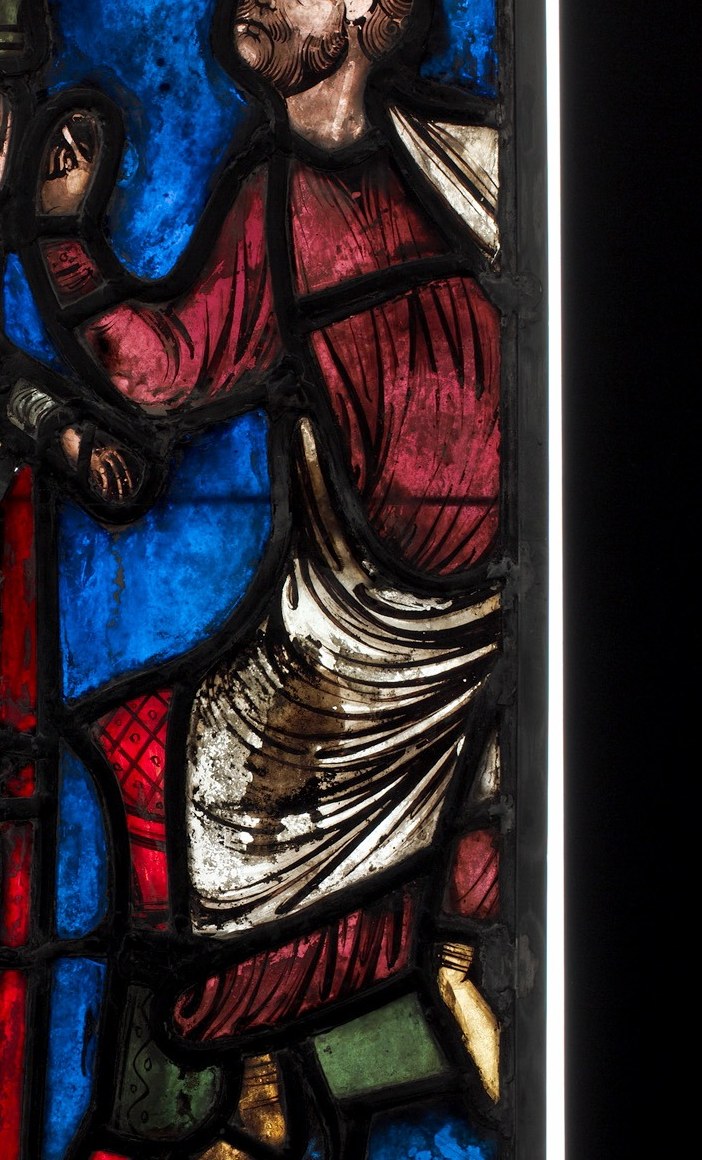
This is a panel of stained glass from around 1205, showing Saint Nicholas accusing a corrupt consul. It belongs to a larger narrative window made for a church in medieval France, and it now lives in a museum collection where most visitors see it at eye level. Which means almost no one bends down to look at the bottom edge.
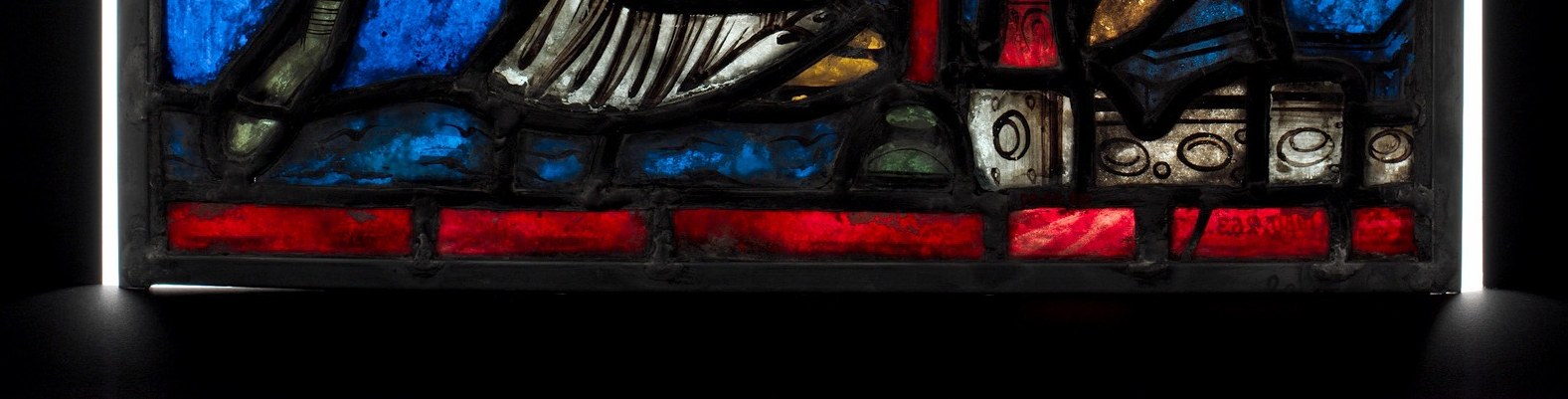
Look at the lower decorative band beneath the figures. Small roundels sit inside the border, easy to dismiss as ornament. But in early thirteenth-century glass workshops, these marginal zones often carried a coded signature, a repeat motif that identified the glazier who made the panel. The shapes are too deliberate and too consistent to be generic decoration.
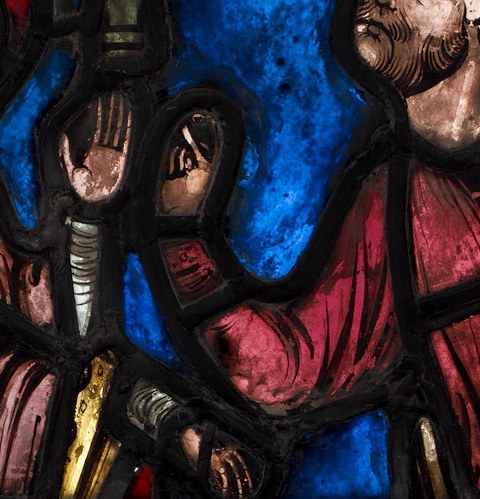
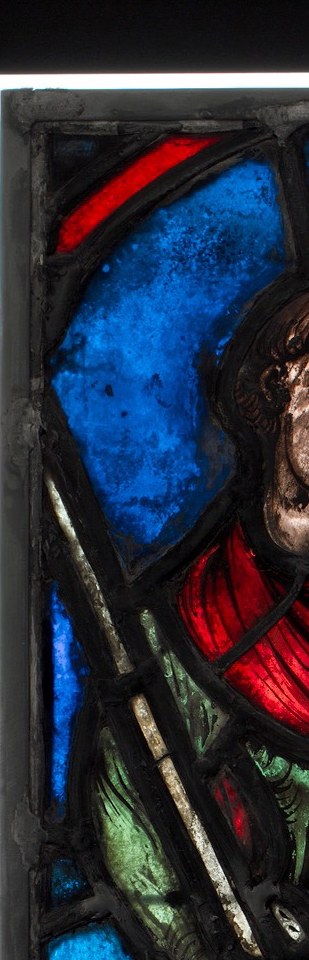
The main scene is already a masterclass in color economy. St. Nicholas wears an unusual pink robe, the consul bleeds red in guilt, and a green-robed figure on the left holds an upright sword. The deep cobalt blue background was the most expensive glass a church could buy, powdered with lapis-level pigment and flooded with light. Every black line you see is lead came, functioning as both structure and drawing.
That bottom border, though, is the detail that changes the object. It shifts the panel from an anonymous devotional image into a signed work by a specific pair of hands. Eight centuries later, the maker is still there, waiting at the very bottom of the frame.
Details
Transcript
He points straight at a trembling consul. A sword waits behind him. The room watches. A story told in glass, from the year 1205. Now look at the ornamental strip below their feet. Those roundels were a workshop's hidden signature. A maker's mark, hidden in plain sight for 800 years.