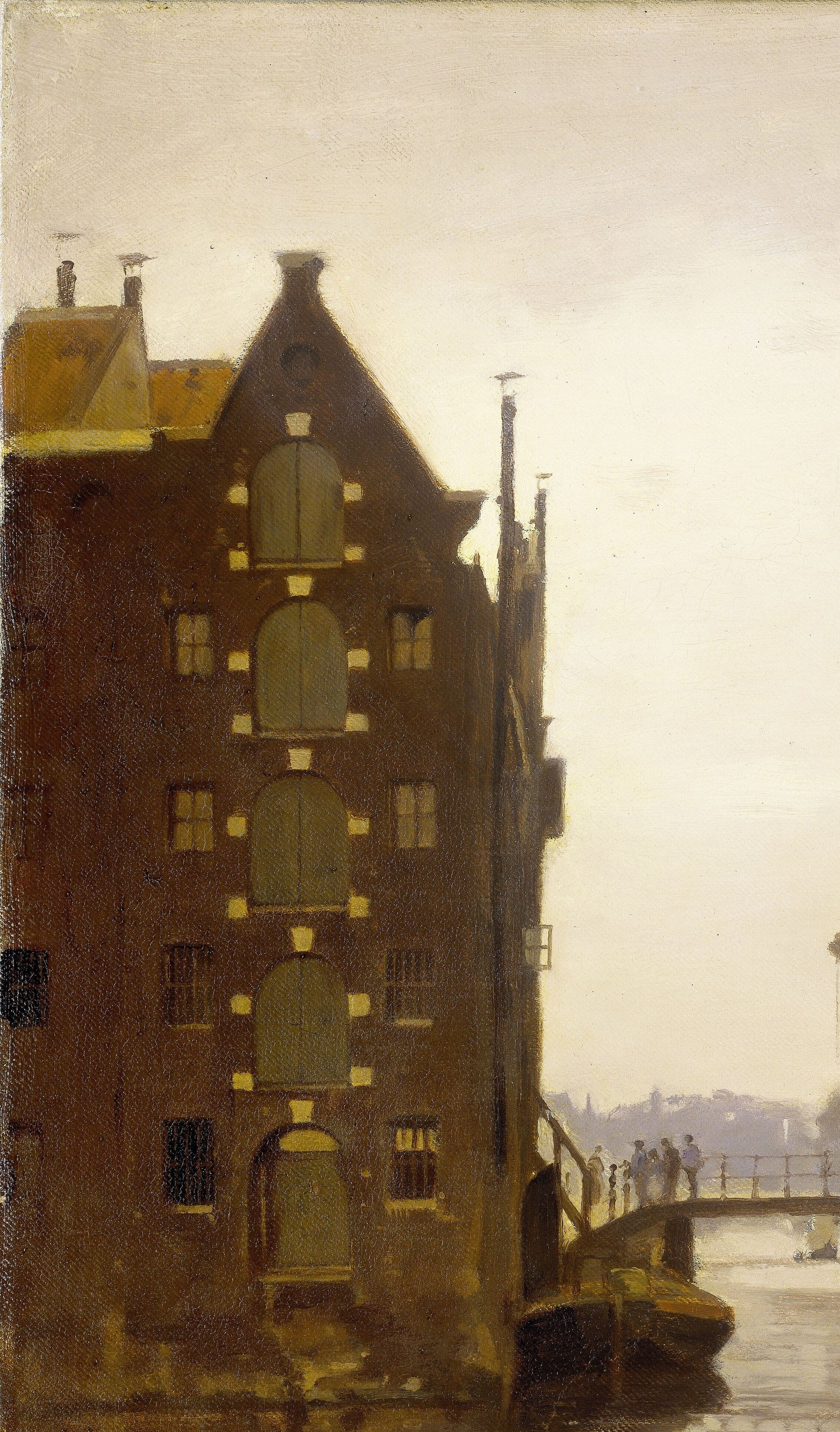
Pakhuizen aan een Amsterdamse gracht op Uilenburg by Willem Witsen
Willem Witsen's oil painting from 1911 preserves a working corner of Amsterdam that no longer exists. Titled Pakhuizen aan een Amsterdamse gracht op Uilenburg, it hangs in the Rijksmuseum and shows the Peperbrug bridge and a monumental warehouse on the Rapenburgwal. The quarter was a densely populated Jewish neighborhood, and within a few decades of this view, radical demolitions erased much of it.
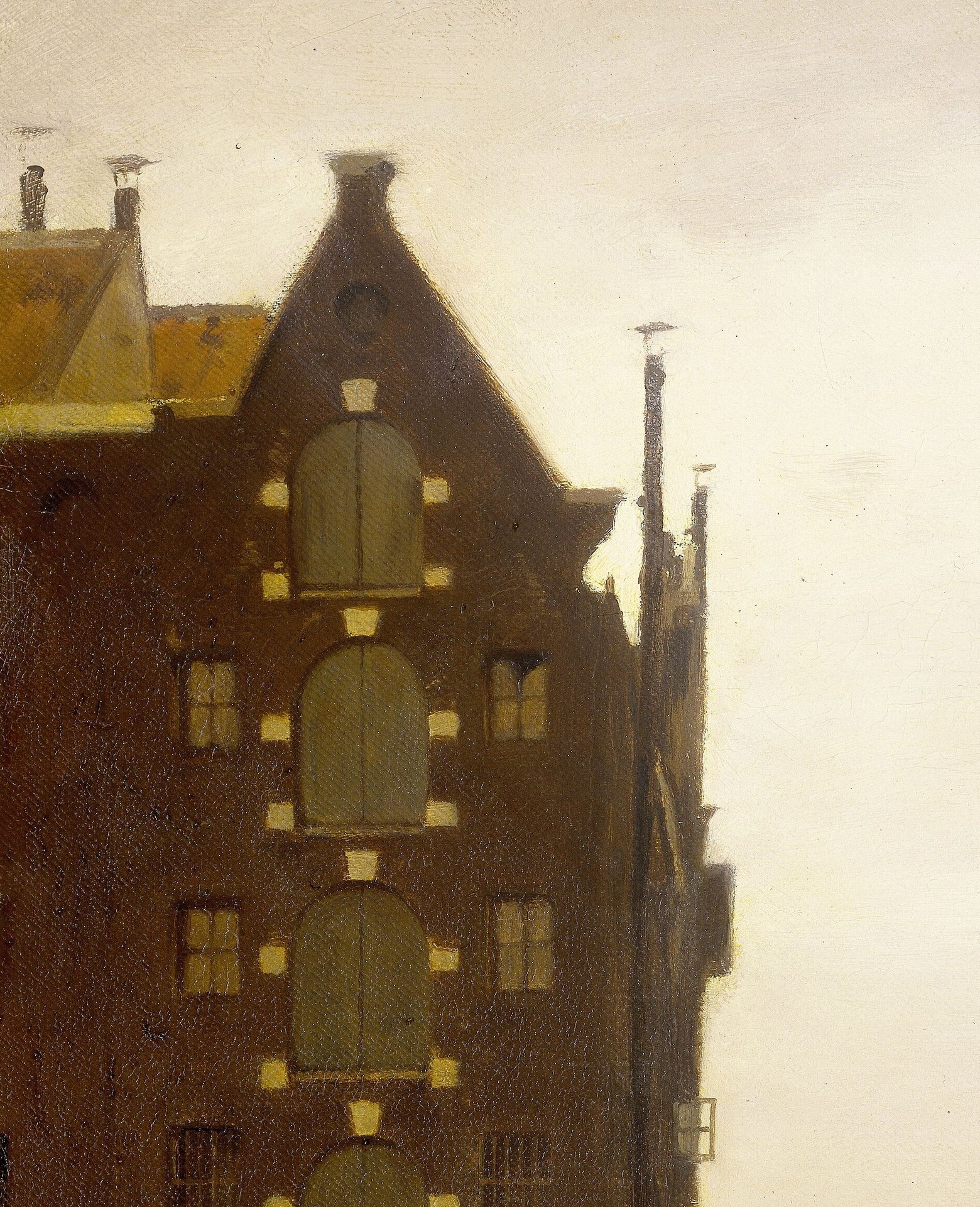
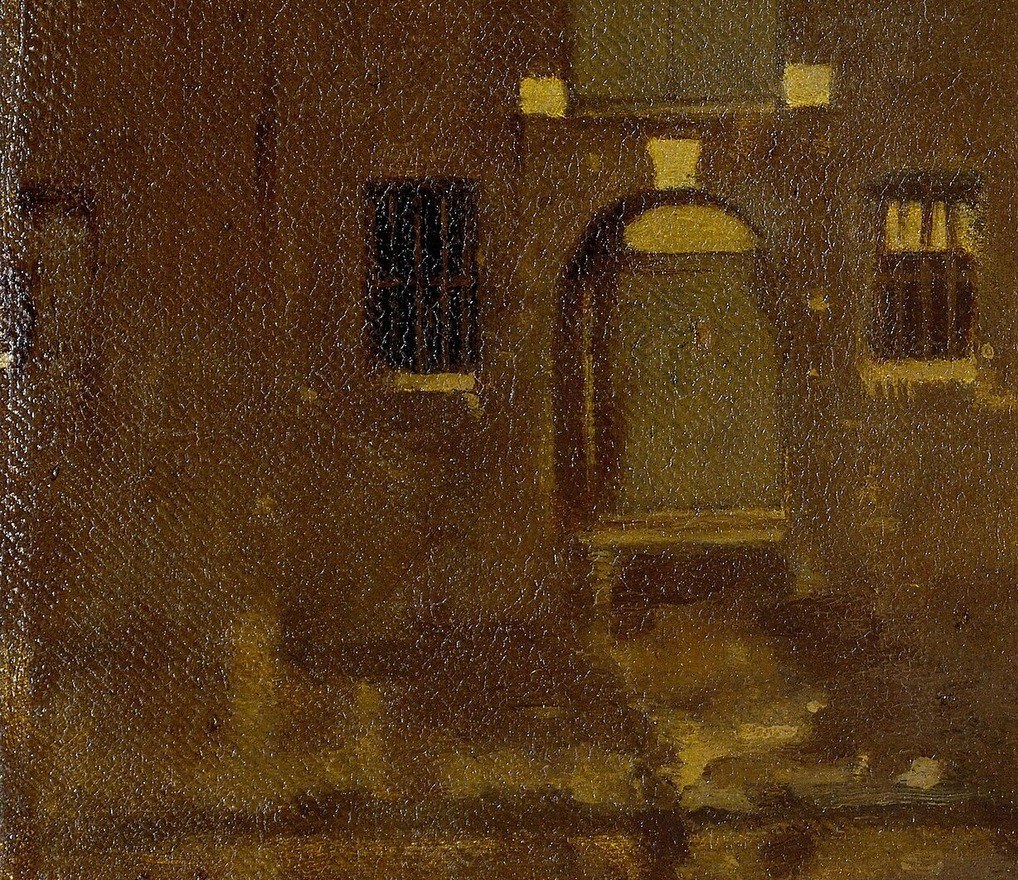
Look first at the sheer mass of the warehouse on the left. Witsen lets its red brick dominate the frame, its rows of small shuttered windows marking floors where goods were hoisted by rope. The dark archway at water level suggests boats once docked right at the building's base. Across the canal, the iron Peperbrug carries a few tiny figures; their scale confirms just how huge that warehouse was.
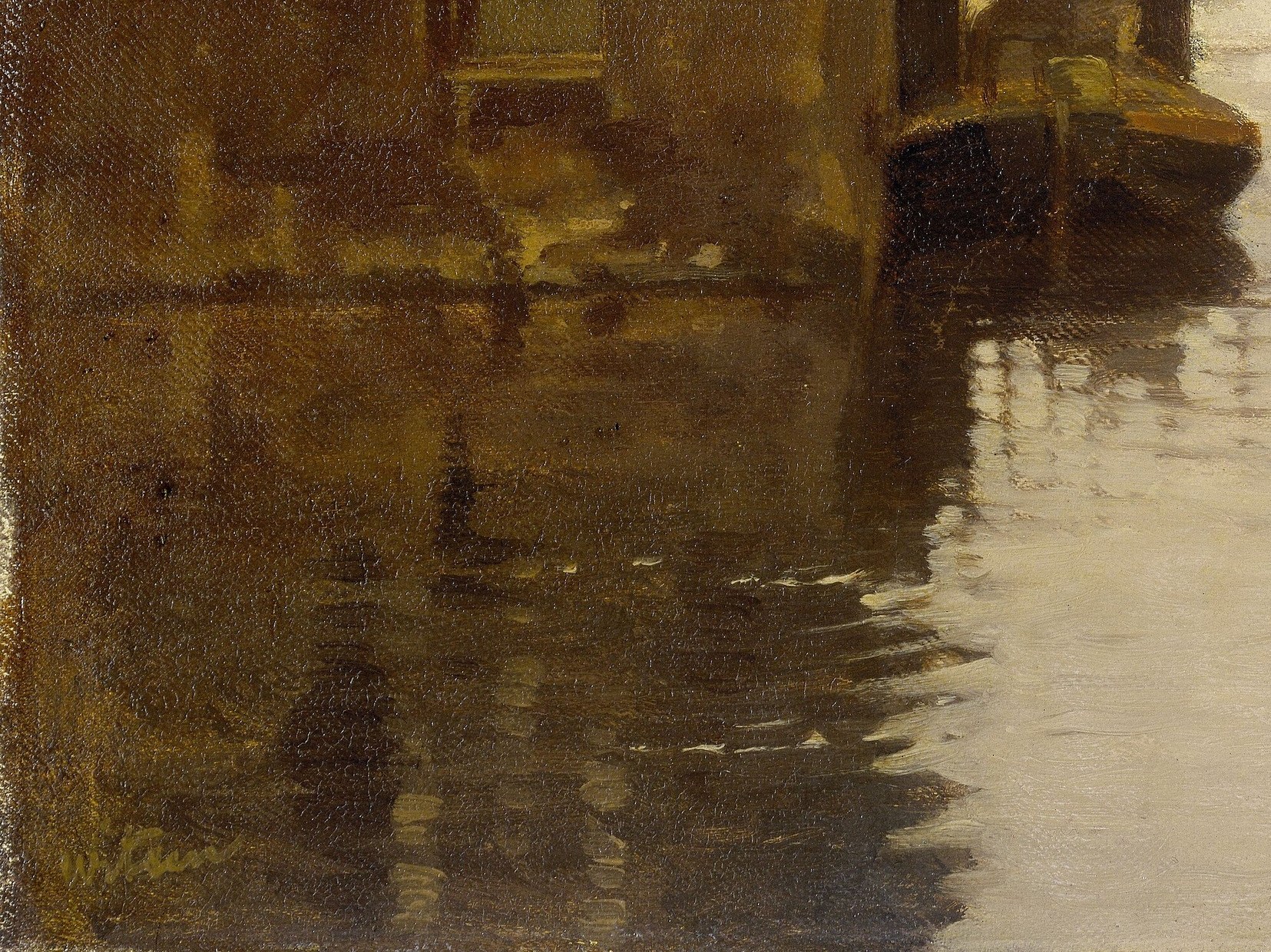
Witsen studied James McNeill Whistler's work closely, and you see it in the way he painted the sky: a pale, almost white haze that presses down and makes the dark brick feel even heavier. The water is painted loosely, more tone than detail, with the warehouse dissolving into its own dark reflection. It is an economical, atmospheric way of seeing that defined Amsterdam Impressionism.
By the mid-20th century, the Uilenburg streets Witsen recorded were largely cleared away. The painting is not a famous masterpiece, but it is a true eyewitness: a calm, light-filled record of a place that survived only in oil on canvas. What do you notice first, the weight of the building, or the quiet of the water?
Details

Transcript
By 1911, Amsterdam's Uilenburg was a dense Jewish working quarter. This red-brick warehouse was its beating heart. Those small upper windows mark floors where goods were hoisted and stored. Down at the water, the dark archway opened for boats to unload. Witsen bleached the sky to make the warehouse feel heavier. In the mid-20th century, nearly all of this was demolished. Only Witsen's quiet painting survived to witness it.