北宋 傳屈鼎 夏山圖 卷|Summer Mountains by Qu Ding
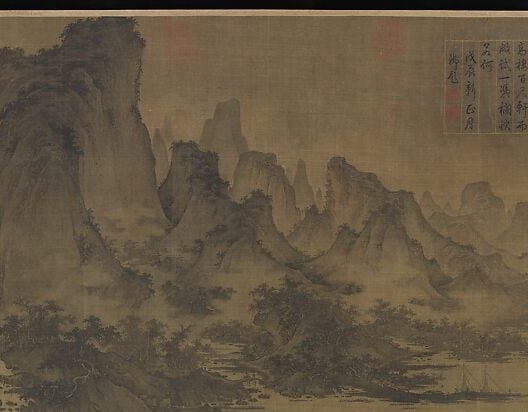
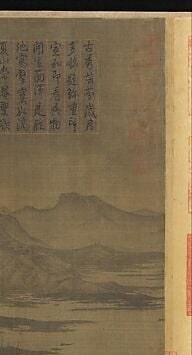
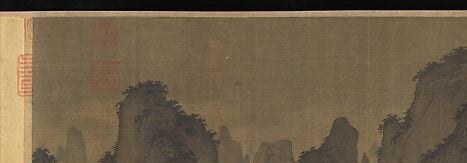
This is *Summer Mountains*, a handscroll painted in ink and light color on silk by the Song dynasty artist Qu Ding around 1050. It is now in the Metropolitan Museum of Art. The single most startling thing about it is that it exists at all: it is one of the only paintings securely attributed to Qu Ding, and it carries the imperial seal of Emperor Huizong, perhaps the most famous art patron in Chinese history.
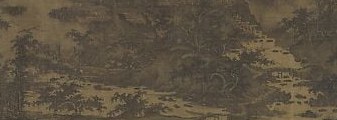
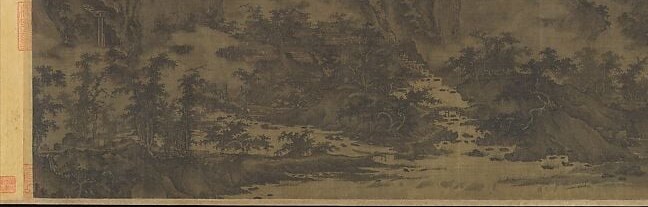
Look first at the sheer scale of the mountains and the tiny travelers on the near shoreline. The painter used layered ink washes to create atmospheric depth, letting peaks dissolve into a horizontal band of unpainted silk that reads as cloud. The bare silk around it, now a warm amber, was never meant to carry pigment, the ground itself is the sky. Finding the small pavilion structure amid the trees center-right rewards patient looking.
Qu Ding learned from the master Yan Wengui. Nearly everything else from his hand is lost. The presence of Huizong's seal suggests Qu Ding worked at court, or at least that his painting was prized there. The handscroll format meant the painting was unrolled section by section, a private journey through a landscape. For centuries it passed through collections, recognized as important enough to preserve.
Very few paintings survive a thousand years. This one made it because someone with power and taste decided it mattered. What does it look like to you now, a landscape of summer, or a landscape of careful survival?
Details
Transcript
This handscroll is a thousand years old. Mountains built up in layered peaks, receding into mist. Two small travelers walk a shoreline path. Nature dwarfs them. That was the point. These columns of text carry an emperor's seal. Emperor Huizong owned this painting. It is one of the only surviving works by Qu Ding. An emperor's taste kept it safe for ten centuries.