Las Hilanderas by Diego Velázquez
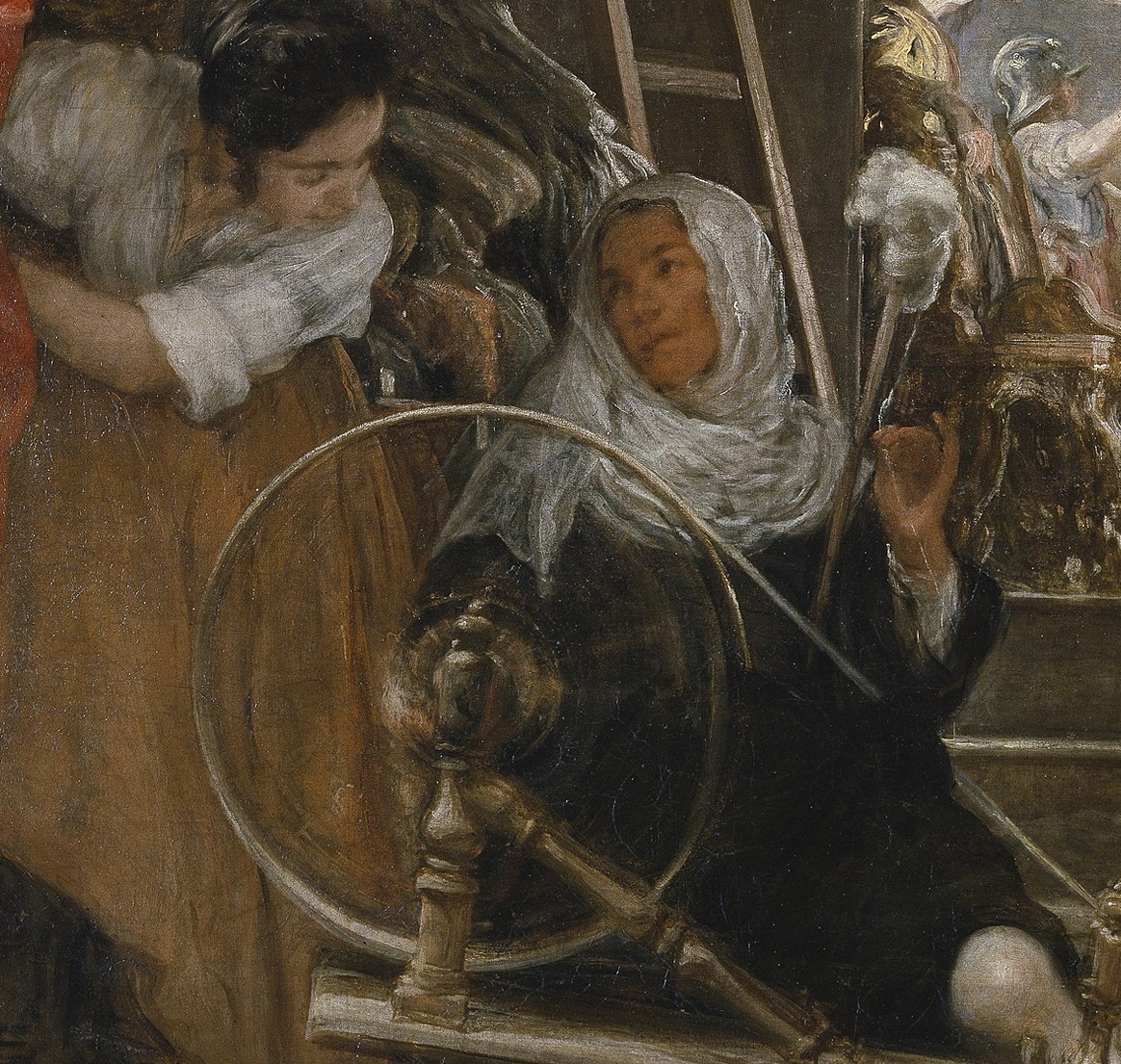
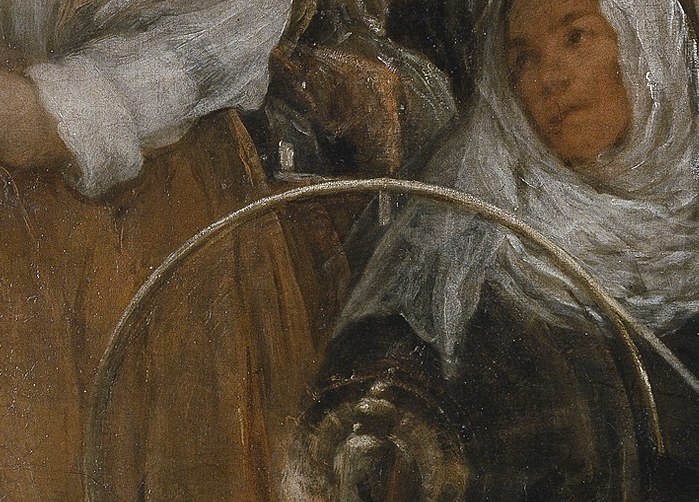
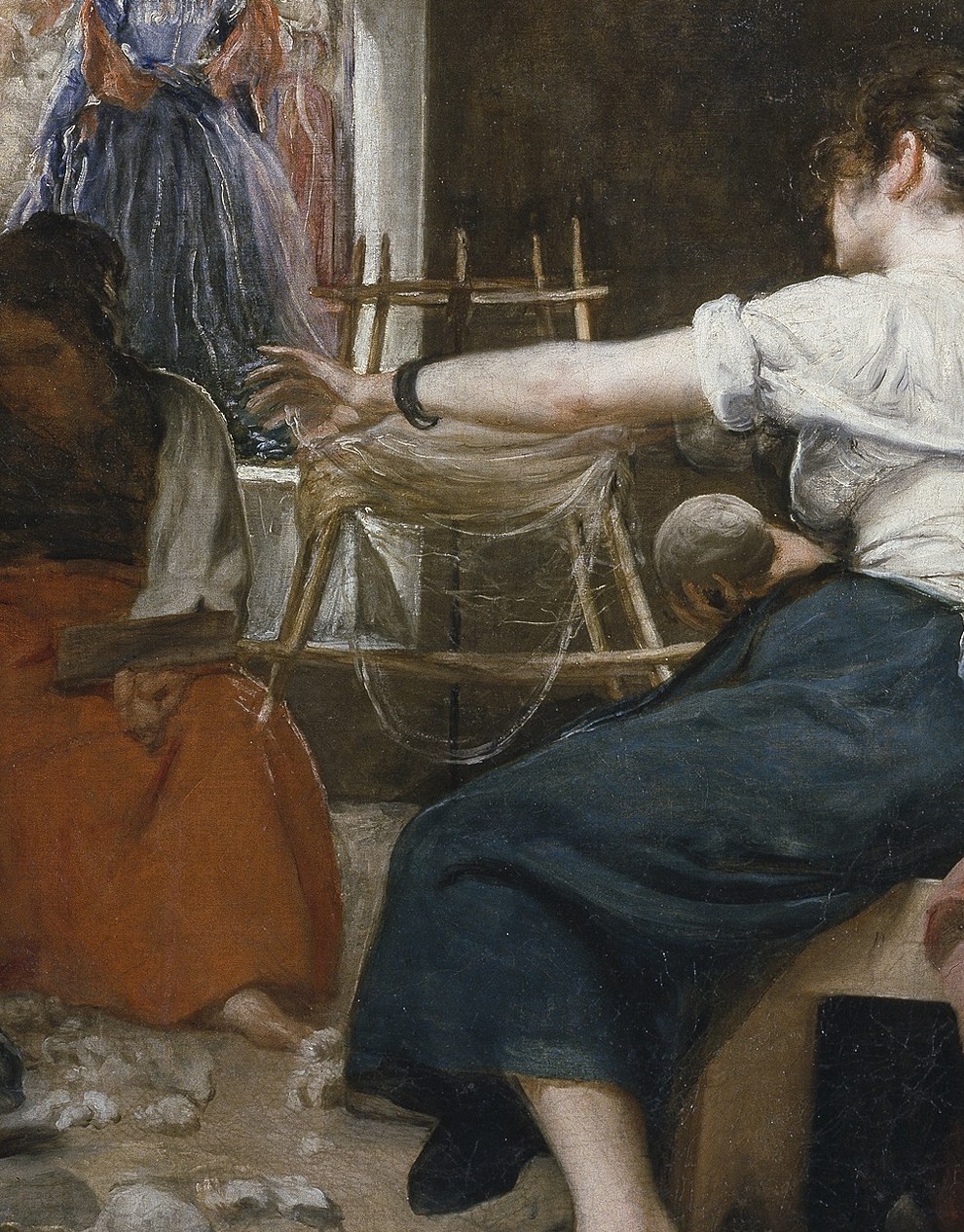
Las Hilanderas (The Fable of Arachne), painted by Diego Velázquez around 1657, contains one of Western art's earliest depictions of motion blur. The left spinning wheel's spokes dissolve into a translucent halo, anticipating photographic capture of movement by two centuries. This single detail proves Velázquez was painting what the eye actually perceives, not what the mind knows is there.
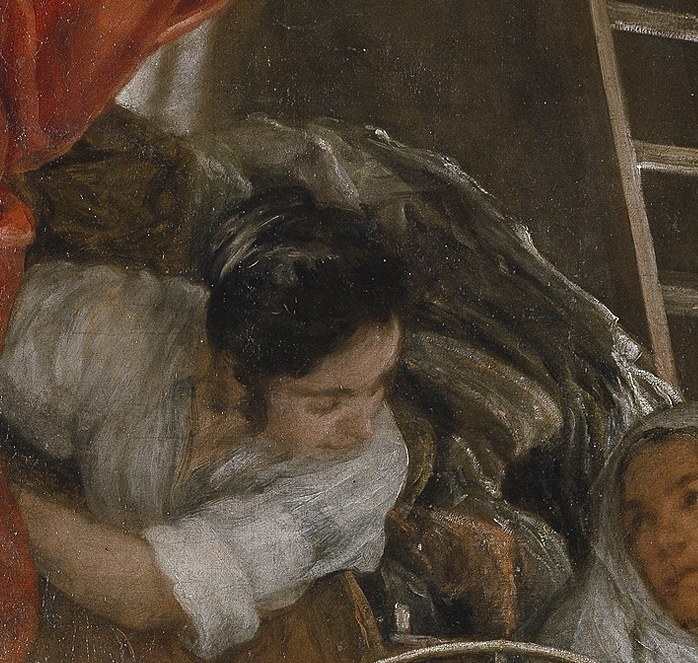
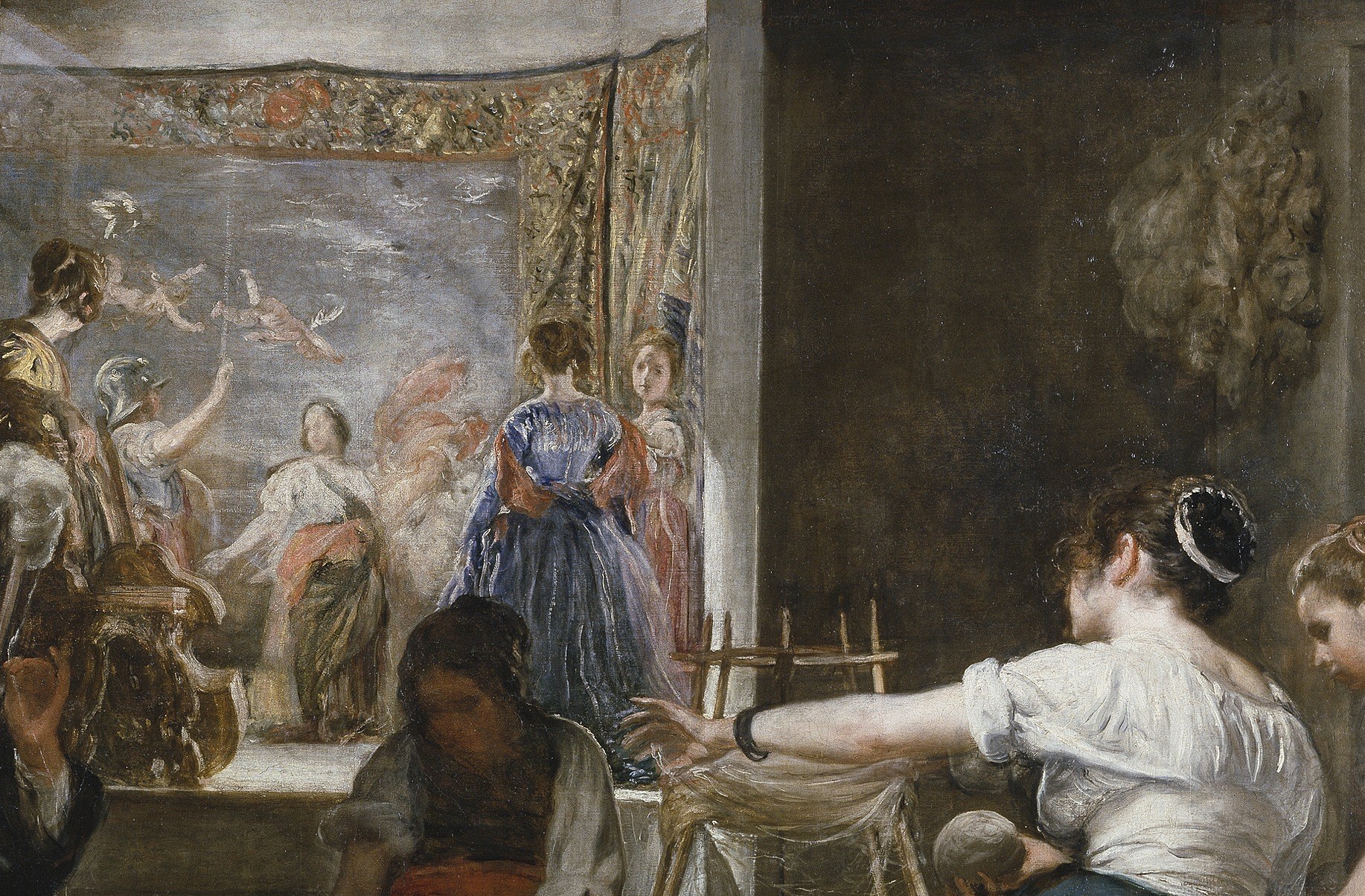
The foreground reads as a humble tapestry workshop, but the illuminated archway behind it reveals the scene's true subject: the myth of Arachne. The young woman in red is the mortal weaver herself. The old woman beside her, with her weathered profile and cap, is the goddess Minerva in disguise, directly matching Ovid's description in the Metamorphoses.
Art historian Jonathan Brown placed this work beside Las Meninas as Velázquez's greatest achievement. It was painted for the court of Philip IV during the Spanish Golden Age, a period when the artist was otherwise occupied with single-figure royal portraits. This ambitious, multi-layered composition shows a mind pushing far beyond the formal requirements of court painting.
Look at the hands of the old woman on the spindle. If the identification holds, these are the hands of a deity performing human labor, the single most charged point of contact in the entire composition.
Details
Transcript
A workshop. Old women spinning wool. But this is not a scene of ordinary labor. The spokes dissolve. A ghostly halo. This is motion blur, painted two centuries before photography. The woman at the wheel is not what she seems. Scholars say she is Minerva, disguised as a crone. A divine hand, spinning mortal wool. Look to the light. The myth has already begun.