Marie Thérèse of Austria in Royal Costume by Henri and Charles Beaubrun
This is 'Marie Thérèse of Austria in Royal Costume,' painted by the brothers Henri and Charles Beaubrun in 1660. It hangs in the Palace of Versailles. The portrait was commissioned just after her marriage to Louis XIV, a political union meant to end war between France and Spain. The painting shows a queen at the peak of her symbolic power, but her personal story was far more isolated.
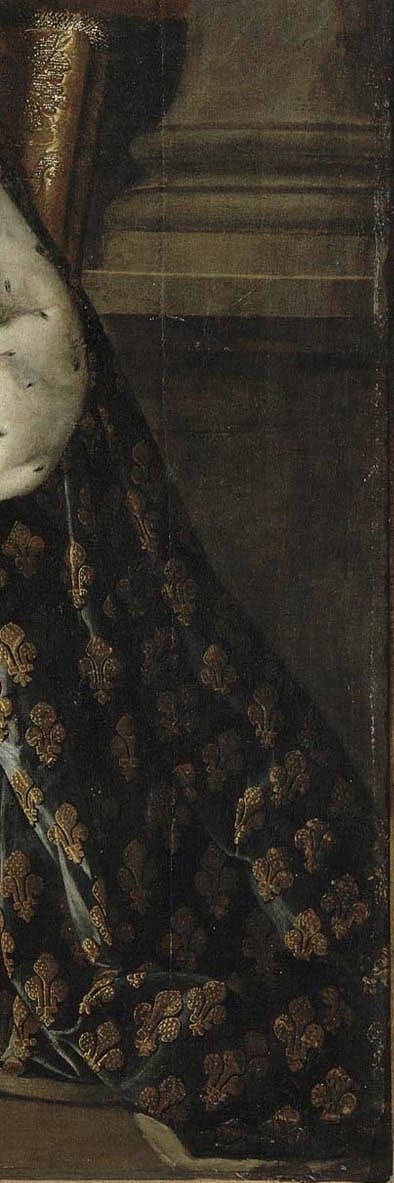
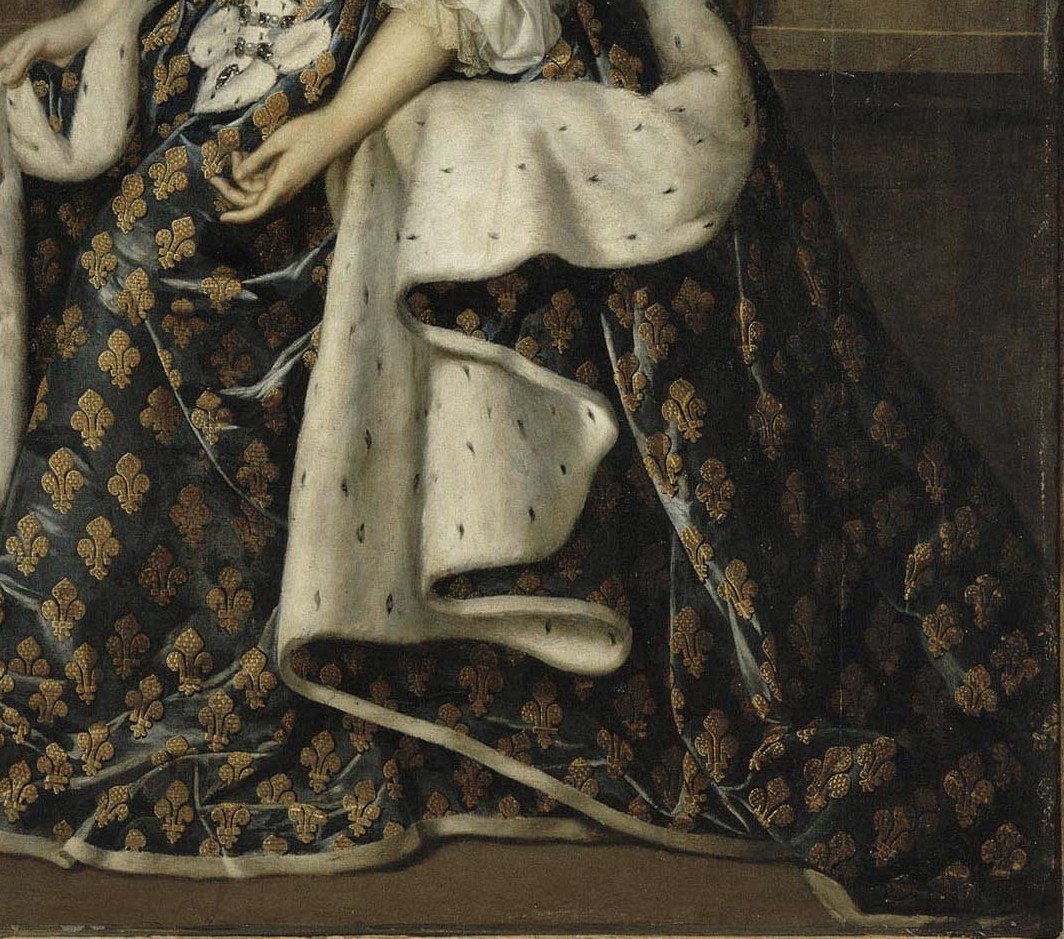
Look at the ermine she holds in her right hand. The Beaubrun brothers rendered it with meticulous care because it was the ultimate symbol of royal purity. The fleur-de-lis embroidered on her gown, the pearl necklace, and the jewel on her chest all broadcast her status. But the dark background on the right is just as telling: it isolates her figure, making her the sole focus in a court where she was often alone.
Maria Theresa arrived at the French court unable to speak the language and struggled to find her place. The court was waiting for her to produce a male heir. She fulfilled that duty six times, but only one child survived past infancy. While she occupied the throne as queen consort, Louis XIV’s attentions quickly turned to a series of influential mistresses. The portrait captures her in a moment of official triumph, yet her quiet, composed face hints at the personal cost of royal duty.
The painting survived the French Revolution and remains at Versailles, a witness to a court that prized appearances above all else. What do you notice in her expression that the artists might not have intended?
Details
Transcript
She arrived in France as a stranger in 1660. A Spanish princess who spoke no French. Look at the ermine she holds. A symbol of royal purity. They painted it perfectly. The court watched for one thing: a male heir. She gave him six children. Only one survived infancy. The Sun King's gaze soon wandered elsewhere.