Roundel with the Annunciation by http://www.wikidata.org/.well-known/genid/34bf1a02510ff8d683146025dd785698
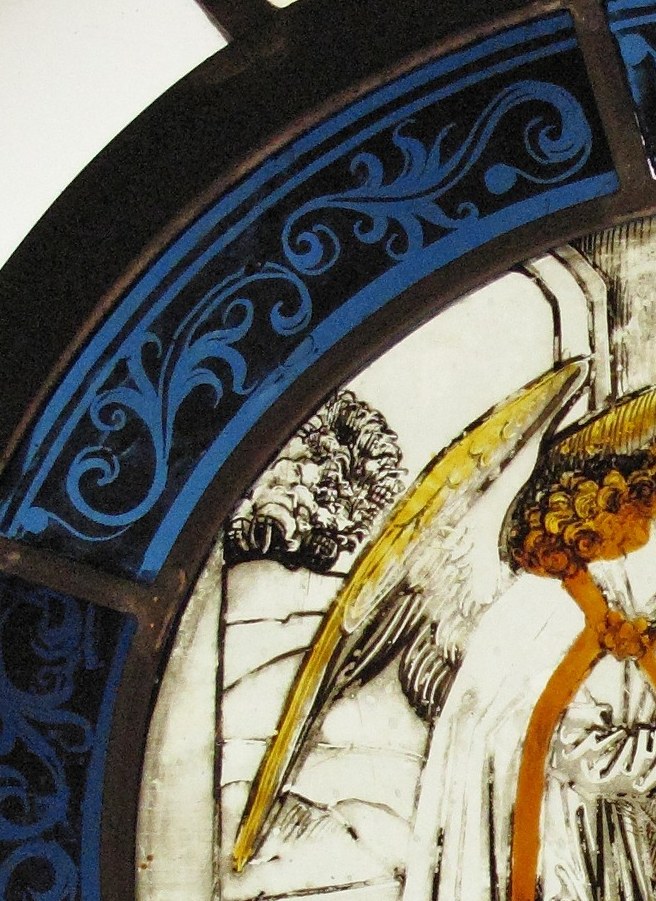
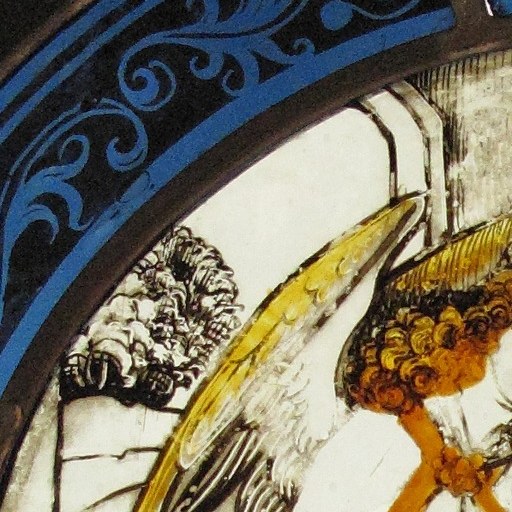
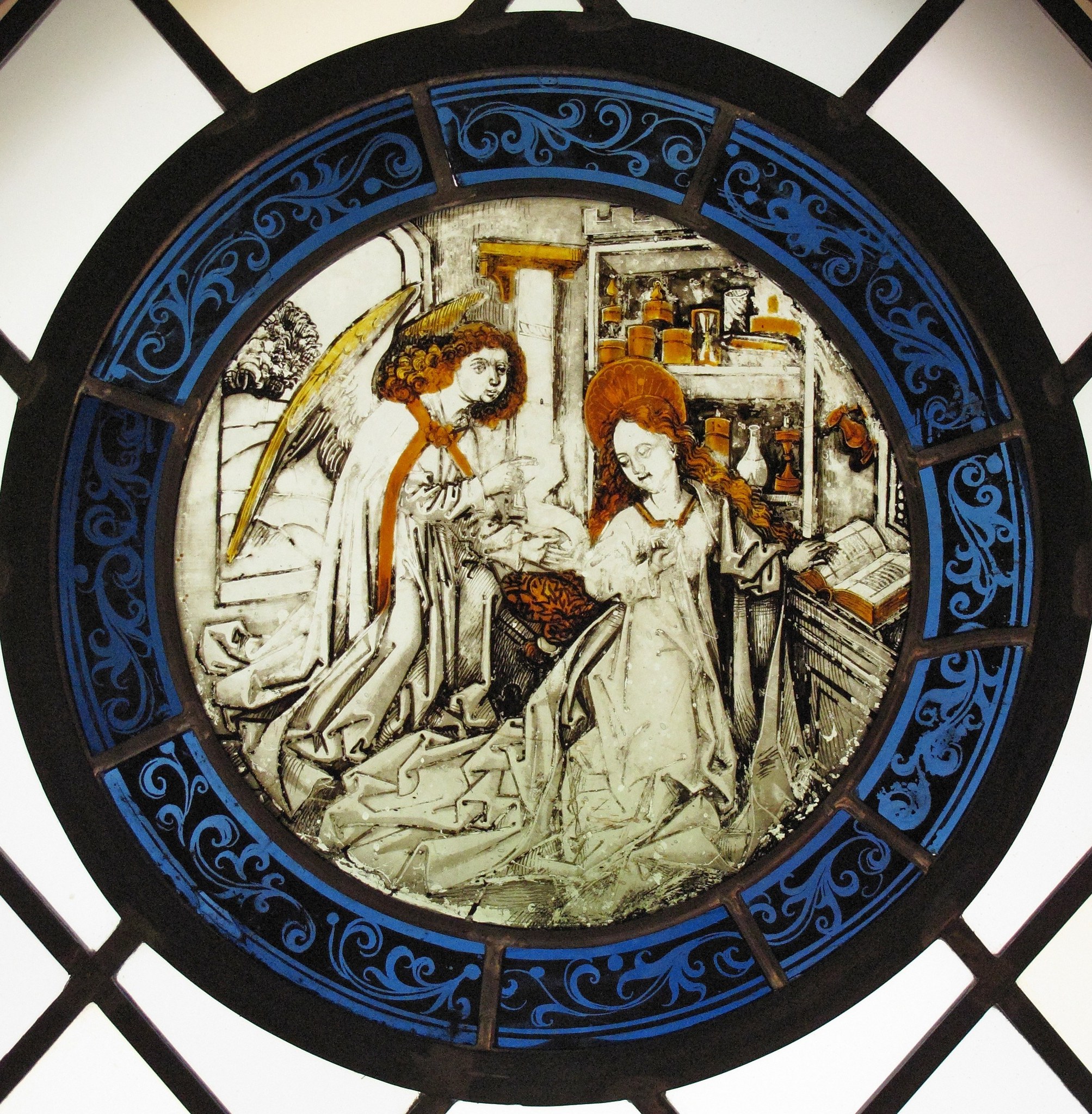
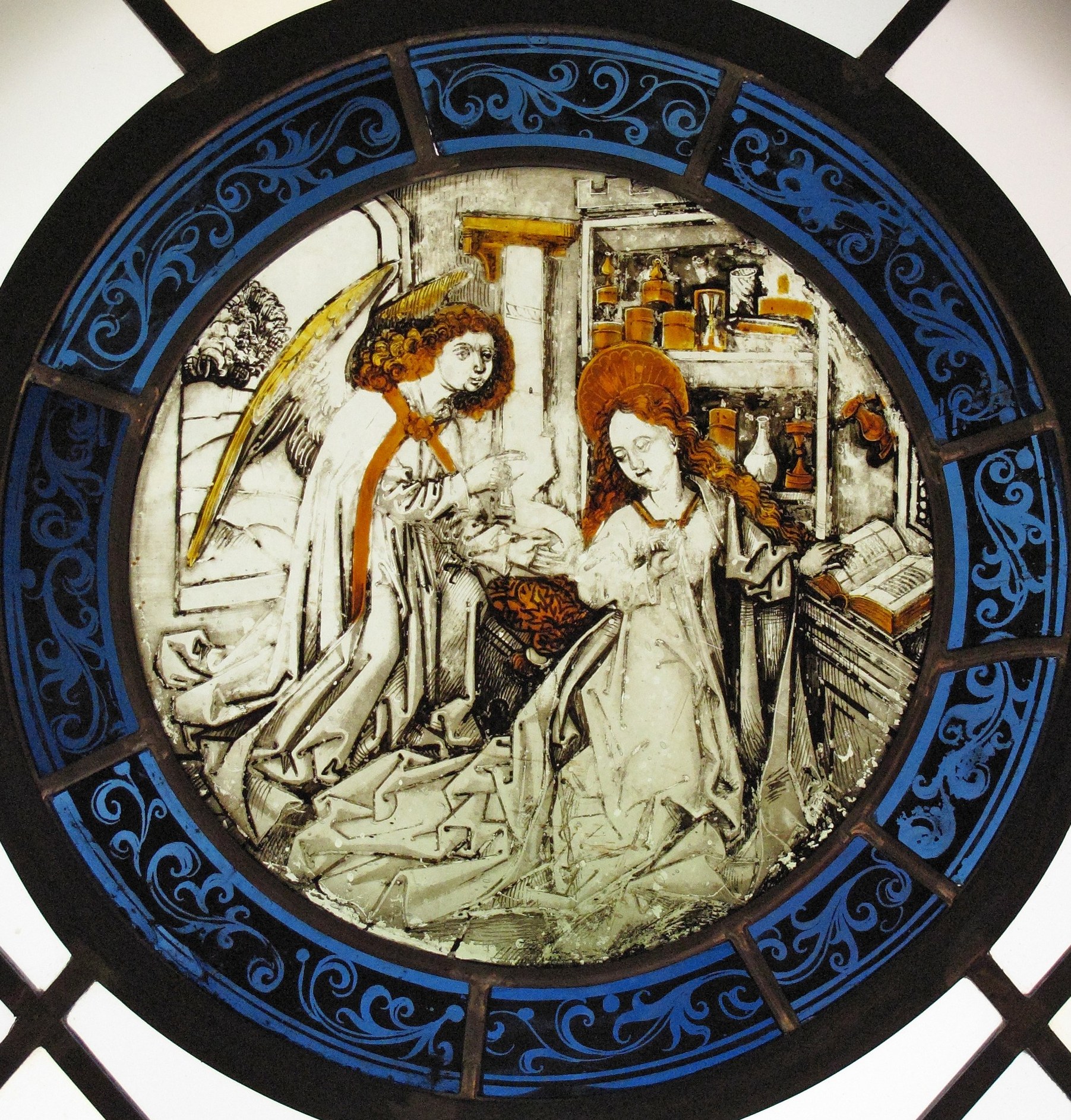
This is 'Roundel with the Annunciation,' a stained-glass roundel made around 1500 by an unknown master in the Northern Netherlands. It is painted almost entirely in grisaille: layers of grey vitreous paint and fired enamel on clear glass. The single exception is the angel's wings, which burn a warm amber-gold against the cool stone tones.
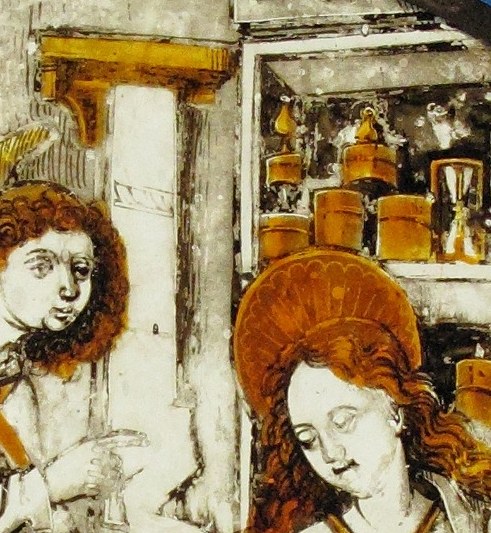
Look at how the grisaille builds Mary's robes. The drapery is not drawn with lines; it is modeled with washes of black-brown paint that were stippled and scratched away before firing to produce the illusion of deep, soft folds. The angel's gesture is the grammatical center: one hand raised in address, the arrival of a message before any words leave the lips.
Silver stain is the reason the wings glow. The artist brushed a compound of silver nitrate onto the back of the glass. In the kiln, the silver ions migrated into the glass itself, turning it permanently amber. It was one of the costliest steps in stained-glass production, and here it was reserved entirely for the messenger. A convent or a wealthy private donor likely commissioned the roundel for a window where morning light would hit the angel directly.
The book under Mary's hand is open. The old story says she was reading Isaiah's prophecy about a virgin who would conceive. The painter gave her a face of quiet absorption, caught at the exact line that would change her life. Every other surface is grey so that this single exchange, and these two faces, would hold the light.
Details
Transcript
This whole world is painted in shades of grey. Except for the wings. That amber is real silver, stained gold. Silver nitrate fired onto glass was ruinously expensive. The artist spent it all on hope hitting this room. And Mary, mid-sentence, accepts it.