Margaret of Austria, Consort of Philip III by http://www.wikidata.org/.well-known/genid/0ff8ca6c71c6a467bdc99130cd642731
This striking portrait of Margaret of Austria, Consort of Philip III, painted by Juan Pantoja de la Cruz around 1600, captures the regal presence of a queen. Now housed in a museum, it stands as a testament to early 17th-century Spanish court portraiture.
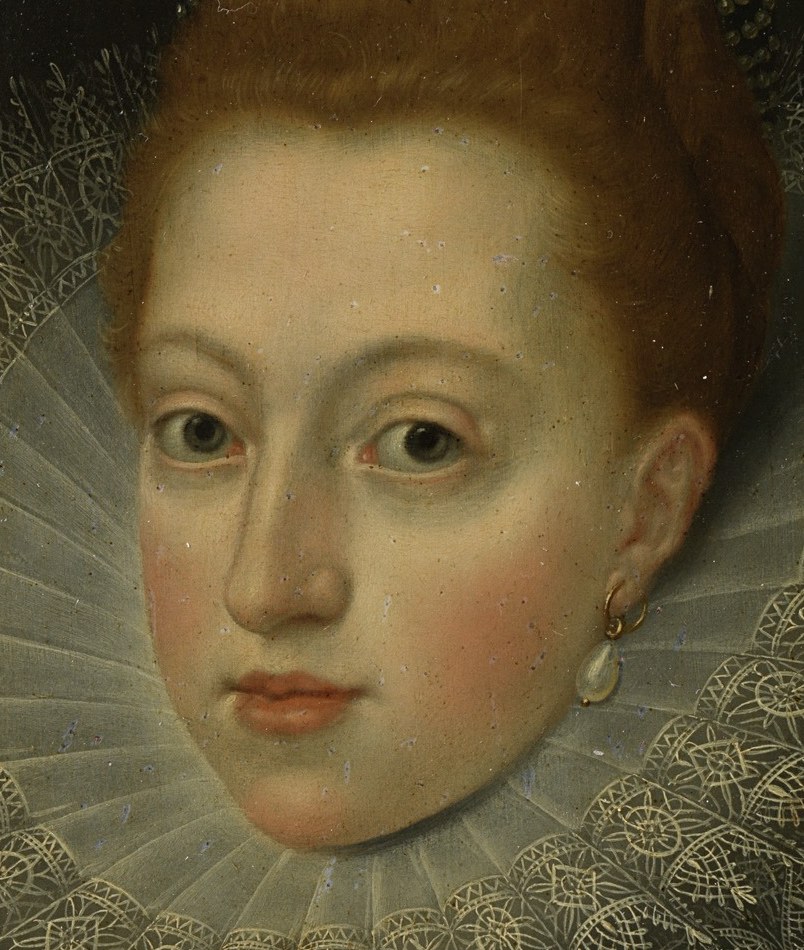
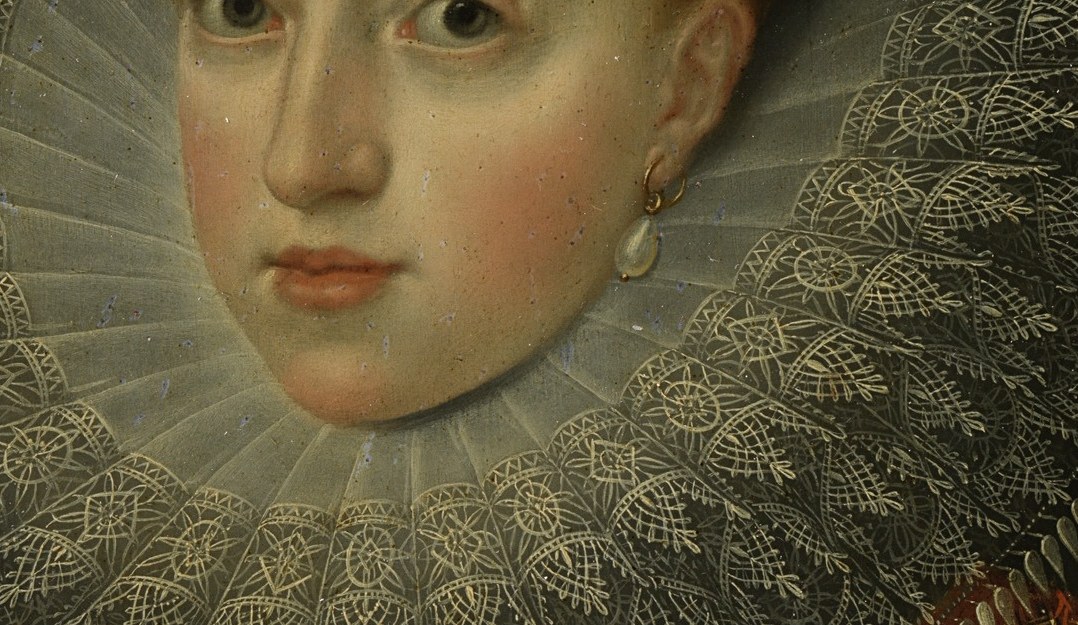
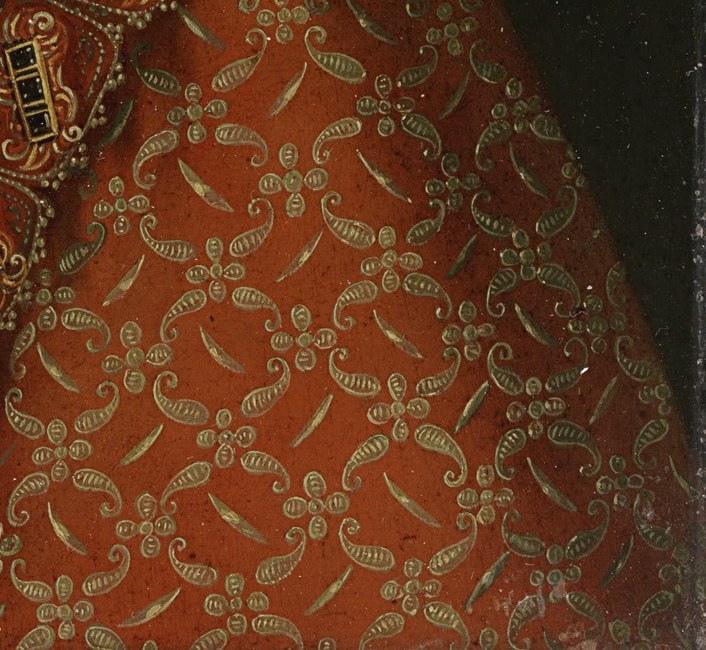
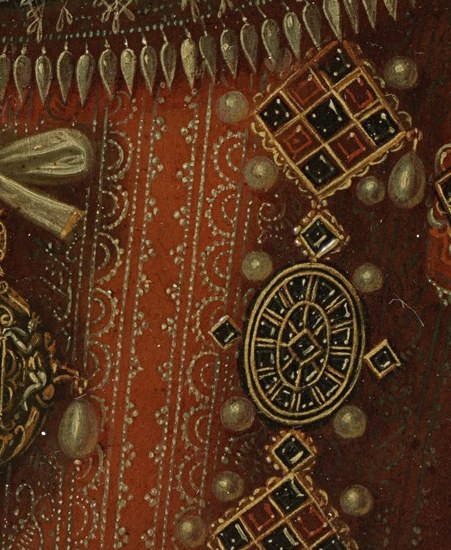
Notice the intricate details: the delicate lace ruff, the rich gold embroidery on her red dress, and the subtle, dignified expression on her face. Each element communicates her status and the formal conventions of the time.
Margaret became queen consort at a young age, and this painting reflects the expectations of her role. The use of a copper panel, a common practice for its durability and luminous effect, highlights the meticulous brushwork and the artist's skill in rendering texture and light. It's a fascinating glimpse into a moment in royal history.
Details
Transcript
Margaret of Austria became queen of Spain at just 19. Her portrait presents a dignified queen, as court conventions demanded. The intricate lace ruff speaks to her immense wealth and status. Even the gold embroidery likely carries hidden dynastic symbols. She looks out, calm and solemn, reflecting her powerful role. The artist used copper to give the painting its luminous quality.