Autumn Landscape, Sugar Loaf Mountain, Orange County, New York by Jasper Francis Cropsey

For forty years, the Metropolitan Museum of Art had this painting labeled wrong. It hung as a view of Mount Chocorua in New Hampshire, a title a dealer had assigned it in 1955. The label was confident, and nobody questioned it.

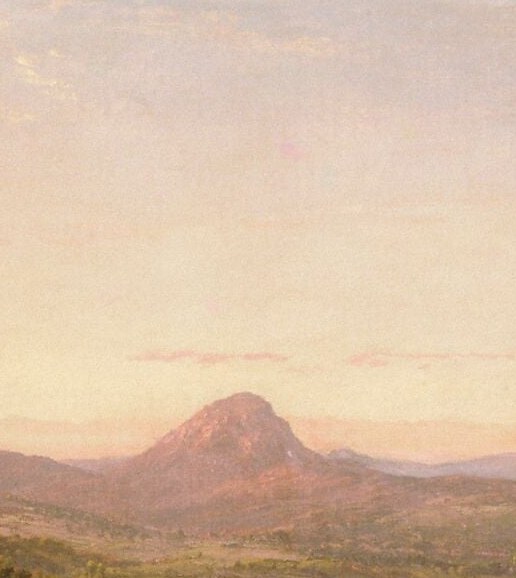
But the mountain in the painting is not Chocorua. It is Sugar Loaf Mountain, a 1,226-foot grazwacke-slate cone in Orange County, New York. Cropsey painted it repeatedly from his home in Warwick, where he lived in a Gothic Revival mansion he designed himself. He saw this peak from his own backyard, then enlarged and idealized it on canvas until it read like White Mountain grandeur.

In 2000, art historian Kenneth W. Maddox published the correction in The Metropolitan Museum Journal. The giveaway was the geology. The rock under the autumn light was not New Hampshire granite. Cropsey had transformed his local hill into a cathedral of autumn, and the deception had worked so well that it fooled curators for generations.

A landscape can be beautiful and mistaken at the same time. Next time you are in the American Wing, look at the mountain and ask yourself what else in the room might be hiding under a borrowed name.

#arthistory #hudsonriverschool #metmuseum

Details

A roseate luminist sky that unifies the whole scene; the gradient from warm pink at center to cooler blue toward the left edge is a deliberate atmospheric perspective move, not a weather accident.
The misidentified title subject , mistaken for Mt. Chocorua for four decades , this distinctive graywacke cone anchors the entire composition and carries the painting's contested, finally-resolved identity.
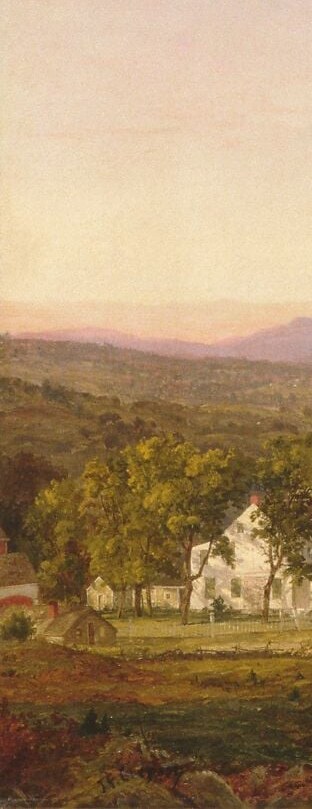
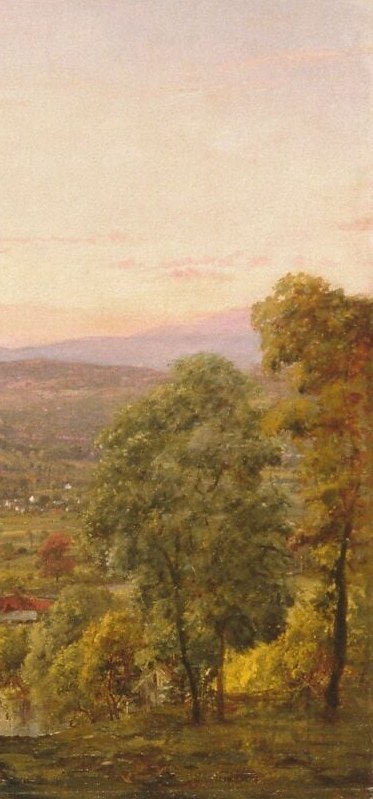
Classic repoussoir with blazing orange and gold , Cropsey's signature autumn palette that electrified London audiences in 1860; close up, these passages reveal bravura loose brushwork beneath the finish.
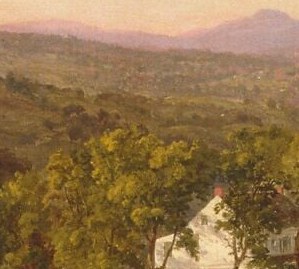
The sole prominent sign of human settlement in the middle ground; its bright white acts as a compositional anchor and signals civilizing of the wilderness that Hudson River School painters celebrated as moral progress.
Balances the left frame; the tonal shift from orange-gold through olive-green traces seasonal change across a single afternoon's light, showing Cropsey's color modulation at work.
Transcript

For decades, this painting hung under a false name. A dealer called it Mount Chocorua, New Hampshire. But look at the rock: grazwacke-slate, not granite. This is Sugar Loaf Mountain, right here in Orange County. Cropsey painted it from his own backyard in Warwick. He took liberties, blowing a modest hill into a monument. Not until the year 2000 was the true name restored.