Artwork
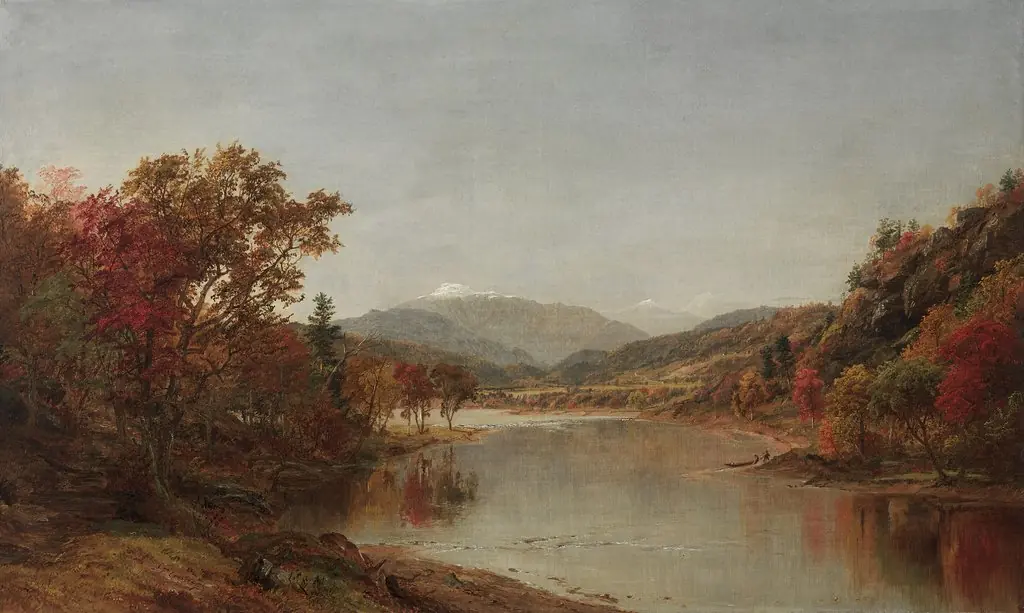
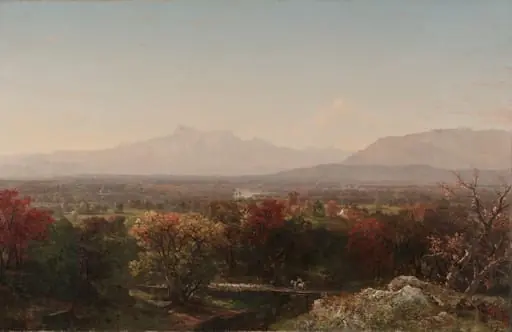
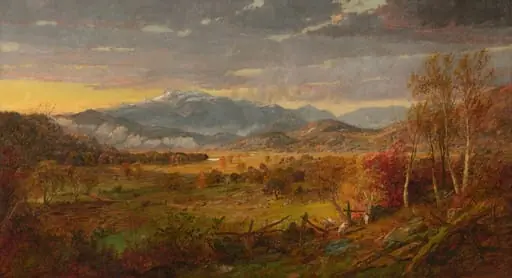
Autumn Landscape, Sugar Loaf Mountain, Orange County, New York
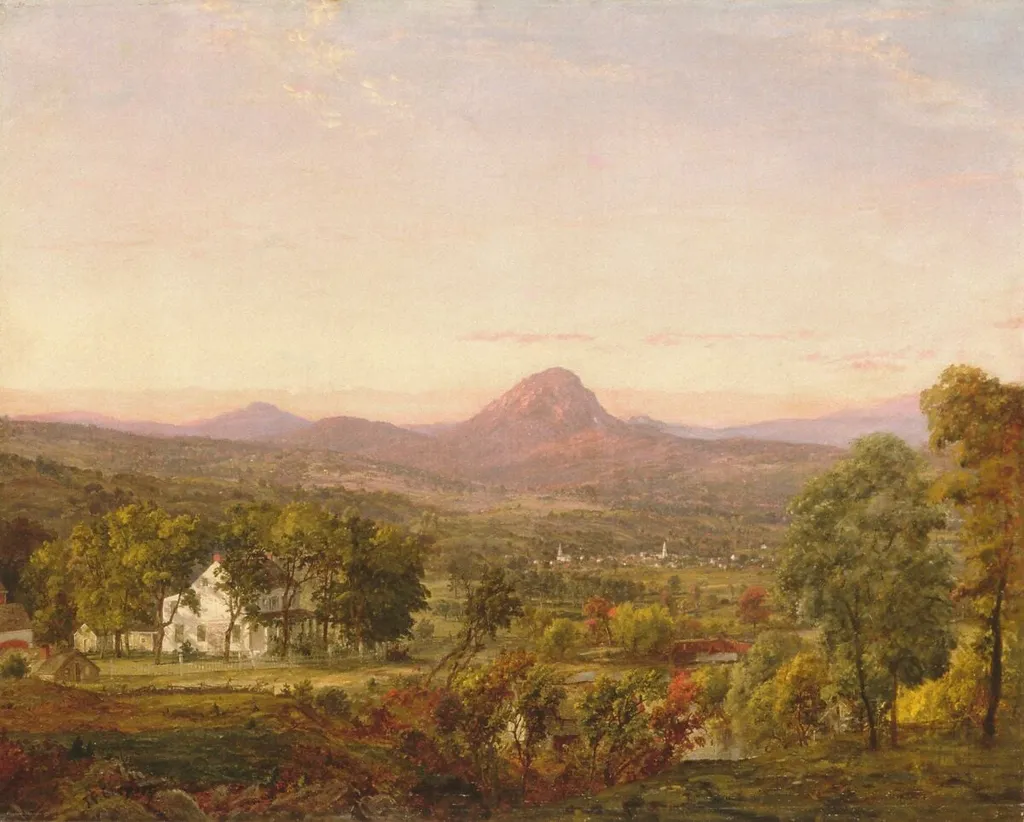
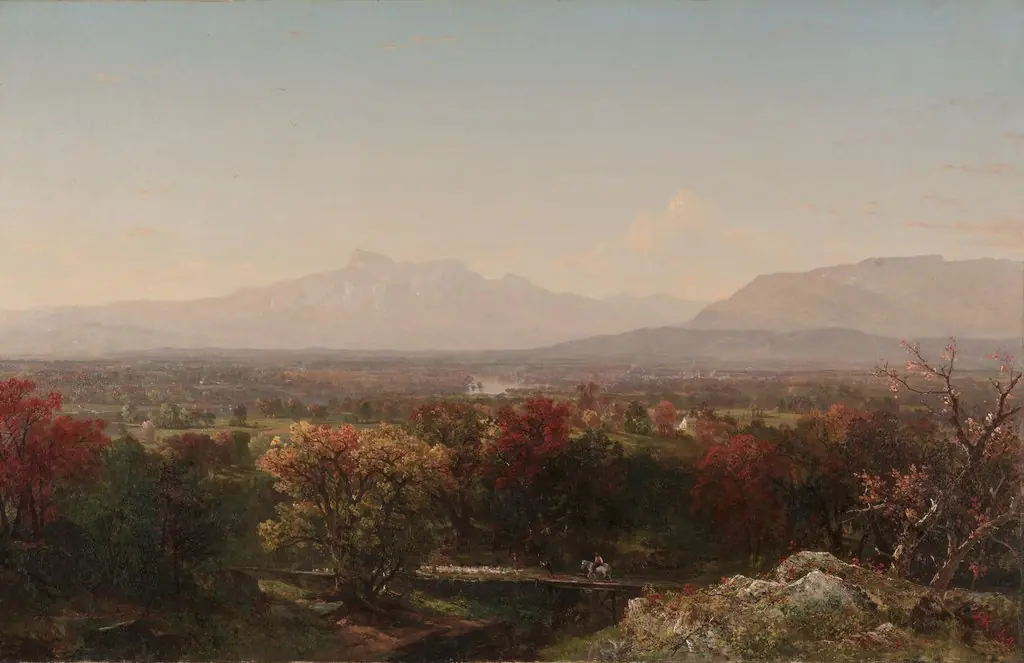
Autumn Landscape, Sugar Loaf Mountain, Orange County, New York is an oil painting by the Hudson River School artist Jasper Francis Cropsey. It dates from 1872 and is held in the collection of the Metropolitan Museum of Art.
- Accession no.
- 61.262
- Credit line
- Purchase, The Bertram F. and Susie Brummer Foundation Inc. Gift, 1961
About this work
Maddox reveal its true subject: Sugar Loaf Mountain, a modest 1,226-foot graywacke-slate peak rising above the Warwick Valley in Orange County, New York.
For nearly four decades, the Metropolitan Museum of Art listed this autumn vista as a view of Mount Chocorua in New Hampshire. Only in 2000 did scholar Kenneth W. Maddox reveal its true subject: Sugar Loaf Mountain, a modest 1,226-foot graywacke-slate peak rising above the Warwick Valley in Orange County, New York. Jasper Francis Cropsey painted the canvas around 1870–75 while living at his nearby estate, "Aladdin," and like Cézanne with Mont Sainte-Victoire, he exaggerated the mountain's scale and contour into a monumental form.
Overview
Jasper Francis Cropsey's Autumn Landscape, Sugar Loaf Mountain, Orange County, New York, painted around 1870–75, captures a vibrant autumnal vista. This oil on canvas depicts a prominent, idealized peak rising above a pastoral scene of meadows, a farmhouse, and distant villages. For decades, the painting was misidentified as a New Hampshire scene, a testament to Cropsey's artistic transformation of a local, modest New York mountain into a monumental form.
Subject & Meaning
The artwork presents an autumn view dominated by a towering, conical mountain, surrounded by wooded areas, open fields, and scattered human settlements. While the painting's title now correctly identifies the peak as Sugar Loaf Mountain in Orange County, New York, Cropsey significantly exaggerated its actual scale and contours. This artistic license transformed the modest 1,226-foot formation into a grand, almost artificial presence, reflecting the artist's tendency to idealize natural forms rather than render them with strict topographical accuracy.
History & Provenance
The Metropolitan Museum of Art acquired this canvas in 1961, initially believing it depicted Mount Chocorua in New Hampshire, a title established by a dealer for a 1955 exhibition. This misattribution persisted for nearly four decades until 2000, when art historian Kenneth W. Maddox published research in The Metropolitan Museum Journal. Maddox definitively identified the subject as Sugar Loaf Mountain, a peak Cropsey frequently observed and painted from his Warwick, New York estate. The museum's purchase was made possible by The Bertram F. and Susie Brummer Foundation Inc. Gift.
Context
Cropsey created this autumnal scene during his residency at "Aladdin," the Gothic Revival mansion he designed and built near Greenwood Lake in Warwick, New York, between 1870 and 1875. From this property, he had a direct view of Sugar Loaf Mountain, which became a recurring motif in his work. His practice of idealizing the local topography, coupled with the relative obscurity of the Warwick Valley compared to more famous scenic locations, contributed to the painting's long-standing misidentification.

Artist & collection
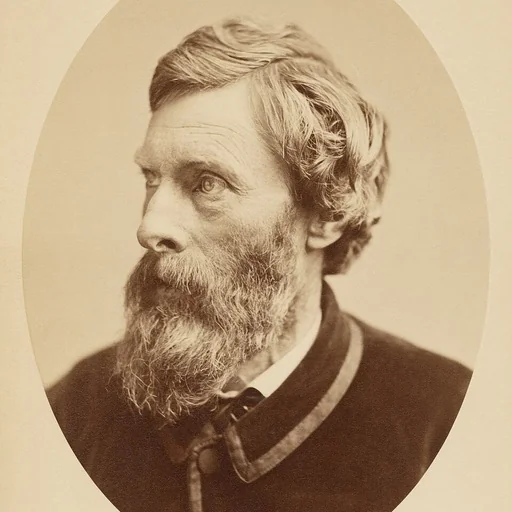
Artist
Jasper Francis Cropsey was an American architect and artist. He is best known for his Hudson River School landscape paintings.