Singerie: The Sculptor by Huet, Christophe
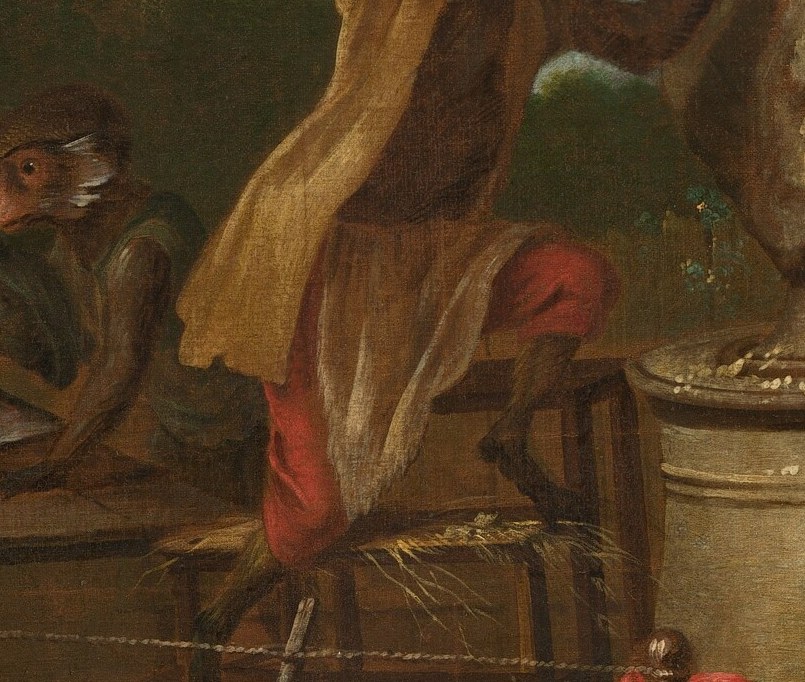
This is *Singerie: The Sculptor*, painted around 1739 by Christophe Huet. It belongs to a peculiar and wonderful genre called *singerie*, which flourished in 18th-century France. Wealthy patrons commissioned entire rooms decorated with monkeys dressed as humans, acting out the follies of fashion, art, and courtly life. It was a way for high society to laugh at its own pretensions.
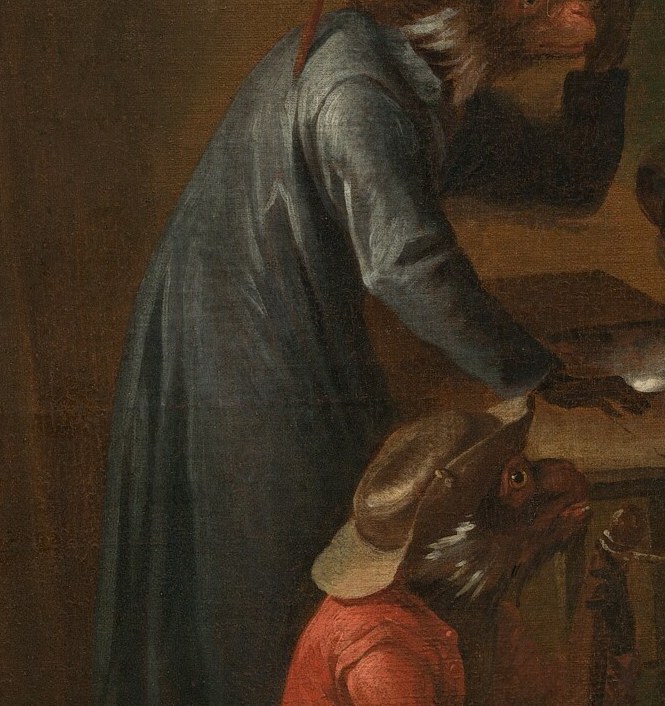
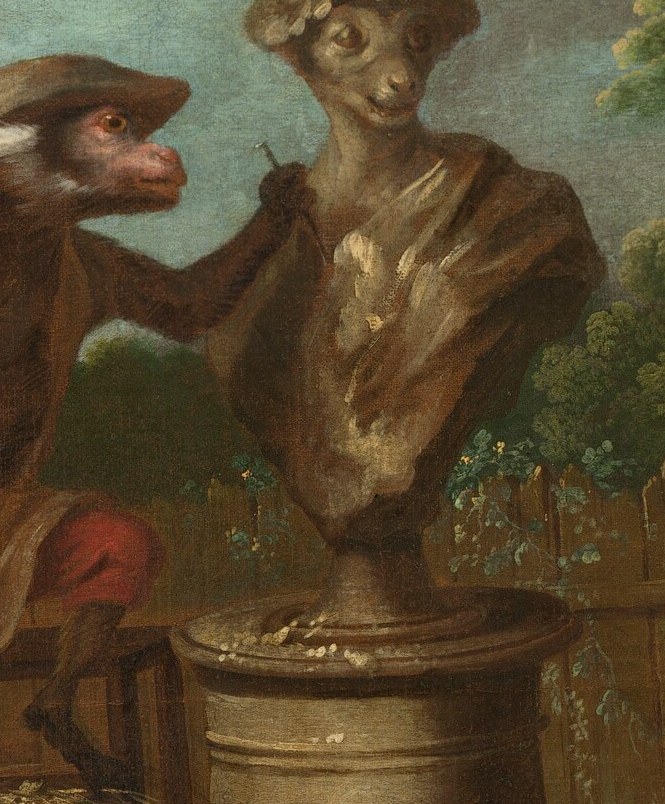
Start with the sculptor monkey, chisel in hand, working a marble bust. His posture and focus are entirely human. The monkey in blue seems to be an art dealer or a patron, directing the work with an air of authority. The one reading a scroll might be studying artistic theory. Every figure is a playful jab at the art world.
Christophe Huet was born in Pontoise in 1700 and became known for these decorative, allegorical scenes. His work blended Baroque dynamism with a sharp satirical edge. The humor is gentle but precise, a reminder that the anxieties of creation and critique are not unique to humans.
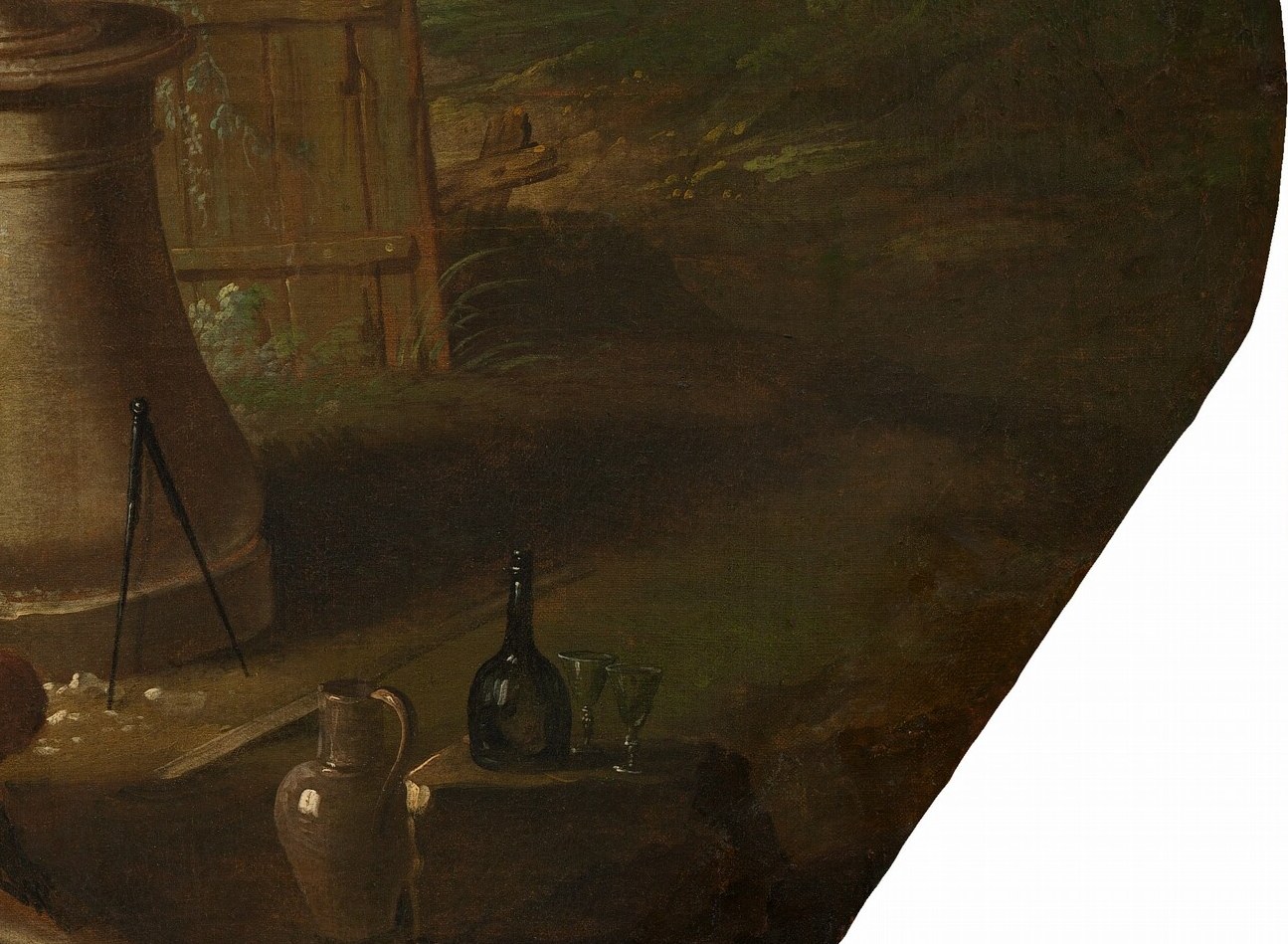
Before you finish, find the landscape in the background. A tiny figure walks there, separate from the studio chaos. It is a quiet punchline: the earnest artistic drama in the foreground is just a small, absurd bubble in a much larger world.
Details
Transcript
A sculptor's workshop, busy with the work of creation. But the artists are monkeys, dressed in 18th-century clothes. This is a 'singerie', a satirical genre that was all the rage in French high society. The painter, Christophe Huet, was a master of the form. The blue-robed monkey seems to direct the work, a stand-in for a pompous patron. Now look past the easel, into the distance. A tiny man walks through the trees. The real world is out there, and it doesn't care about this studio at all.