The Meeting by Pietro Longhi

Pietro Longhi’s ‘The Meeting’ (1746) hangs at the Metropolitan Museum of Art, a small canvas that trades grand Venetian spectacle for something sharper: a wry look at what Carnival really permitted.

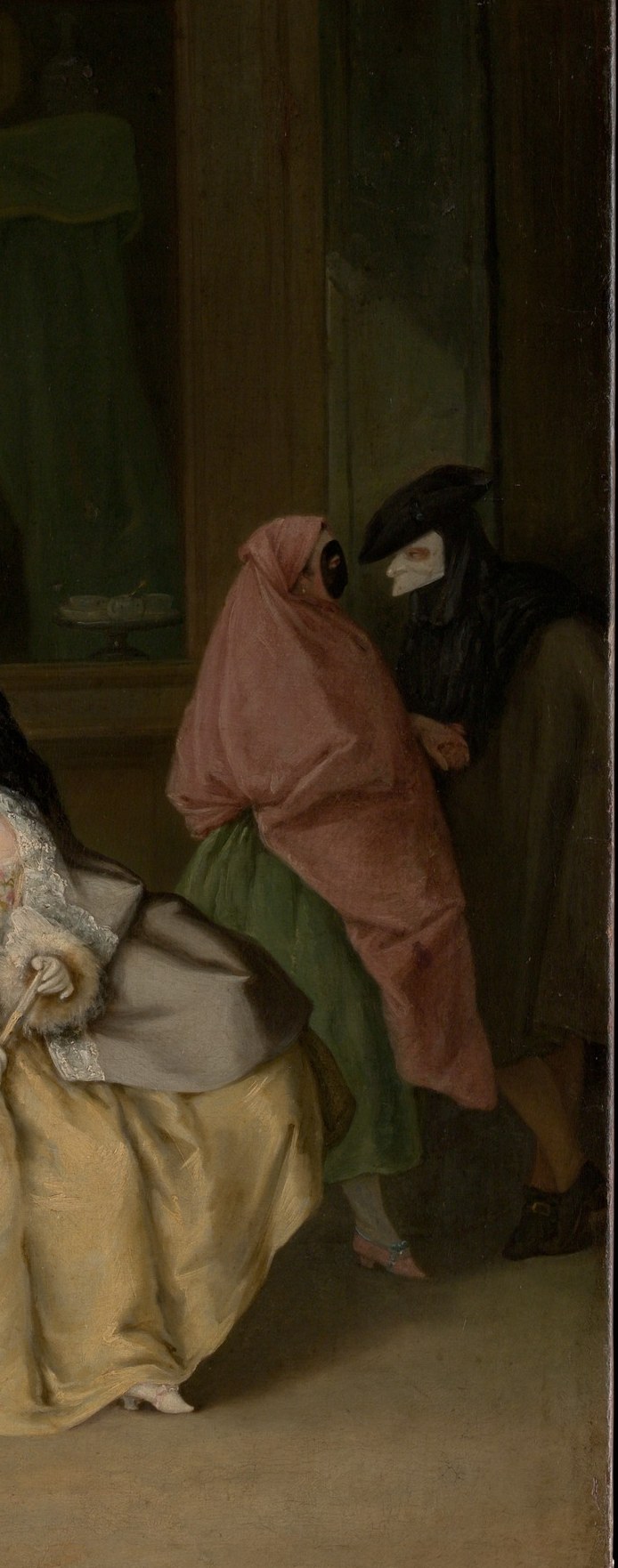
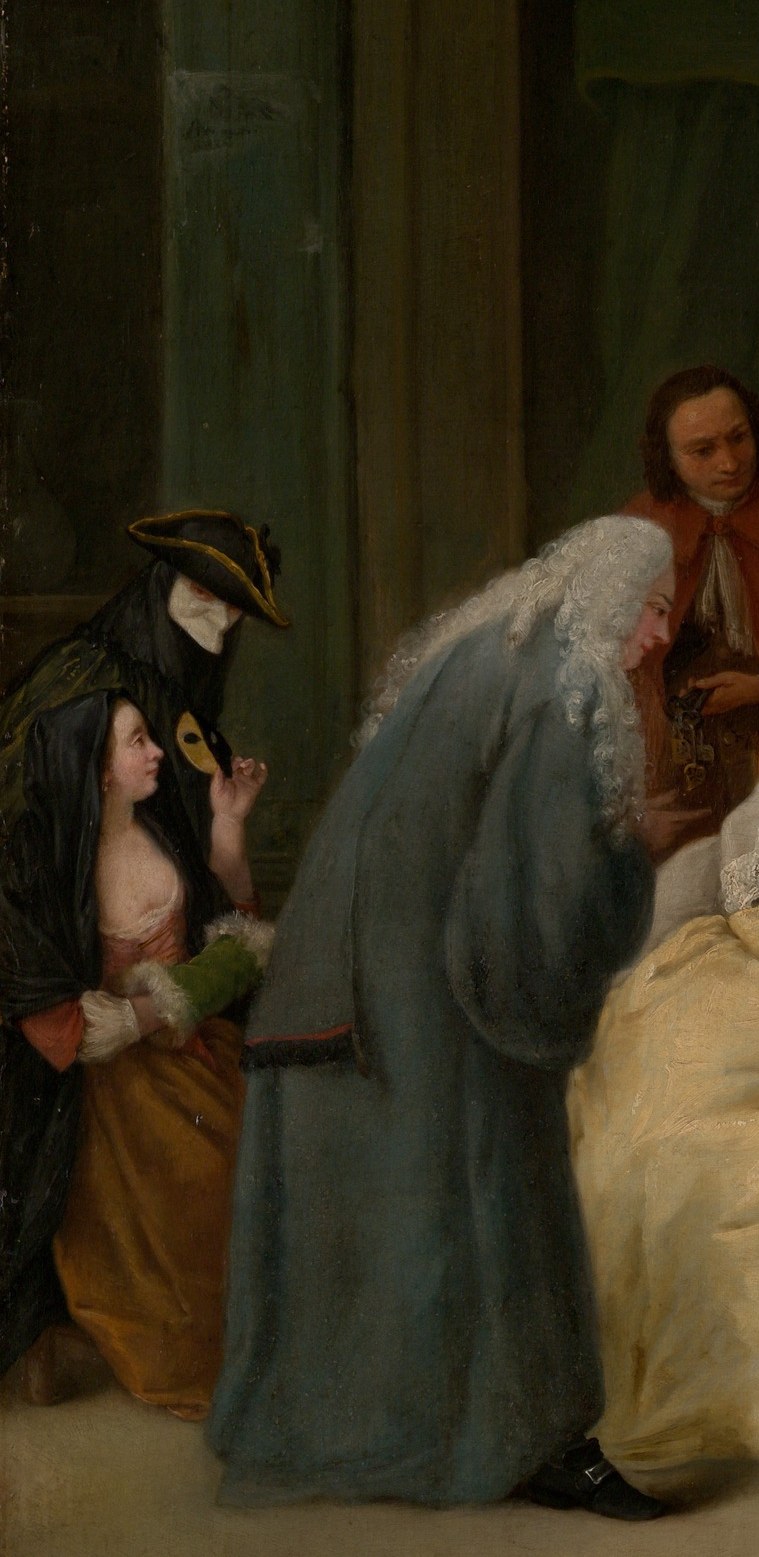
A man in blue leans close to a masked woman. At the edge of the frame, a second man offers keys to a private theater box. The deal is quiet, but the painting above them is not. Reflected in the mirror, Longhi inserted the Holy Family, so that sacred domesticity peers down on a negotiated rendezvous.

Longhi abandoned history painting in the 1730s to chronicle private Venetian lives. During Carnival, masks erased rank and made transactions like this one possible. He knew the game was social comedy and moral risk at once, and he let the mirror say what the figures could not.

Every object in this room is a quiet verdict. The keys open a door; the reflection closes an argument.

#arthistory #rococo #pietrolonghi

Details
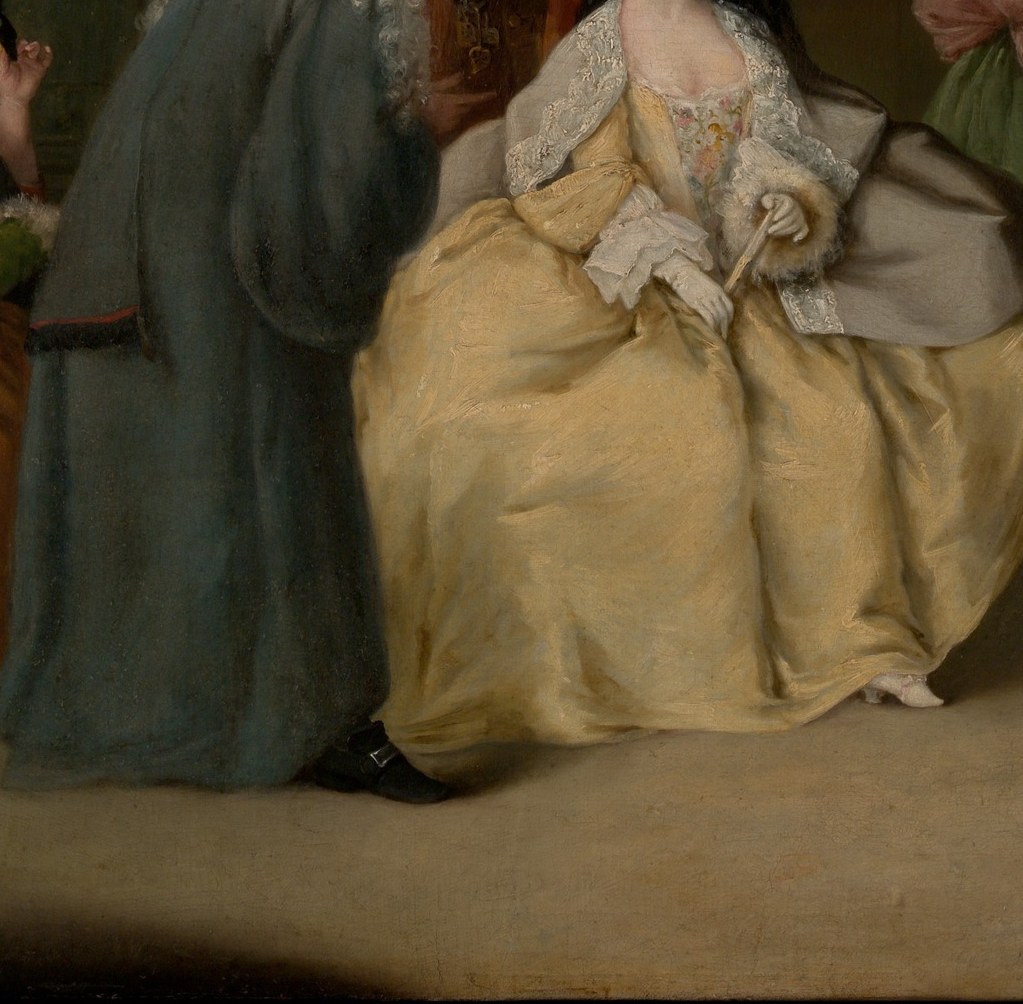
The dominant color note; the billowing skirt consumes the lower canvas and signals respectable bourgeois femininity, in ironic contrast with the morally compromised situation above it
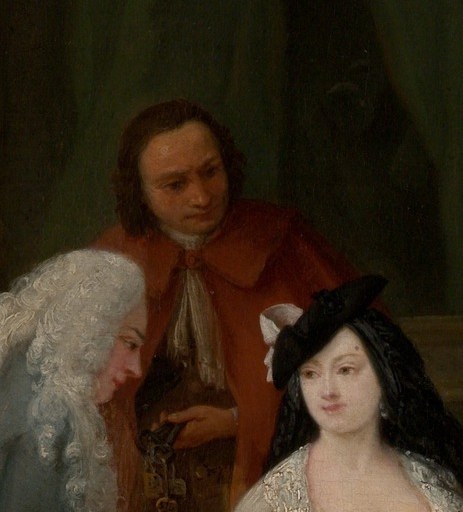
The transactional enabler: he holds the keys to a private theater box available for rent, converting romantic possibility into a commercial arrangement , the detail that gives the scene its satirical edge
His entire body language is a proposal , canted forward, arm extended , making the choreography of 18th-century Venetian seduction readable in posture alone
Her expression is deliberately opaque , neither consenting nor refusing , which is Longhi's psychological signature; the social pressure of navigating male proposals is legible without a single word
Class marker and period anchor; the hat frames his lean and establishes the social register of the encounter as fashionable bourgeois, not aristocratic
Transcript

Venice, 1746. Carnival masks dissolve the usual rules. A gentleman in blue makes his proposal. These keys rent a private theater box for the night. Now look above them, into the mirror. Longhi painted the Holy Family reflected over this scene. Sacred devotion and a rented room, held in the same frame.