Artwork
The Meeting
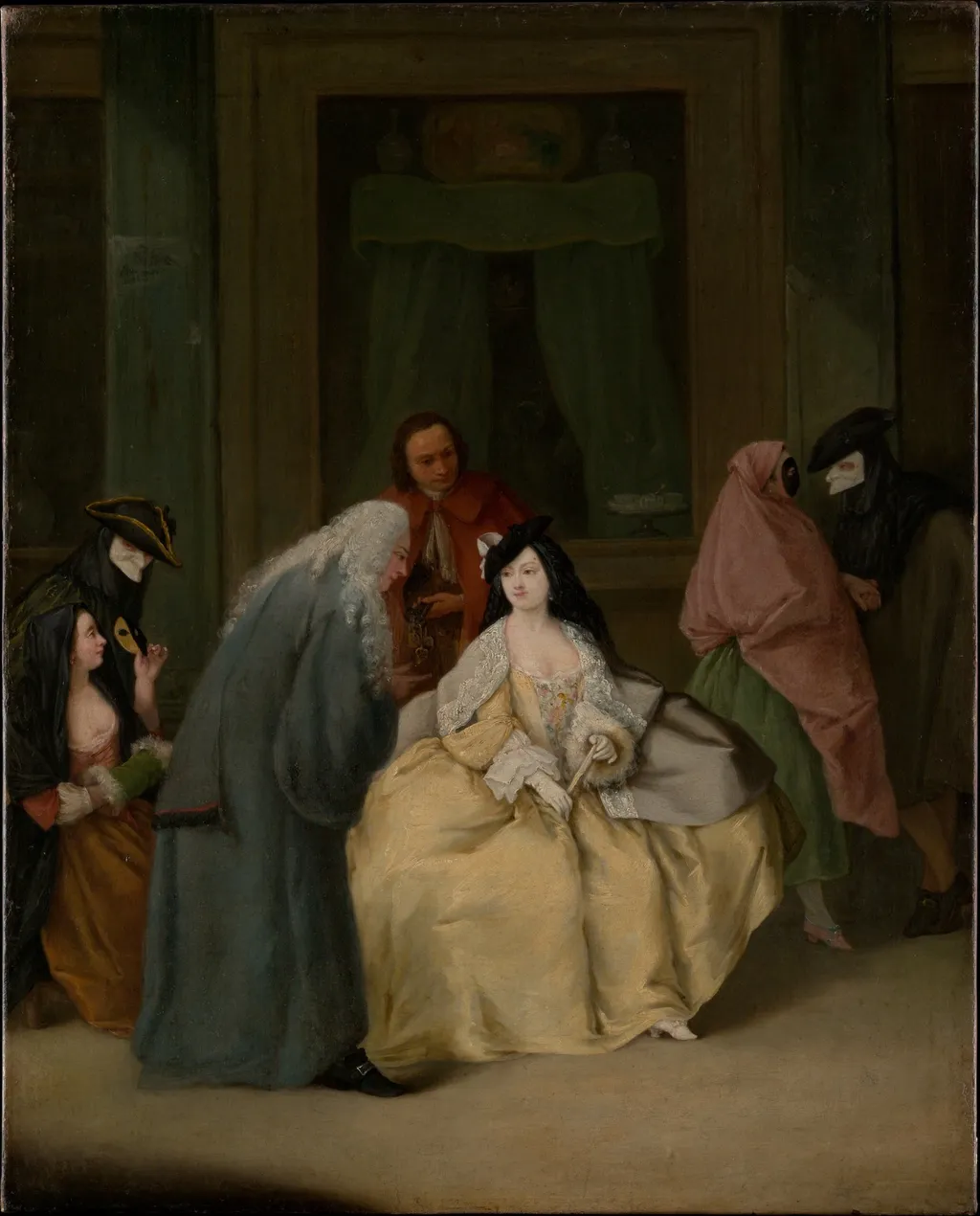
The Meeting is an oil painting by the Rococo painting artist Pietro Longhi. It dates from 1746 and is held in the collection of the Metropolitan Museum of Art.
About this work
Above them, a mirror catches the reflection of a canopied bed and a painting of the Holy Family, casting an ironic gaze on the assignation.
A gentleman in blue leans toward a masked woman during Venetian Carnival, while a vendor in a red cloak dangles keys to a private theater box he is willing to rent. Above them, a mirror catches the reflection of a canopied bed and a painting of the Holy Family, casting an ironic gaze on the assignation. At the Metropolitan Museum of Art, Pietro Longhi's 1746 canvas turns a fleeting flirtatious transaction into a witty moral vignette of eighteenth-century Venice.
Subject & Meaning
The painting depicts a chance encounter between a man and a woman at a masquerade ball, a popular social amusement in 18th-century Venice. The woman is dressed in refined attire including a lace-trimmed shawl, stomacher, gloves, and cap, while the man wears a tricorne hat and carries a muff. Both figures wear masks, heightening the sense of anonymity and playful intrigue associated with such events.
The composition focuses on the moment of meeting, emphasizing the rituals of courtship and disguise that characterized Venetian carnival culture. Through the careful depiction of fashionable dress and the masquerade setting, the work represents the delicate social codes of flirtation and concealment within polite society.
Technique & Style
Pietro Longhi executed 'The Meeting' in oil on canvas. The painting measures 61 by 49.5 centimeters. The work includes detailed representations of lace, a shawl, stomacher, gloves, cap, shoes, a mask, muff, and tricorne, reflecting the artist's attention to the accoutrements of 18th-century Venetian masquerade attire.
Overview
Pietro Longhi, a Venetian painter born in 1701, became known for his small-scale genre scenes depicting the private lives of his contemporaries. The Meeting, painted in 1746, exemplifies this shift from grand historical subjects to intimate narratives. The oil painting captures a clandestine encounter during the Venetian Carnival, a period when social conventions were relaxed. Its modest dimensions and focus on everyday interactions reflect the Rococo preference for domestic and bourgeois themes.
History & Provenance
Created in 1746, The Meeting has a documented history of ownership. The oil painting was once part of the Gambardi family collection in Florence, and later belonged to Conte Giacomo Miari de Cumani in Padua. Subsequently, it was acquired by Henry Walters in Baltimore.
The artwork ultimately entered the Metropolitan Museum of Art in 1936, where it remains today, a gift from Samuel H. Kress.
Context
Longhi's artistic development saw him transition from initial training in history painting to specializing in genre scenes, a decision that defined his career. His focus on the private dramas of Venetian life resonated with the broader European taste for such narratives, leading to comparisons with artists like William Hogarth. The widespread circulation of engravings based on his compositions further amplified his influence, establishing him as a significant chronicler of eighteenth-century social customs.
Own this work as a print
Artist & collection


 Music lesson
 Rehearsal for a Play
 Conversation Piece (The Sense of Smell)
 The Painter in his Studio
 Theme from the Venetian Carnival – In the Parlatory of the Monastery
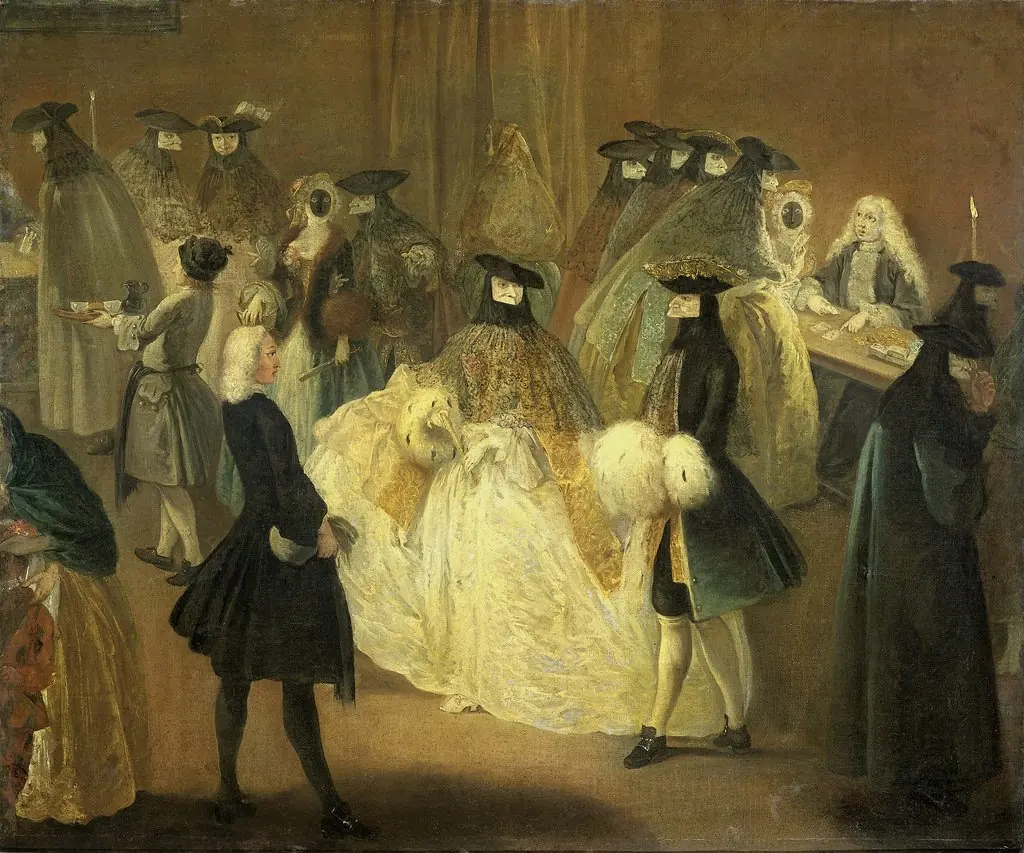 The Casino
 The Italian Comedians (copy)
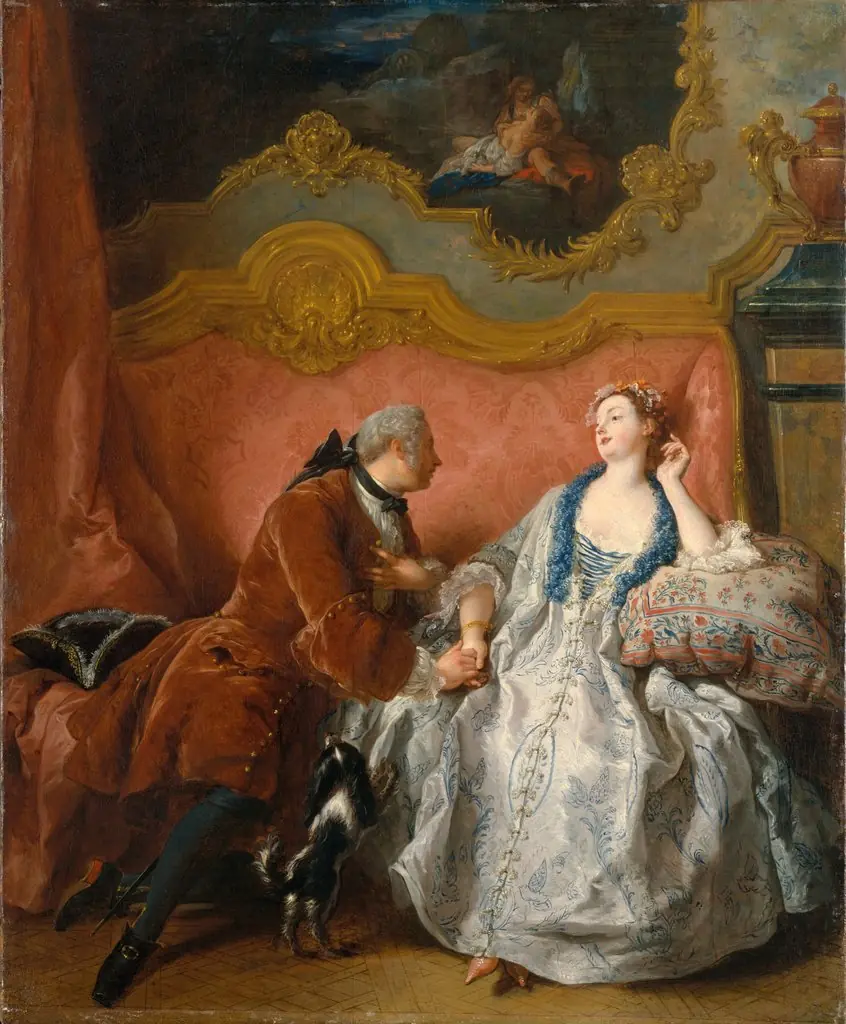 The Declaration of Love
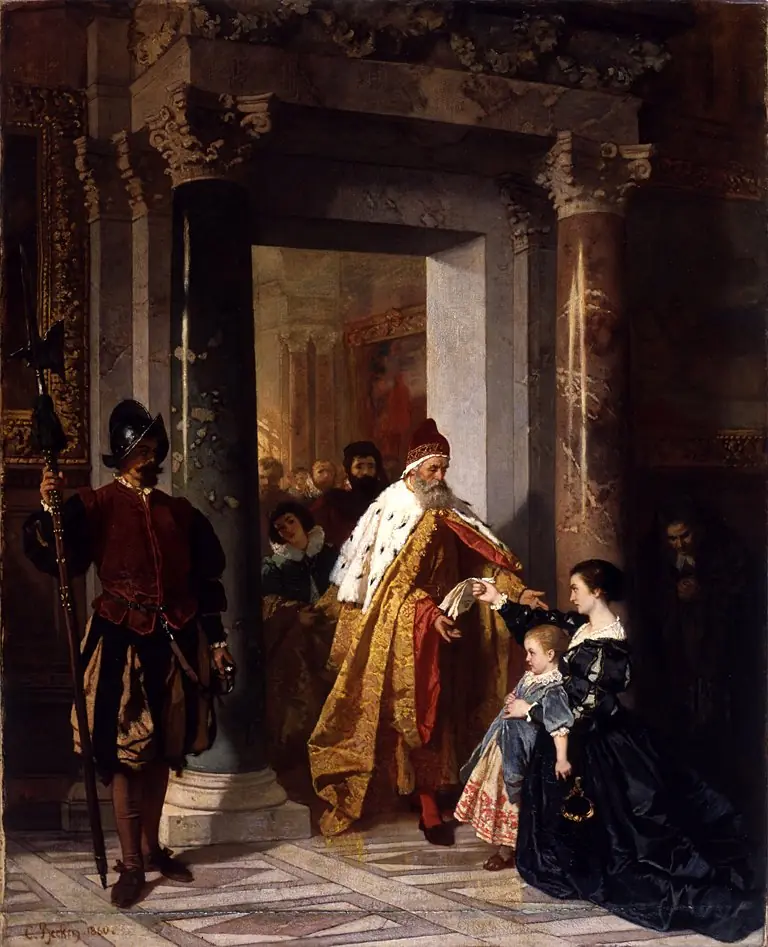 The Petition to the Doge
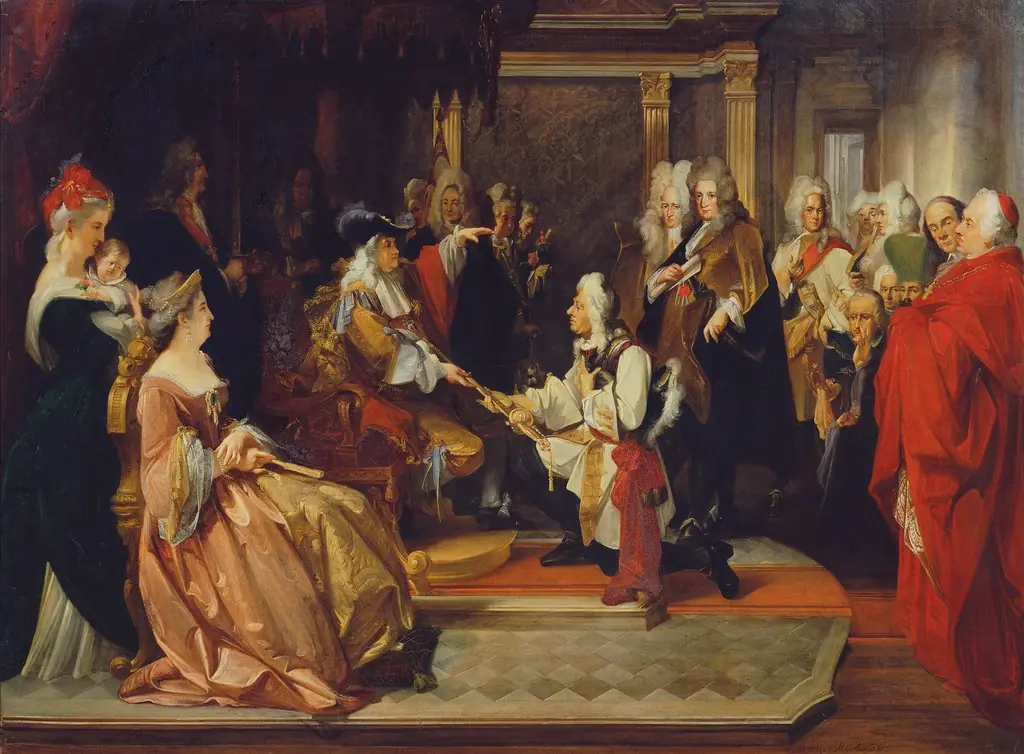 Kaiser Karl VI. überreicht Prinz Eugen nach der Schlacht bei Belgrad den Ehrendegen
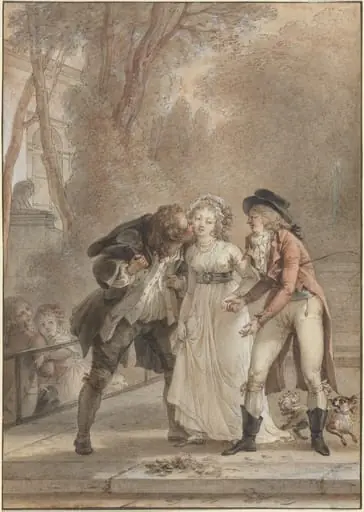 Loaned Kiss