Mrs. William Griffin by Sully, Thomas
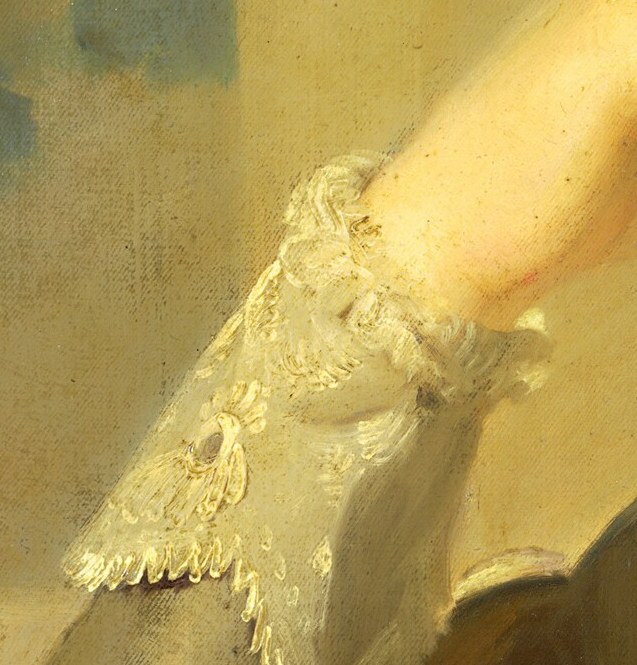
Thomas Sully's 1830 portrait, Mrs. William Griffin, at the Metropolitan Museum of Art, initially appears as a straightforward depiction of a thoughtful woman. However, a closer look reveals the artist's remarkable attention to detail, particularly in the delicate rendering of her lace cuff.
The sitter's pose, with her chin resting gently on her hand, was a fashionable convention of the early 19th century, conveying contemplation and refinement. Sully, a leading portraitist of his time in Philadelphia, captured her with a characteristic softness and luminosity.
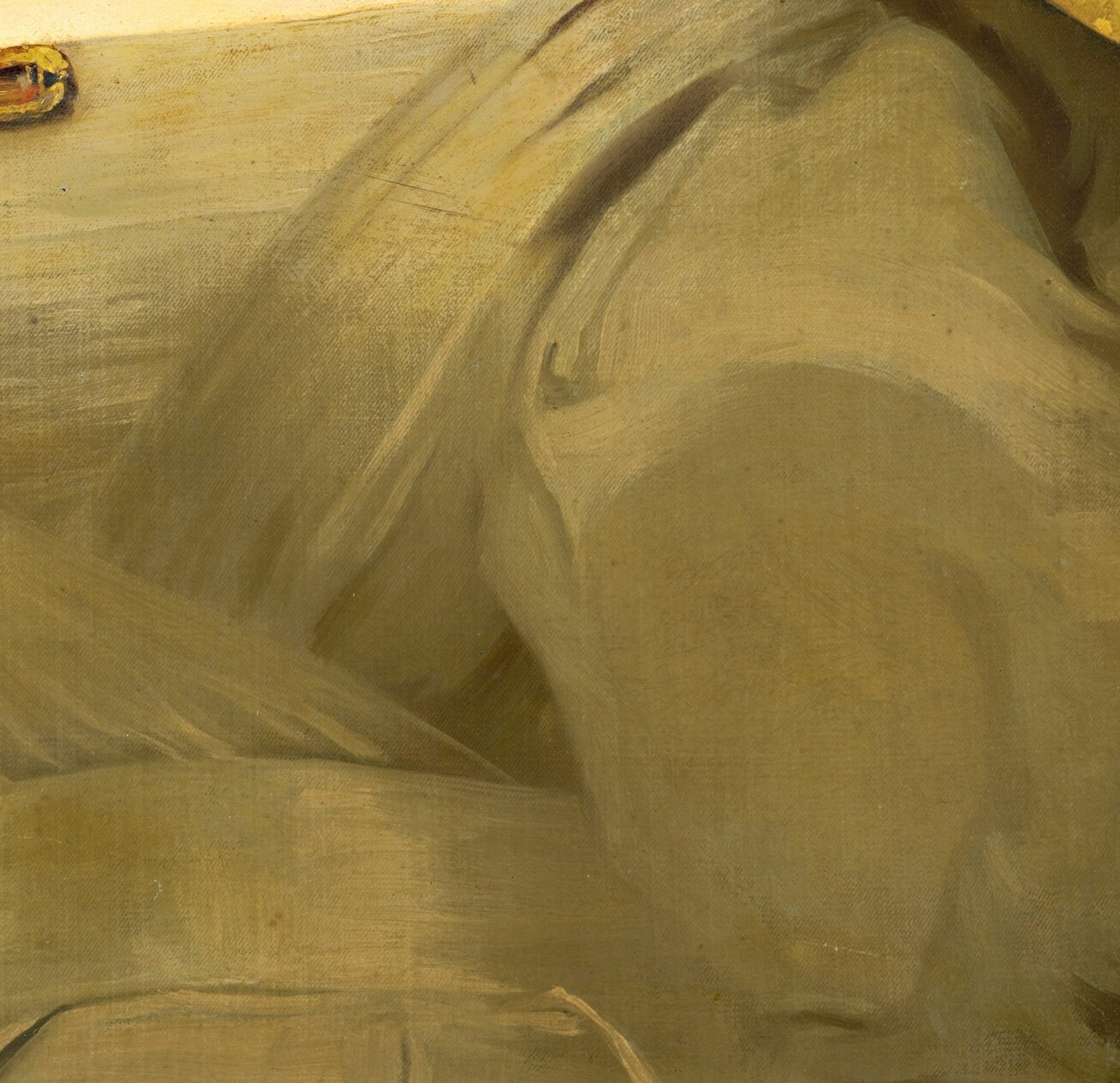
His mastery extends beyond the psychological presence of his subjects. The intricate patterns and textures of the lace cuff, for example, demonstrate his exceptional skill in painting fabrics, contrasting beautifully with the smooth skin tones and voluminous puffed sleeve. This subtle detail invites viewers to appreciate the technical brilliance underlying the portrait's overall elegance.
What other small details do you notice in historic portraits?
Details


Transcript
This woman's portrait, painted in 1830, seems simple. The artist, Thomas Sully, was known for his elegant style. Her thoughtful pose was popular in 19th-century portraits. But look closely at her left arm. Her lace cuff is painted with incredible, tiny detail. It shows Sully's mastery of fabric texture and light.