Two Apachee Warriors and a Woman by Catlin, George
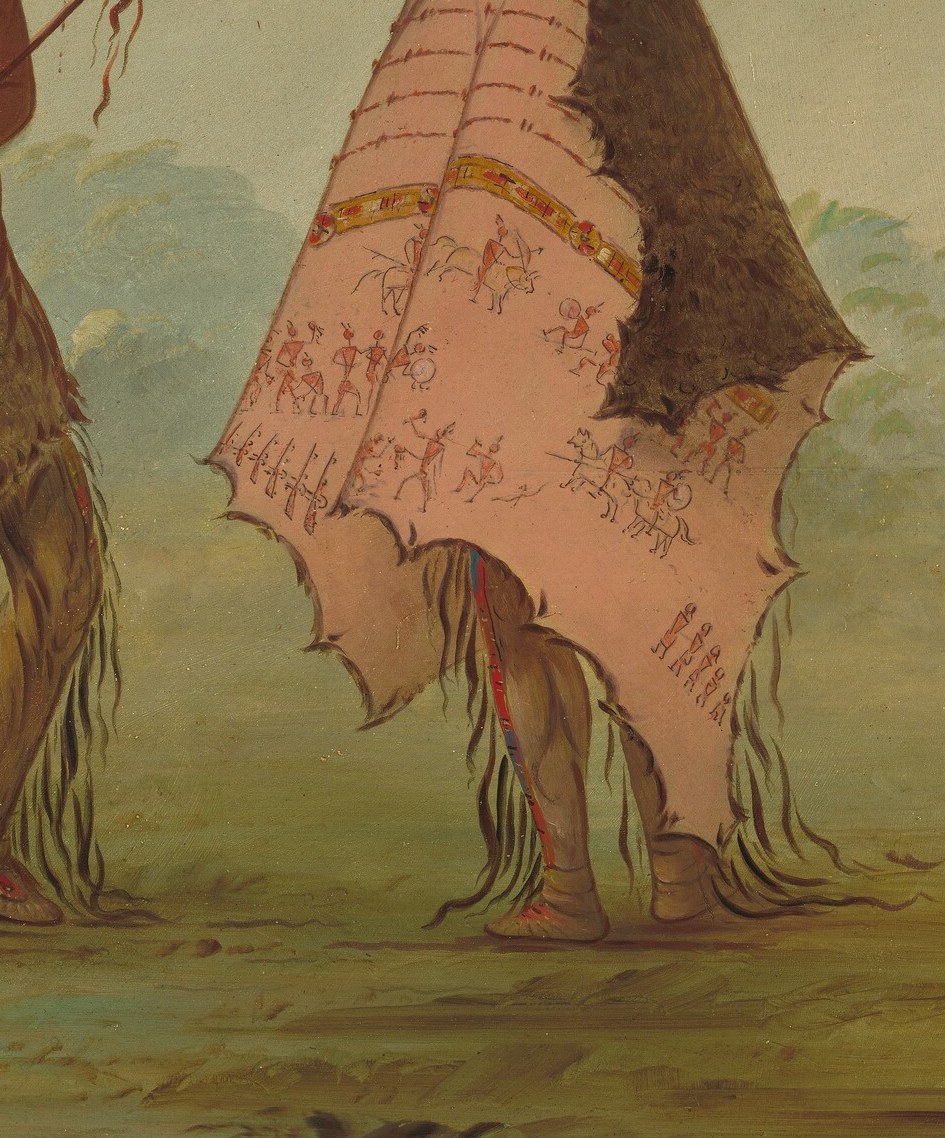
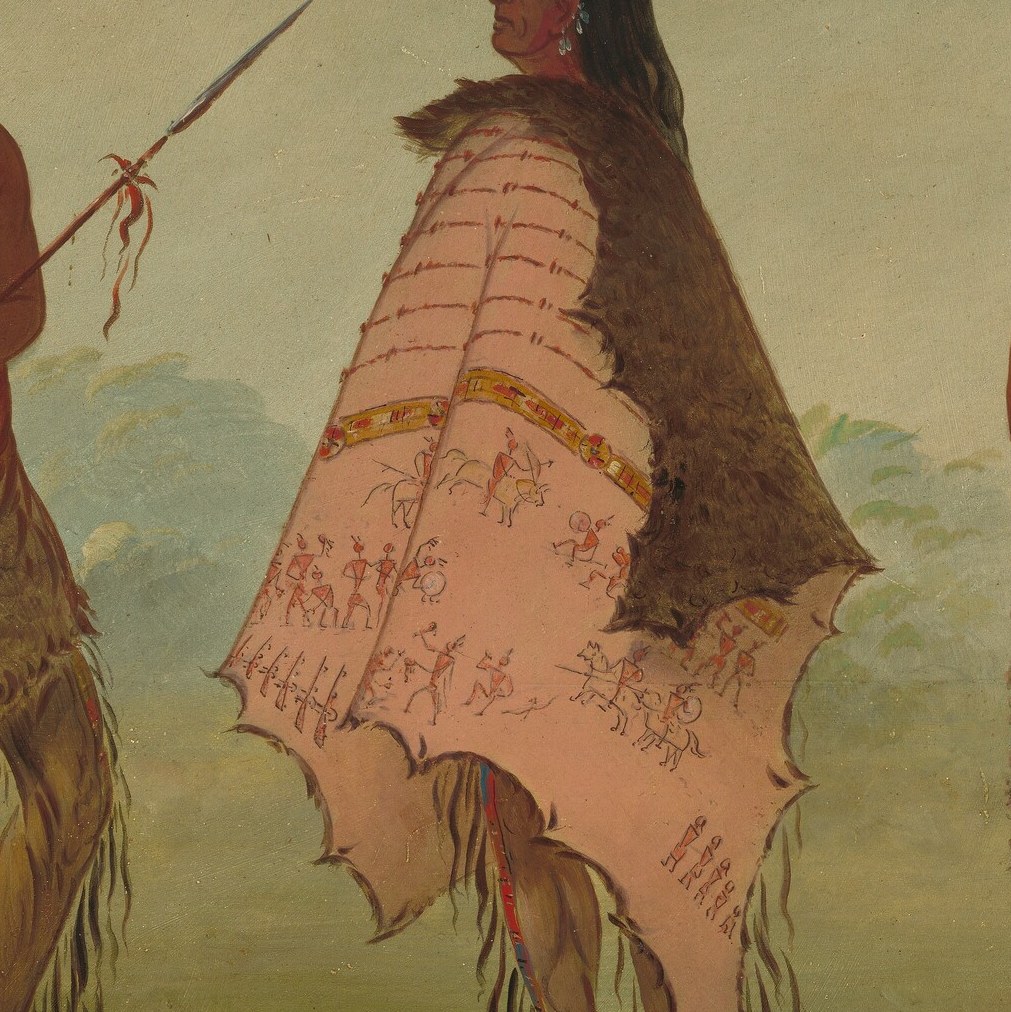
This is George Catlin's 1862 painting 'Two Apachee Warriors and a Woman', now in the collection of the Smithsonian American Art Museum. Catlin was a practicing lawyer who, after seeing a delegation of Native Americans in Philadelphia, felt compelled to document their lives before westward expansion changed them forever. He would eventually produce over five hundred paintings from his travels.
Look at the central woman's clasped hands. Catlin places her between the two warriors, her posture gentle and restrained, her patterned skirt a careful study of textile and form. The two men wear feathered headdresses and hold their weapons with a calm readiness. The pale green sky and flat horizon give nothing away.
Catlin made five trips into the western frontier during the 1830s, often traveling alone and living among the Plains tribes. He collected artifacts, filled notebooks, and painted urgently. His work is not polished; he was self-taught. But it carries the weight of a person who believed he was witnessing the end of something.
The quiet in this painting is not emptiness. It is three people standing for a record, for a man who wanted the future to know they were here.
Details
Transcript
George Catlin was a lawyer, not an artist. In the 1830s, he left his practice and traveled the frontier alone. He believed Native American life was being erased. He painted over 500 portraits, determined to record it all. Look at her hands, still clasped. A quiet moment held together against an uncertain future.