Arabs on the March by Adolf Schreyer
Adolf Schreyer's 1873 oil painting, "Arabs on the March," captures a dynamic scene of riders on horseback, a classic example of the 19th-century Orientalist genre. This painting is part of the collection at The Metropolitan Museum of Art.
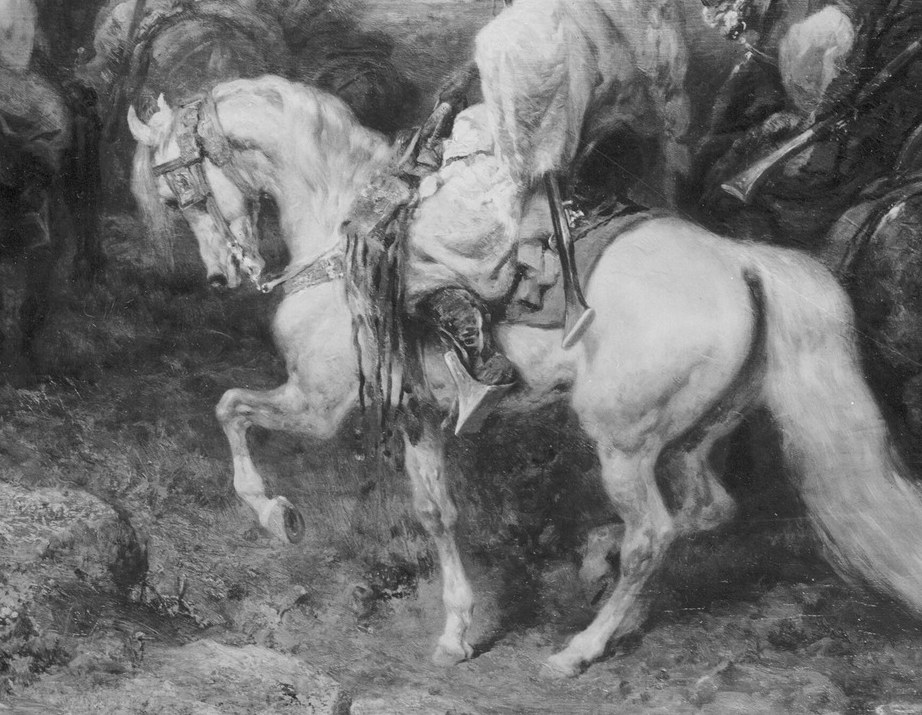
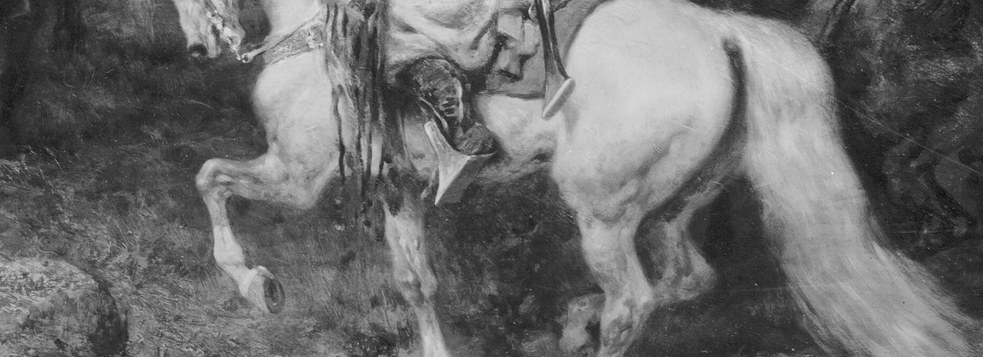
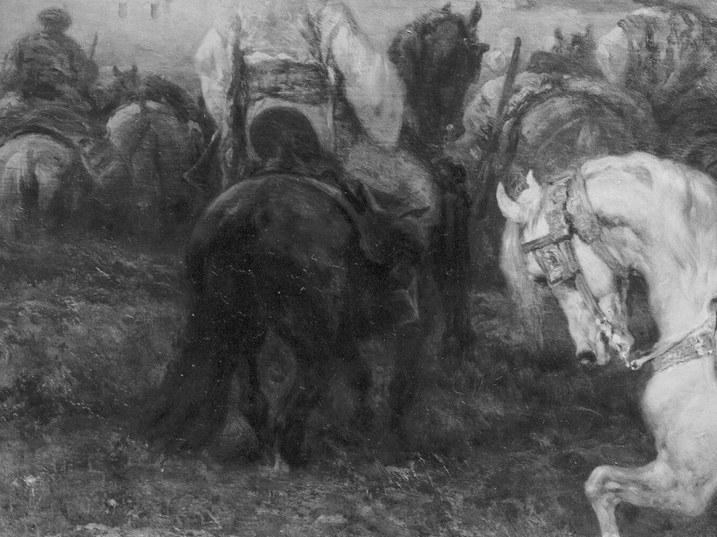
Schreyer focused on equestrian subjects, creating a vivid sense of action through meticulous detail. Notice the swirling dust kicked up by the horses and the powerful musculature of the animals themselves, conveying strong kinetic energy. The riders are clad in traditional robes, carrying long spears, suggesting a journey unfolding in an arid landscape.
However, like many Orientalist works of the period, this painting reflects a European fascination with and romanticization of North Africa and the Middle East. Artists like Schreyer often depicted these regions through a lens of exoticism and drama, rather than documented reality, presenting a moment suspended in time without a defined endpoint.
This work invites us to appreciate the artistic skill while also considering the cultural perspectives it represents. What details in the painting make you feel the movement?
Details
Transcript
This painter imagined journeys through North Africa and the Middle East. He romanticized distant cultures, creating dramatic scenes like this one. Look closely at the swirling dust, creating a sense of movement. The artist meticulously depicted the horses' musculature and powerful strides. These long spears suggest a need for protection on the journey. The details are vivid, but the scene is a European fantasy.