Arches in Ruins by Hubert Robert
Hubert Robert's "Arches in Ruins" (circa 1750) survives not only the decay it depicts, but a revolution that nearly erased its maker. Today it hangs in The Metropolitan Museum of Art, a quiet witness to a violent chapter in French history.
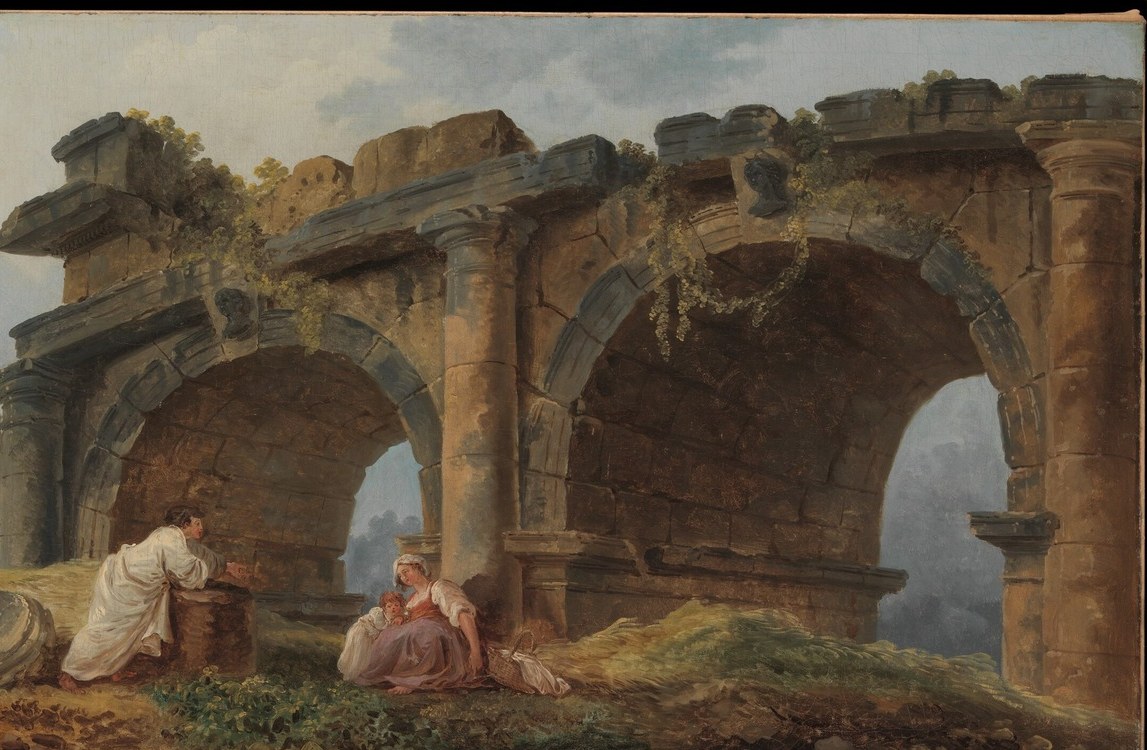
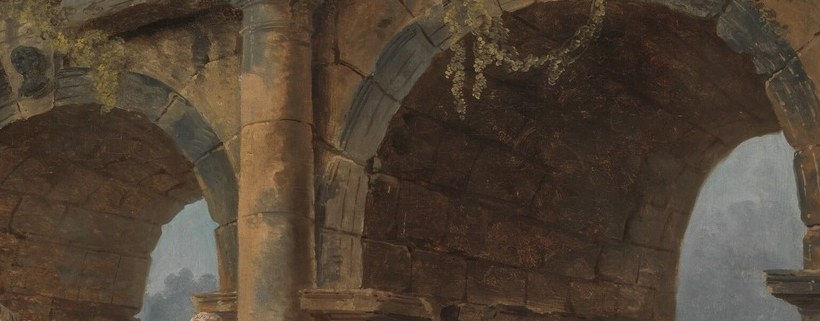
The painting shows a capriccio, an idealized Italian landscape built from imaginary ruins. Three figures rest beneath a monumental stone arch. A woman cradles a child, a scholar gazes upward, and vines creep over carved blocks of stone. Robert painted human smallness against the weight of antiquity.
Then came the Revolution. Robert, who had sketched the destruction of the Bastille, was arrested in 1793 during the Terror. His patronage circles collapsed. Many of his works were confiscated and dispersed. The painter who had spent a career refining picturesque ruin suddenly inhabited a real one.
He survived. Released after the fall of Robespierre, Robert returned to painting and even helped reorganize France's new national museum, the Louvre. This canvas, a serene fiction of collapse, carries the memory of the moment when the artist himself fell through the cracks of history.
Details
Transcript
In 1793, the French Revolution came for the artists. This painter was arrested and thrown into prison. The state seized his work. This canvas vanished into storage. These arches are imaginary, but the ruin felt real then. Look at the vines overtaking the stone crown. Nature reclaiming a glory that had already collapsed. He painted decay, then watched his own world dismantled.