Jean Charles Garnier d'Isle (1697–1755) by Maurice Quentin de La Tour
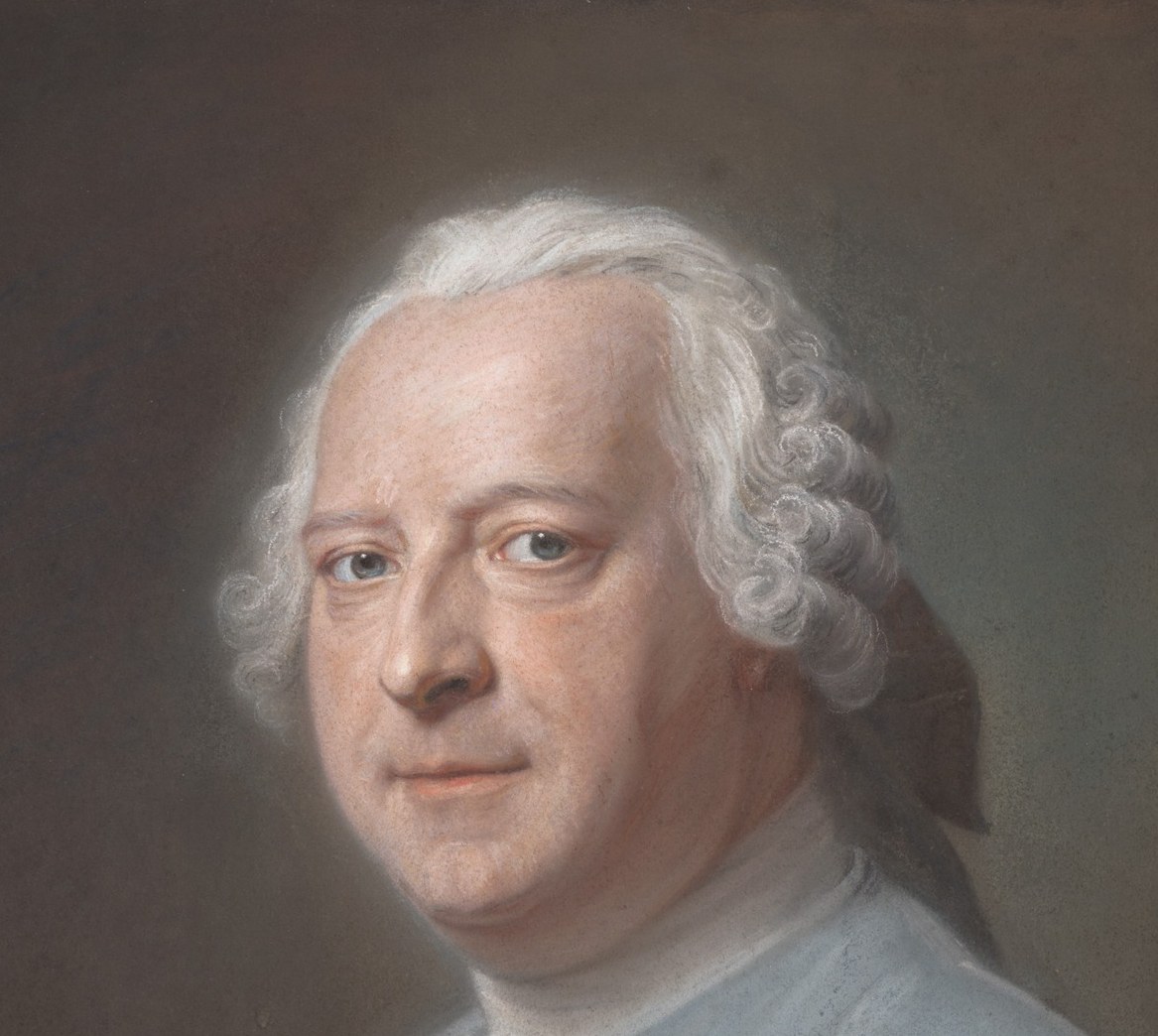
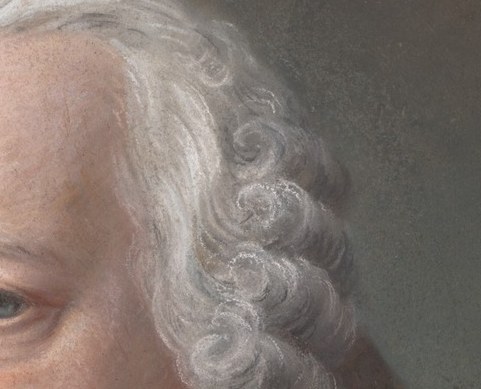
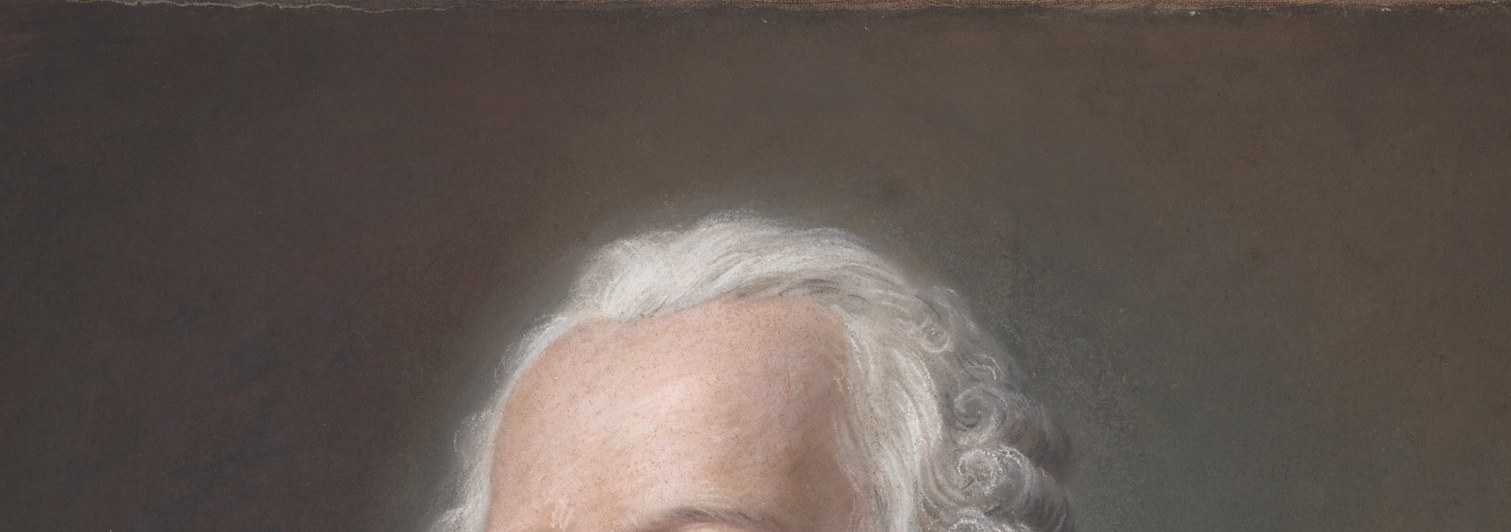
Maurice Quentin de La Tour's portrait of Jean Charles Garnier d'Isle (c. 1750) is a masterclass in what pastel can do. Housed at The Metropolitan Museum of Art, it shows an 18th-century French aristocrat at the height of his confidence, rendered entirely in dry pigment sticks.
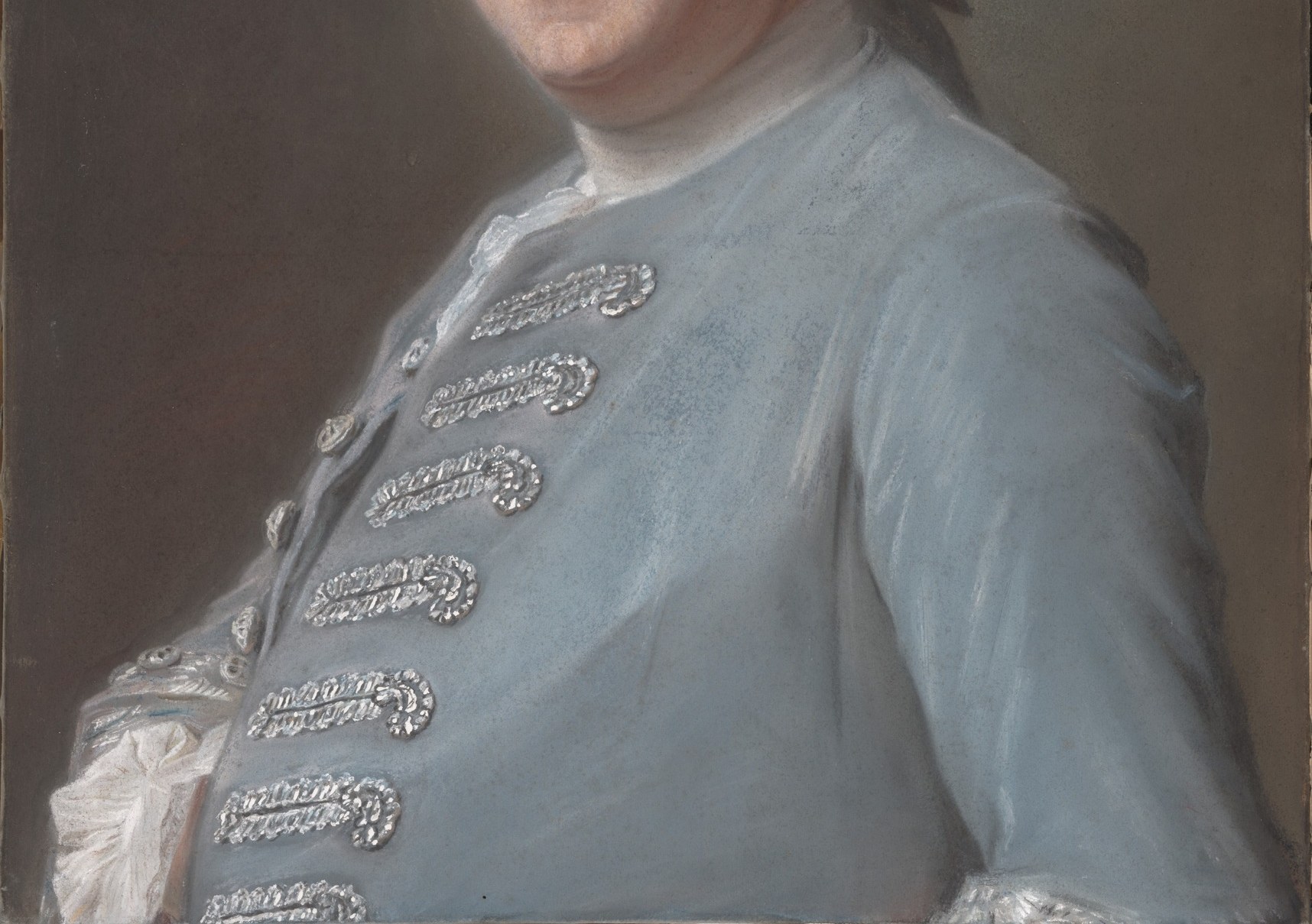
Look closely at the pale blue silk coat. Pastel has no natural gloss, so La Tour had to construct the sheen himself. He layered cool grey, pale blue, and bright white strokes, one over the other, until the fabric seemed to catch actual light. The same precision carries into the silver buttons and the lace jabot: each button is individually modeled, each lace opening a tiny window to the darker coat beneath.
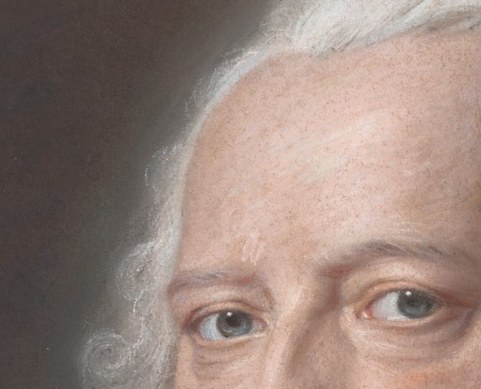
But the centerpiece of the illusion is the eyes. La Tour was celebrated across Paris for animating a sitter's gaze, and the trick is still visible here. Inside each pupil he placed a point of pure white chalk, a literal highlight that mimics the reflection of a window or a candle. Your brain reads that single bright dot as moisture, and suddenly the chalk becomes a person looking back at you.
La Tour's patron Garnier d'Isle was a senior official in the royal household of Louis XV, a man who needed his portrait to project authority and life. The artist delivered both with a box of colored dust. What catches your eye first when you meet his gaze?
Details
Transcript
Pastel is just colored chalk and dust. Yet, look at the light in this fabric. La Tour layered grey, blue, and white to build the sheen of raw silk. Now the real trick: the eyes. He placed tiny white dots inside the pupil. That single catch-light makes chalk read as a living gaze.