The Flight into Egypt by Carlo Maratta
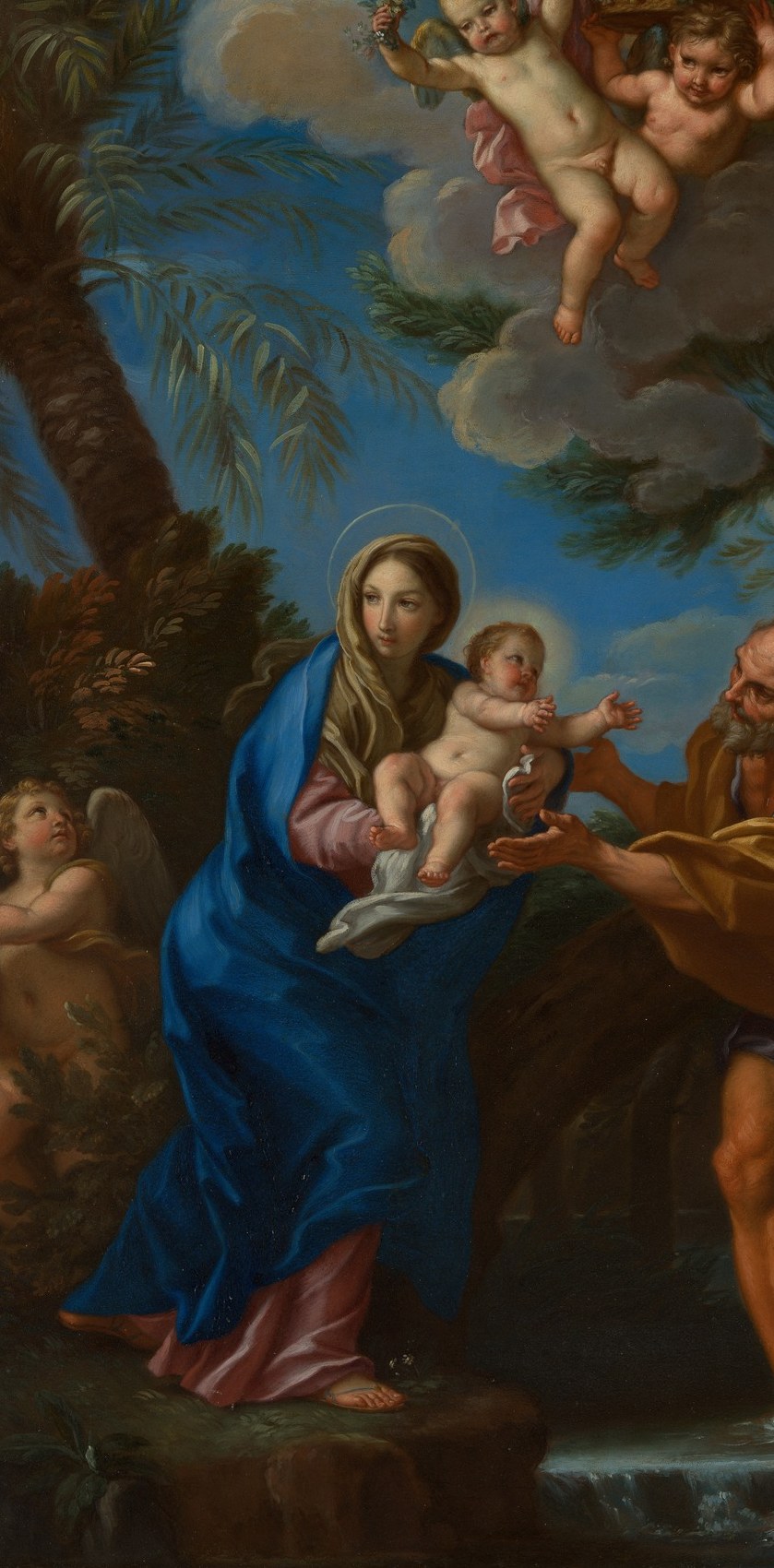
Carlo Maratta’s “The Flight into Egypt,” painted in 1664, is more than a narrative scene; it’s a canvas rich with symbolic meaning. This Baroque masterpiece, now held in a private collection, tells the biblical story while embedding layers of theological significance.
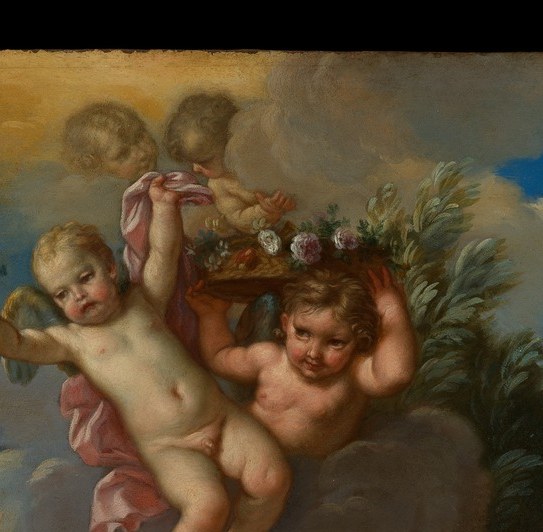
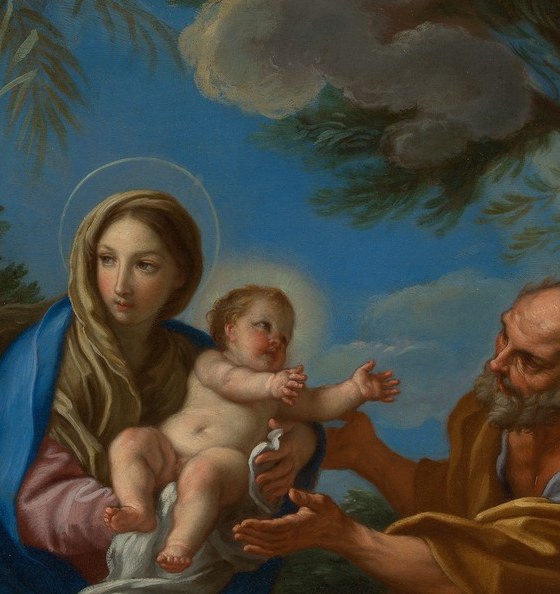
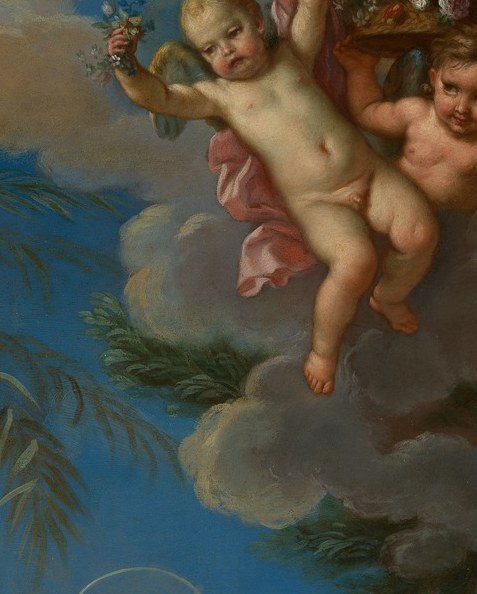
Observe the Virgin Mary’s ultramarine mantle, a classic sign of her heavenly role. Above, cherubic figures offer specific symbols: a laurel wreath for Christ’s future victory and fruit, representing the restoration of Eden and divine abundance, even amidst exile.
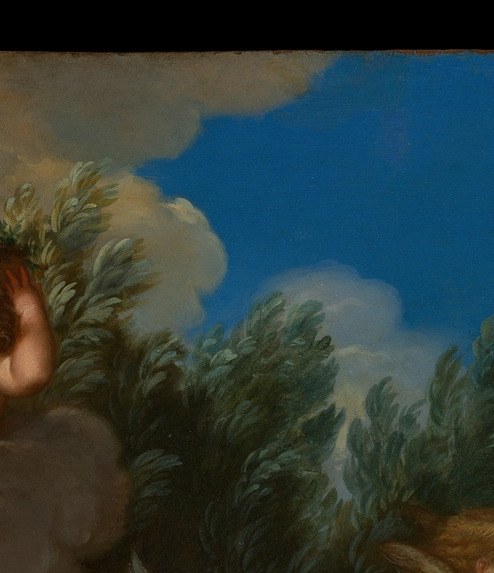
Maratta chose copper as his support, a material celebrated for its durability and ability to hold fine detail. This choice was deliberate, reflecting the permanence of the divine message conveyed within the painting and enhancing the luminous quality of the figures and the atmospheric sky.
What other hidden meanings do you see in this intricately coded journey?
Details
Transcript
This isn't just a flight, it's a divine journey. Mary's blue mantle is a sign of her heavenly status. Above them, a putto offers a wreath, signaling future triumph. Another putto presents fruit, a symbol of Eden restored. The artist painted on copper, a medium known for its permanence. It was meant to last forever, like the message it carries.