Pilate Washing His Hands by Rembrandt
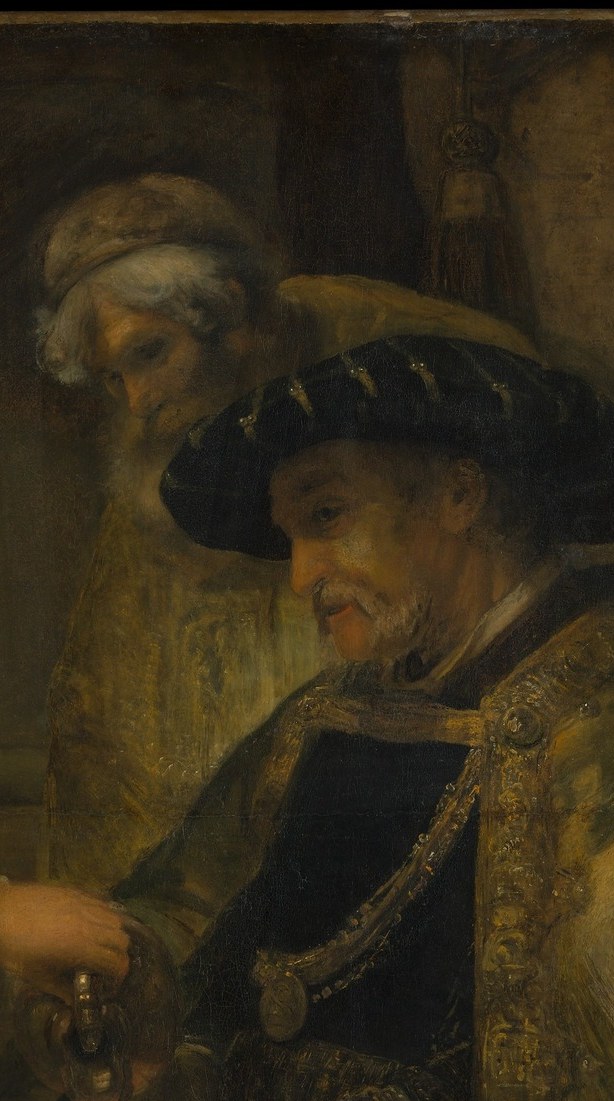
This is Rembrandt's Pilate Washing His Hands, painted in 1660. It lives at The Metropolitan Museum of Art and it is not really about clean hands. It is a portrait of a man reckoning with a moral failure he has already decided to commit.
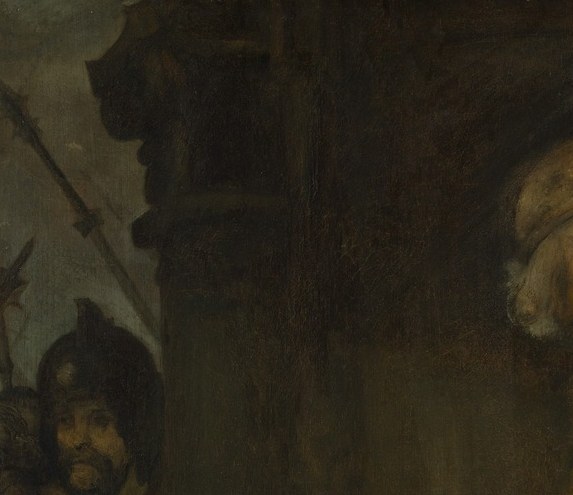
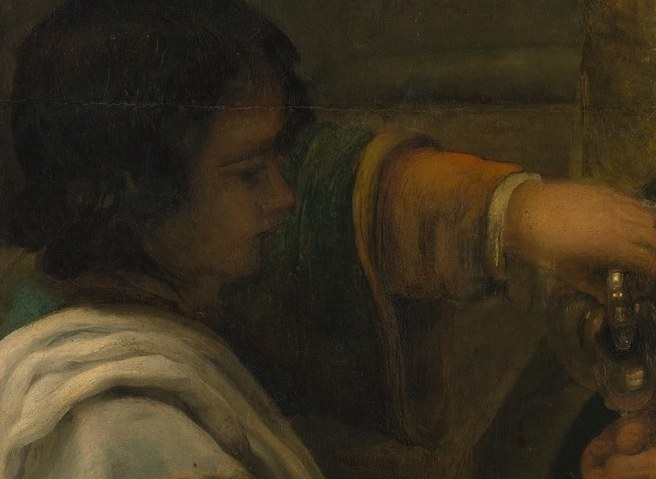
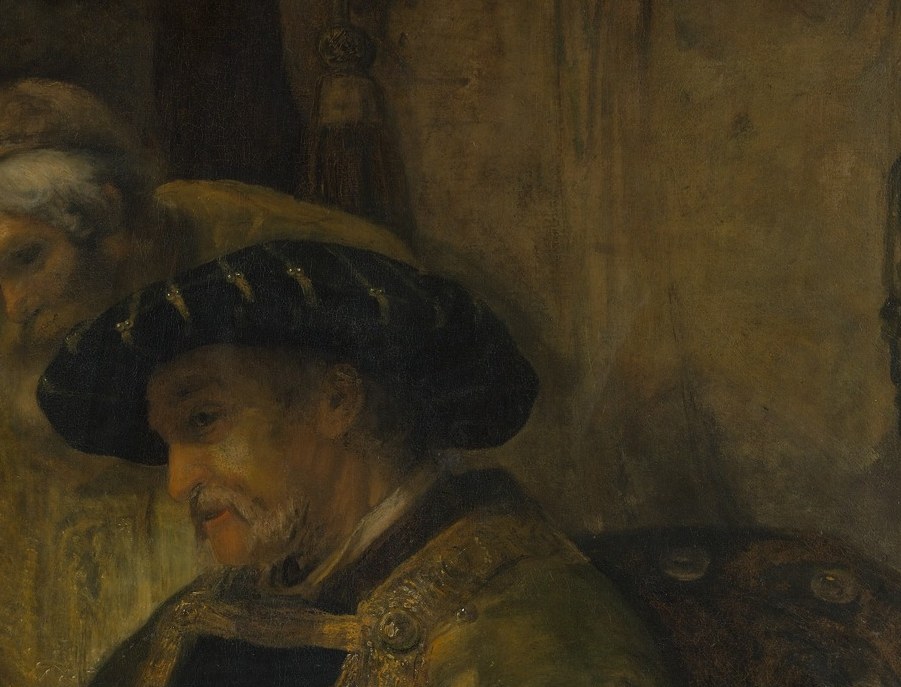
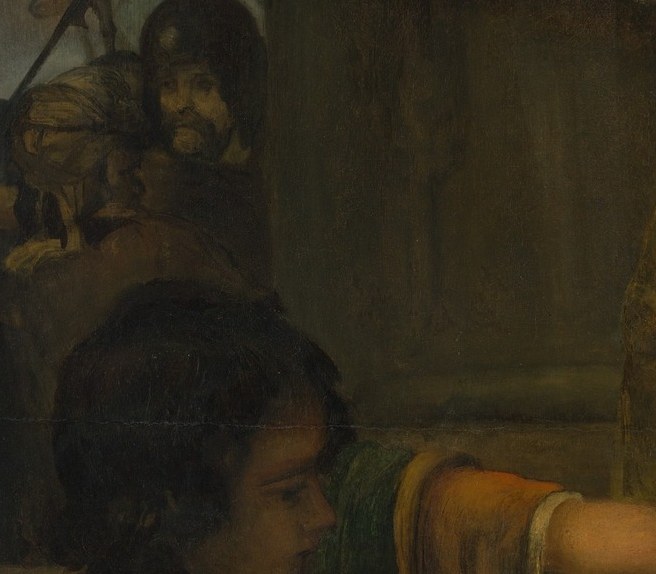
The camera holds on Pilate's face. Notice his eyes: they are cast down, but not toward the basin. He will not look at what his hands are doing. The light in this painting falls on his chest and on the water, leaving the soldiers and the crowd in near-total darkness. Rembrandt isolates the act, and the man, so completely that the scene feels less like a biblical narrative and more like a psychological study of guilt.
By 1660 Rembrandt had buried Saskia, his wife, and three of their children. His house and his collection of art had been auctioned to pay debts. He was living in a rented house on the Rozengracht, painting for survival. When you know that, the exhaustion in Pilate's face hits differently. This is not a painting about judgment from above. It is a painting about living inside the judgment you pass on yourself.
What does it cost a person to perform an act that they know is wrong, publicly, under imperial lights, while pretending it is procedure? Rembrandt asked that question with a brush and half a century of living behind him.
Details
Transcript
Rembrandt was nearly bankrupt. The year was 1660. He painted a man trying to wash away a decision. Now look at his eyes. He is not looking at his hands. He knows the water will not do what he is asking it to do. The crowd waiting in the dark does not care about his conscience. Rembrandt had buried three children and his wife by the time he painted this. He understood what it cost a person to live with a choice like this.