Forest Scene by Ruisdael, Jacob van
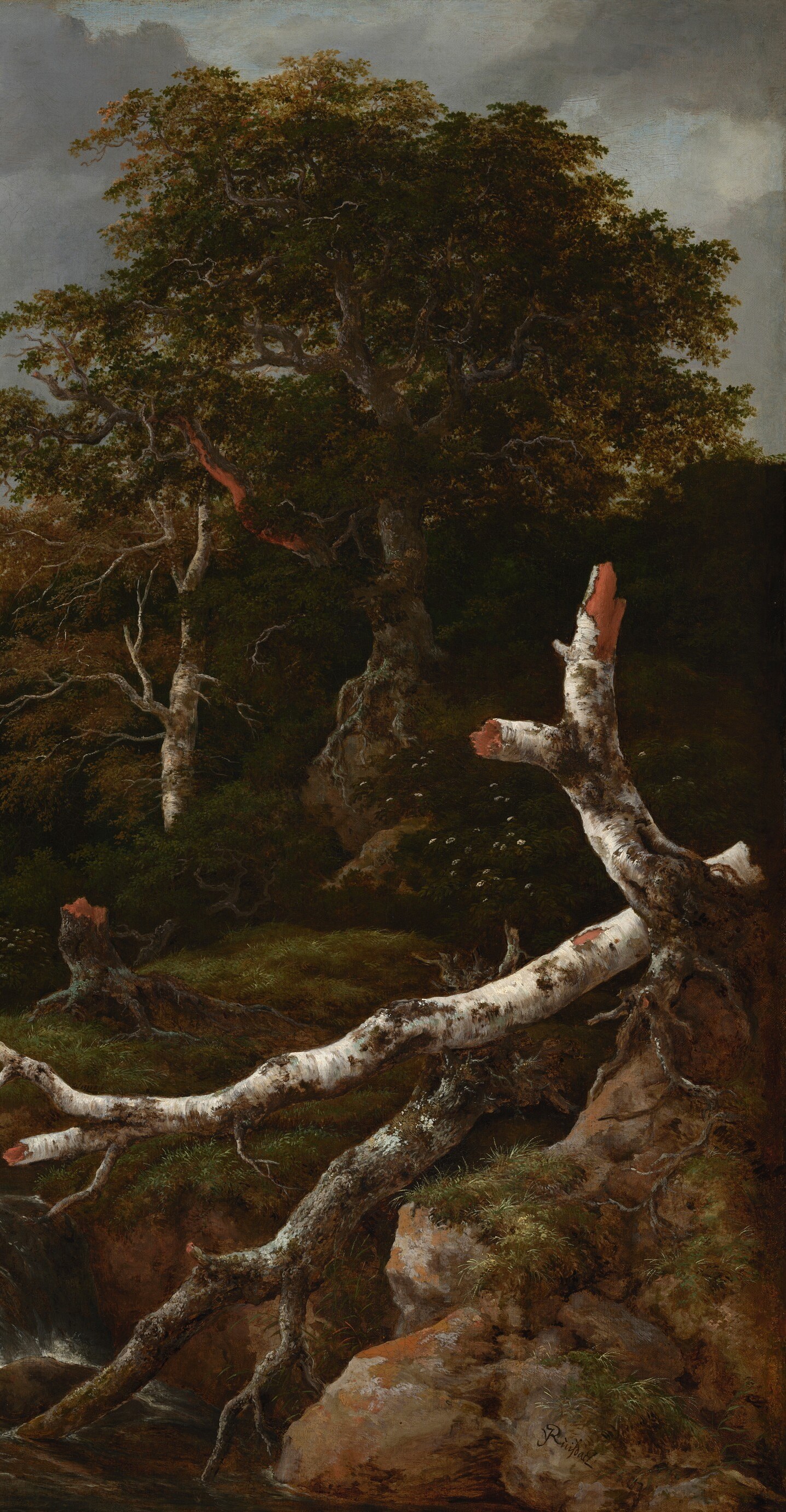
Jacob van Ruisdael's Forest Scene, painted around 1655, is not an imagined landscape. It is a direct eyewitness account of an old-growth northern European forest, a specific, wild place the artist walked through and recorded with extraordinary fidelity. This is what a primeval woodland looked like before centuries of industry and agriculture cleared the continent.
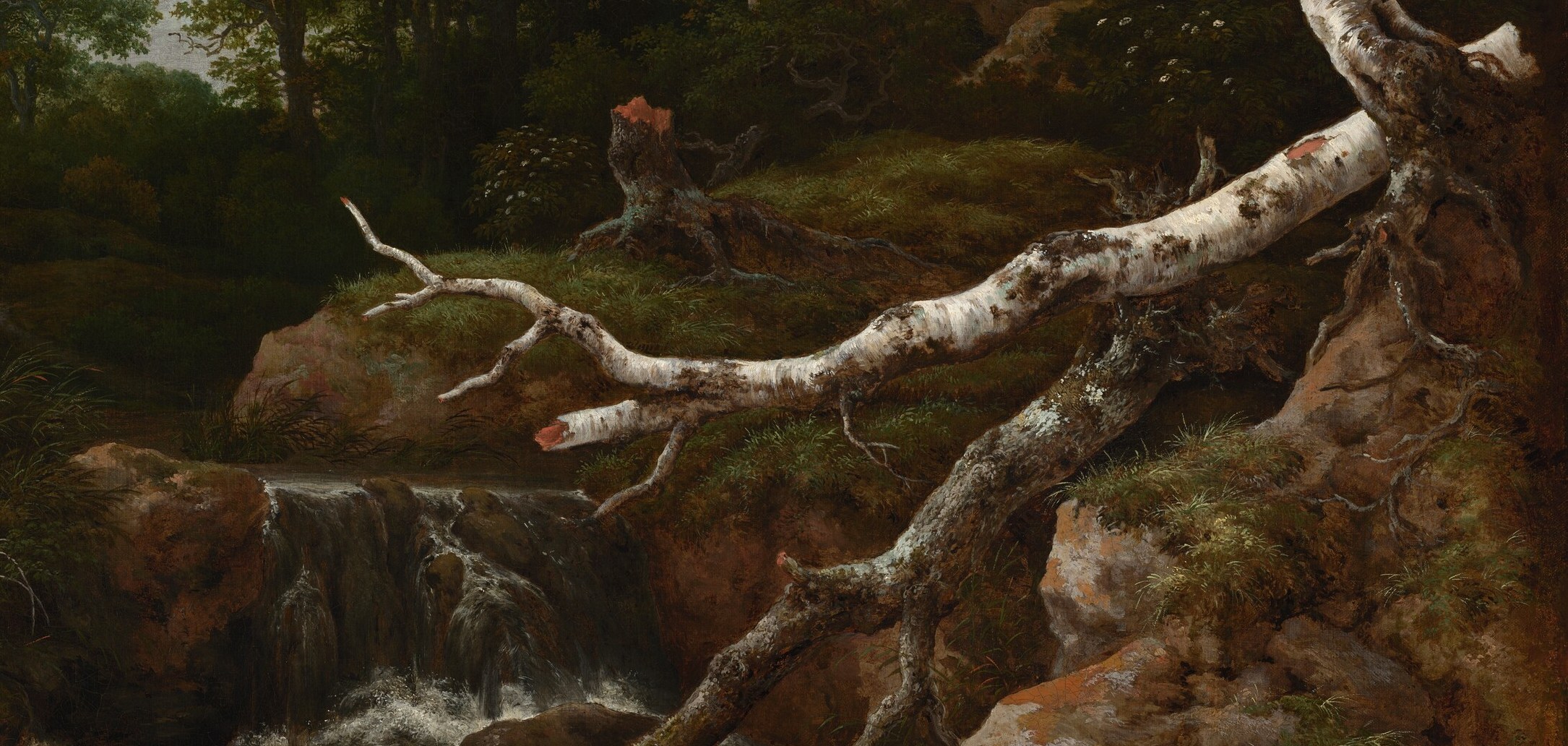
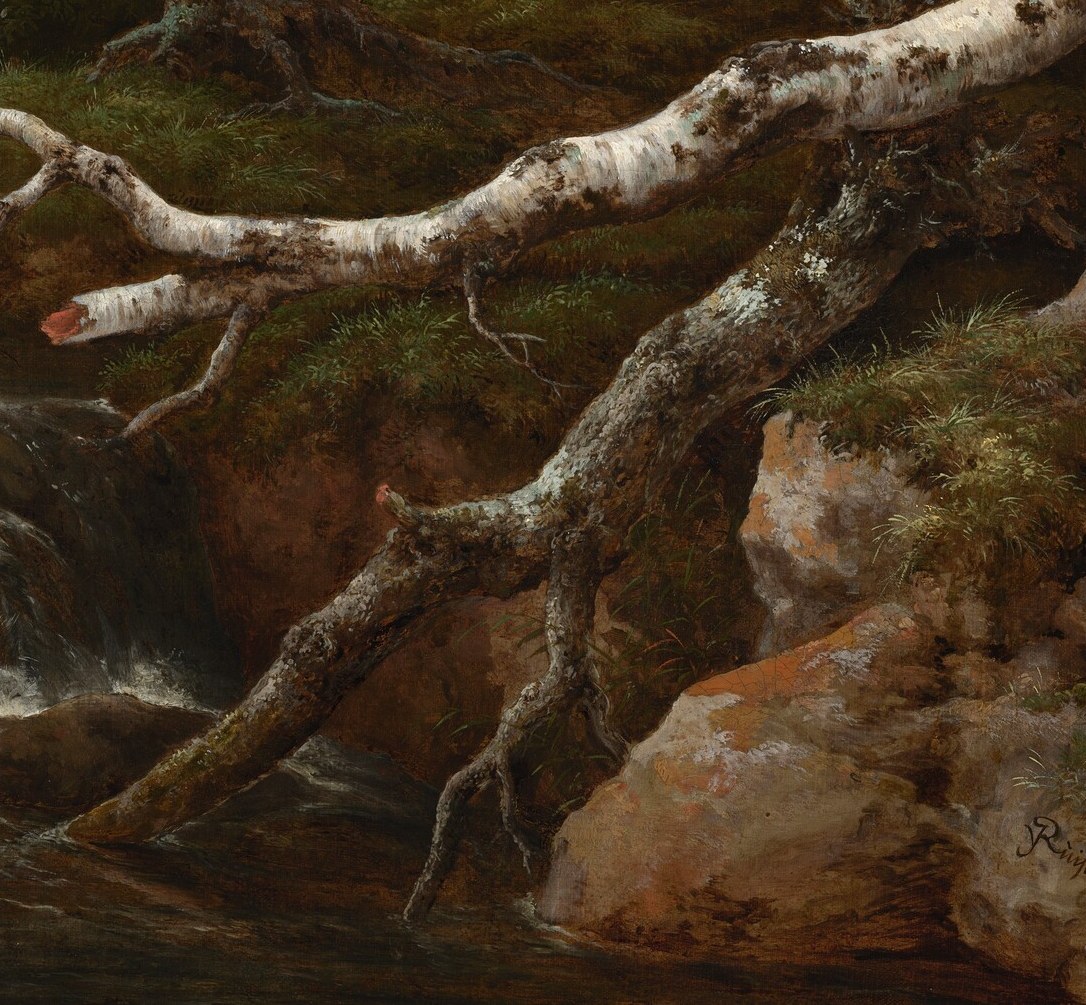
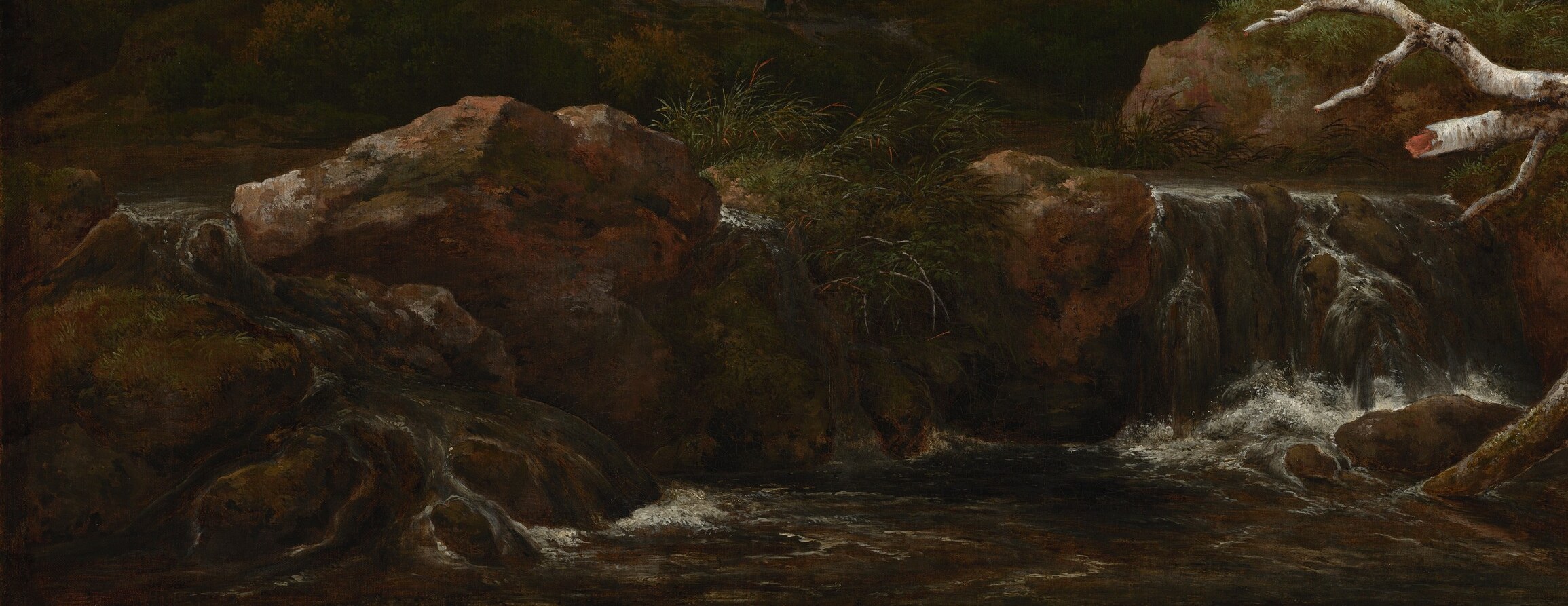
Look first at the monumental oak dominating the right side. Its canopy is the anchor of the entire composition, a living giant that had already stood for centuries when Ruisdael set up his easel. Then let your eye travel down the diagonal of the pale, fallen trunk at lower right, a dead tree among the living, and on to the small cascade of white water over dark rocks. The entire scene is built on accurate ecological observation: how light penetrates a dense canopy, how deadwood accumulates on the forest floor, how moss grows on northern boulders.
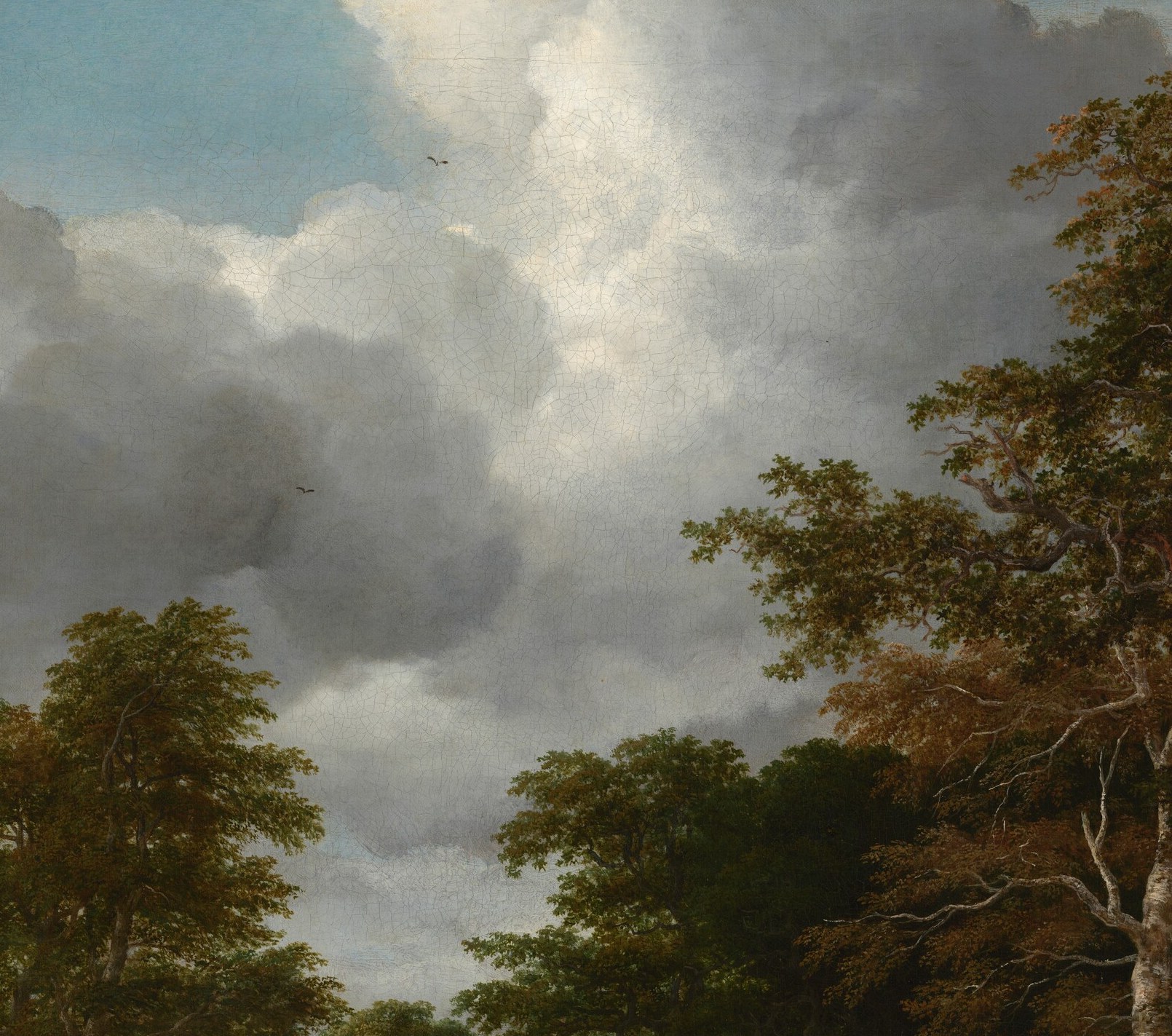
Ruisdael was the preeminent landscape painter of the Dutch Golden Age, and he treated the unglamorous damp woodlands of the Low Countries and Germany with the seriousness earlier generations reserved for biblical scenes. He would have walked sites like this near Haarlem or along the German border, sketching directly. The charged sky, the single shaft of light breaking through, and the tiny figures lost in the middle distance are all his signature devices for making nature feel vast and mankind small.
The old-growth forest he documented has almost disappeared. A fraction of one percent of Europe's original ancient woodland remains. This canvas is a record of a lost world, painted by someone who stood inside it.
Details
Transcript
An old forest, exactly as it stood in 1655. It is a witness. Nothing here is invented. This giant oak has anchored the scene for centuries before the painter arrived. A dead trunk cuts across the living forest floor. Ruisdael walked these woods and knew exactly how a forest falls and renews. A single shaft of light breaks the canopy. Old-growth wilderness like this has nearly vanished from Europe.